Erling Haaland haunts RB Leipzig once again to secure a pulsating 3-2 victory for Manchester City in the UEFA Champions League

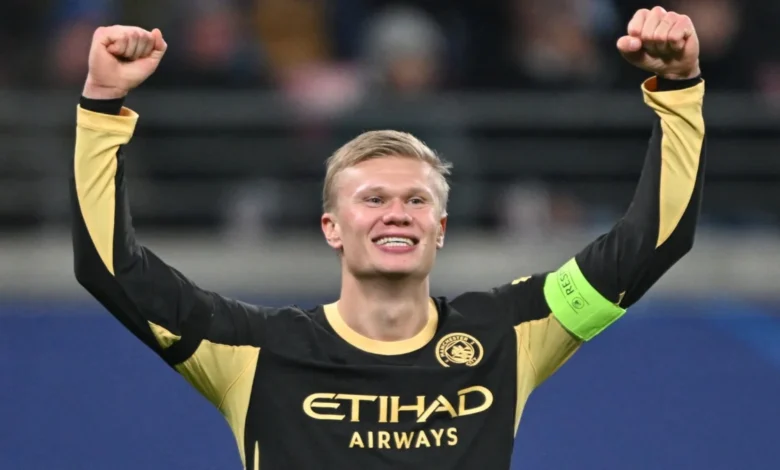
The UEFA Champions League nights in Germany have long served as a litmus test for Europe’s elite, and Tuesday’s encounter between RB Leipzig and Manchester City proved to be a chaotic, high-octane affair that ultimately saw the Premier League side emerge with a narrow 3-2 win. At the heart of the drama was Erling Haaland, a player whose history with the Bundesliga side has become a recurring nightmare for the Leipzig faithful. By netting the decisive goal twelve minutes from time, the Norwegian striker notched his 13th goal in just nine career appearances against the German outfit—a staggering statistic that underscores his clinical efficiency on the continental stage.
This victory provided a vital psychological boost for Enzo Maresca’s side, who entered the contest looking to recalibrate following a domestic setback against Brighton. While the result moves Manchester City up to seventh in the league phase table, the performance served as a microcosm of the team’s current season: flashes of sheer individual brilliance tempered by defensive fragility and tactical lapses that nearly cost them dearly in a hostile away environment.
A First Half of Comedy and Contention
The opening period was defined more by tactical tension than fluid football. Leipzig, buoyed by the vocal Red Bull Arena crowd, initiated the match with significant intensity. Christoph Baumgartner and Antonio Nusa consistently probed the City backline, exploiting spaces in the channels that suggested the visitors were vulnerable to direct, vertical transitions.
Despite Leipzig’s early dominance, they were architects of their own misfortune in the 25th minute. A miscommunication at the back led to a disastrous sequence for Castello Lukeba, whose panicked attempt to clear a cross resulted in a comical own goal. It was a gift that Manchester City, struggling to find their rhythm, were happy to accept. Haaland, often the focal point of the attack, spent the majority of the first half as a peripheral figure, managing only three touches in the opening 45 minutes as Leipzig’s defensive structure effectively isolated the target man.
The Tactical Seesaw of the Second Half
The game transformed into a frantic, end-to-end spectacle immediately following the interval. Gianluigi Donnarumma, tasked with anchoring the City goal, produced an early reflex save to deny Baumgartner, keeping the visitors’ lead intact. However, the respite was momentary. Seconds later, the Italian goalkeeper was left red-faced when Ridle Baku, stationed at an acute angle near the byline, spotted a gap at the near post. Expecting a cross, the City defense hesitated, allowing Baku to tuck the ball home in a display of composure that shifted the momentum firmly back toward the home side.
The match then entered a period of total instability. Haaland, having been stifled for the duration of the match, began to find pockets of space. As the intensity escalated, Enzo Fernandez stepped up to restore City’s lead. The midfielder, timing his run into the penalty area with precision, met an exquisite delivery from Iliman Ndiaye with a thunderous header that left the Leipzig keeper stranded.
The lead, however, was fleeting. Within three minutes of Fernandez’s strike, the clinical Antonio Nusa capitalized on a defensive lapse, firing a low, accurate drive past Donnarumma into the bottom right corner. The goal was a deserved reward for Nusa’s tireless work rate and confirmed that City’s defensive organization remained a work in progress.
The Decisive Moment and a Frantic Finale
With the scores level at 2-2, Manchester City entered their most cohesive spell of the match. The introduction of Jeremy Doku provided the necessary width and pace to stretch the Leipzig defense, which had begun to show signs of fatigue. The winning moment arrived in the 78th minute: Elliot Anderson, who has enjoyed a seamless integration into the City squad since his arrival, delivered a low, searching cross that cut through the Leipzig defense. Haaland, lurking with predatory instinct, tapped the ball home to seal the victory.
The closing stages were defined by a desperate, back-and-forth battle. David Raum rattled the woodwork for Leipzig, while Rayan Cherki came agonizingly close to extending City’s lead at the other end. Despite the late pressure, the visitors held firm to secure three crucial points in a competition where consistency is the primary currency.
Goalkeeping Scrutiny and Tactical Reflections
The performance of Gianluigi Donnarumma has become a focal point of post-match analysis. The Italian international has struggled to project an air of command, with his handling and decision-making often inviting unnecessary pressure onto his defenders. The goal conceded to Baku—where the keeper was caught out of position at his near post—has reignited questions regarding his reliability as the last line of defense. Analysts noted that his erratic movement during set-pieces and moments of transition suggests a player currently lacking the confidence required for the demands of a high-pressing, high-line system like Maresca’s.
Enzo Maresca, in his post-match reflections, was measured in his assessment of the team’s defensive structure. "It was a tough game in some moments. We controlled the tempo reasonably well, but there were intervals where we struggled significantly," the head coach noted. "In the Champions League, particularly away in Germany, you are always going to face periods of extreme pressure. We must be more careful with our transitions; we were vulnerable when we lost the ball in the middle third."
Haaland’s Perspective on Growth
Erling Haaland’s post-match comments reflected a striker who remains focused on the broader trajectory of the club rather than personal accolades. Addressing the press, he remarked, "I think this is the most I have scored against any single club in my career. I’ve faced them many times with Dortmund and now City, so I have a familiarity with their system. However, we have to step up as a collective. When we are 1-0 up, we need to be more ruthless. We need to go for the second and third goals to kill the game off. That is the mentality we need to work on."
Haaland also took a moment to praise his teammate, Elliot Anderson, whose impact since joining the club has been notable. "He has had an amazing start. It is not easy to walk into a new club, adapt to new teammates, and learn a new system under a new coach, but he has been impressive. We respect that contribution."
Implications and Context
The victory leaves Manchester City in a stable position within the league phase of the Champions League, but the performance serves as a reminder of the competitive nature of the tournament. The "league phase" format, which has replaced the traditional group stage, rewards consistency and goal difference, making every away point invaluable.
For RB Leipzig, the result is a bitter pill to swallow. Despite matching City in terms of shot conversion and possession percentages for long stretches, their failure to close down the game when they had the visitors on the ropes highlights the thin margin between a draw and a defeat at this level. The German side will look to bounce back in their next fixture, but they will be acutely aware that their defensive lapses in the final quarter of the match ultimately cost them a result that their attacking play arguably deserved.
As Manchester City turns its attention back to domestic commitments, the narrative remains consistent: they possess the offensive firepower to outscore any opponent, but their defensive transitions remain the "Achilles’ heel" that opponents will continue to target. Whether Maresca can find the necessary equilibrium before the knockout stages will determine the true ceiling of this team’s European ambitions. For now, they return to England with three points in the bag and a clearer understanding of the work required to become a truly dominant force in the competition.
Related posts: