A Historic Deadlock: The Mississippi Senate Race Between Scott Colom and Cindy Hyde-Smith Hangs in the Balance

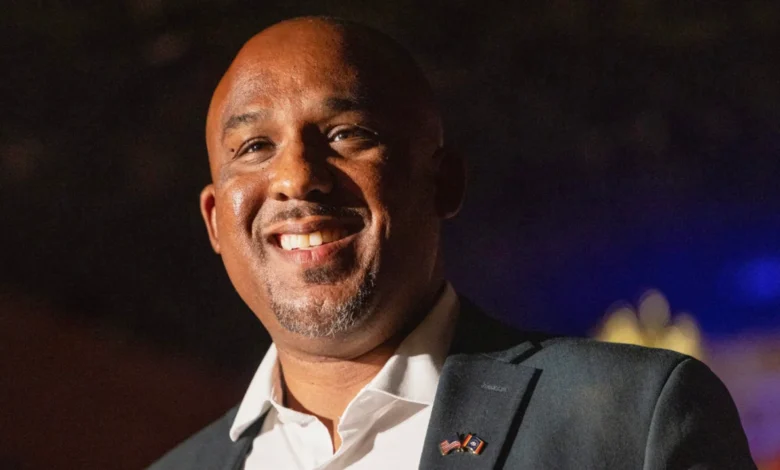
The 2026 midterm elections have produced a political cliffhanger in the Deep South that could fundamentally alter the trajectory of Mississippi politics. As of Wednesday afternoon, the U.S. Senate contest between incumbent Republican Cindy Hyde-Smith and Democratic challenger Scott Colom remains too close to call, with fewer than 100 votes separating the candidates. With over 95 percent of precincts reporting, the razor-thin margin has thrust Mississippi into the national spotlight, as Colom attempts to become the first Black U.S. Senator to represent the state since the Reconstruction era.
The tension in Jackson is palpable. For a state that has historically been considered a stronghold for the Republican Party—and one that delivered a commanding 23-point victory for Donald Trump in the 2024 presidential cycle—the competitiveness of this race marks an unprecedented shift in the local political landscape.
A Timeline of the Electoral Standoff
The current impasse follows a campaign season defined by aggressive ground games and high-stakes litigation regarding voting access.
- April 2026: The Supreme Court ruling in Louisiana v. Callais effectively dismantles significant portions of the Voting Rights Act, sparking a wave of mobilization among Southern voters who fear that the decision will invite further gerrymandering and restrictive election laws.
- November 3, 2026: Election Day proceeds with record-breaking voter turnout in several key Mississippi counties. As reports filter in, it becomes clear that Colom is outperforming expectations in urban centers and traditionally disenfranchised districts.
- November 4, 2026: Preliminary results indicate a lead for Colom, but the margin remains well within the threshold for a contested outcome. The Secretary of State’s office confirms that thousands of provisional and affidavit ballots remain unprocessed.
- November 13, 2026: The statutory deadline for the state to certify the final election results, creating a high-pressure window for election officials to verify thousands of contested ballots.
The Demographic and Legal Landscape
Mississippi holds the highest concentration of Black residents in the United States, with the latest Census Bureau data placing the figure at approximately 37 percent. Despite this demographic weight, the state has long been categorized by civil rights organizations as a site of significant voter suppression.
A major point of contention in this election cycle has been the state’s felony disenfranchisement laws. According to data provided by The Sentencing Project, approximately 43,700 Black Mississippians—exceeding 5 percent of the Black adult population—were ineligible to vote in 2024 due to past felony convictions. This figure stands in stark contrast to the national average of 1.7 percent for all adult citizens, highlighting a systemic barrier that has historically suppressed the political power of Black communities in the state.
The Republican-led legislature has also faced ongoing criticism for its redistricting efforts. The ACLU of Mississippi and other advocacy groups have frequently challenged legislative maps, arguing that the drawing of district lines is designed to dilute the voting power of minority populations. Despite these structural hurdles, the 2026 cycle has seen a surge in voter engagement, largely attributed to a grassroots reaction against the erosion of federal voting protections.
Economic Policy and Platform Divergence
The race has been shaped heavily by the economic anxieties of rural and working-class Mississippians. Scott Colom’s platform has focused on a "kitchen table" approach to governance, emphasizing issues that have historically been sidelined in statewide discourse.
Colom has campaigned on the following core pillars:
- Wage Reform: A commitment to raising the federal minimum wage, which has stagnated at $7.25 per hour since 2009.
- Healthcare Infrastructure: A pledge to oppose Medicaid cuts, citing the precarious state of rural hospitals that have faced closure due to financial insolvency.
- Data Center Regulation: An unconventional focus on the environmental and economic impacts of the booming data center industry. Colom has called for a moratorium on new construction until corporations agree to offset their power consumption costs and prioritize hiring local Mississippi workers.
Conversely, Senator Cindy Hyde-Smith has campaigned on a platform of fiscal conservatism and deregulation. Her supporters argue that her tenure has provided the stability needed for private industry to flourish, and they point to her track record of alignment with the state’s traditional economic interests as the reason she secured a 10-point victory in her previous reelection bid.
The Challenge of Certification and Recounts
One of the most critical factors in the current standoff is Mississippi’s lack of an automatic recount law. As the state moves toward the November 13 certification deadline, the process for addressing the margin of error is governed by administrative rules regarding provisional and affidavit ballots.
According to reports from the Mississippi Clarion Ledger, the Colom campaign has identified approximately 15,000 affidavit ballots that remain to be reconciled. These ballots, which are often cast by individuals whose registration status is in question or who failed to provide the required photo identification at the polls, are currently the primary battleground. Should the gap remain under 100 votes after the review of these affidavits, the state will face a legal and political crisis regarding the legitimacy of the outcome, given the absence of a standardized recount procedure.
Broader Implications for American Politics
The closeness of this race is a bellwether for the changing political dynamics of the American South. Historically, "ruby-red" states were viewed as monolithic entities, but the surge in voter participation among Black Southerners suggests a more complex reality.
If Colom prevails, or even if he falls short by a minuscule margin, the election serves as evidence that the "solid South" may be fracturing. Political analysts suggest that the mobilization seen in Mississippi is not an isolated incident but part of a regional trend of voters responding to national judicial shifts. The dismantling of the Voting Rights Act has paradoxically served as a catalyst for increased turnout, as local organizers have pivoted to local and state-level registration drives to combat the loss of federal oversight.
Furthermore, the focus on economic issues like the minimum wage and rural healthcare access suggests that voters are increasingly looking for solutions to regional poverty that transcend traditional partisan rhetoric. The battle over data centers also signals a growing interest in environmental justice and corporate accountability, topics that were once rarely discussed in the context of Mississippi senate campaigns.
As the state awaits the final tally, the nation is watching closely. Whether the result is a narrow victory for the incumbent or a historic win for the challenger, the 2026 Mississippi Senate race has already cemented itself as a pivotal moment in the history of the state’s electoral evolution. It remains to be seen how the eventual victor will govern a state that is so clearly divided in its vision for the future, but the intensity of the campaign has guaranteed that the status quo will be challenged for years to come.