Brazil Is Reshaping Global Cocoa Markets by Expanding Production on Degraded Amazonian Pastures

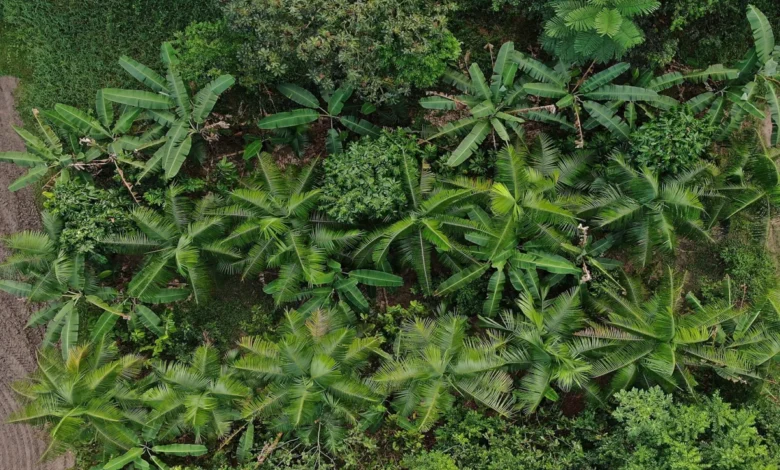
As global cocoa prices fluctuate under the weight of climate-induced crop failures in West Africa, the Brazilian Amazon has emerged as a critical laboratory for sustainable agricultural expansion. While traditional cocoa frontiers in nations like Côte d’Ivoire and Ghana have recently faced scrutiny for driving the clearing of primary tropical forests, a comprehensive mapping study by Embrapa, Brazil’s state-run agricultural research agency, indicates that Brazil’s cocoa sector is following a fundamentally different trajectory. By leveraging millions of hectares of previously degraded pastureland, the Brazilian industry is positioning itself as a leader in deforestation-free cocoa, aligning with stringent European Union environmental regulations while attempting to revitalize its historical status as a global agricultural powerhouse.
A Strategic Shift in Land Use
The data released by Embrapa highlights a significant surge in production capacity within the state of Pará. Between 2022 and 2024, the land area dedicated to cocoa cultivation in the region expanded by approximately one-third, reaching 116,436 hectares (287,700 acres). Crucially, the geographical analysis reveals that this expansion is not occurring at the expense of virgin rainforest. Nearly all of the newly mapped cocoa plots—96% in Pará and 98% in the state of Rondônia—are situated on land that had been deforested prior to 2020.
This finding is of monumental importance for the international supply chain. The European Union’s Deforestation Regulation (EUDR), which is slated to strictly enforce non-deforestation criteria for imports by late 2026, requires that commodities like cocoa be traced back to plots that have not undergone deforestation since December 31, 2020. By repurposing degraded pastures—land that was historically cleared for cattle ranching—Brazil is effectively creating a "compliance shield" that makes its cocoa highly attractive to European buyers who are increasingly wary of the environmental footprint of their chocolate supply chains.
The Evolution of Mapping Technology
The effort to quantify and locate the Amazonian cocoa footprint has been a decade-long endeavor, characterized by a transition from rudimentary field surveys to sophisticated satellite-based intelligence. Adriano Venturieri, a lead remote sensing specialist at Embrapa Amazônia Oriental, recalls the early days of the project when satellite imagery often proved confusing. Plots that appeared as secondary forests in initial scans were, in fact, complex agroforestry systems (SAF) where cocoa was grown beneath the canopy of taller native trees.

To bridge the gap between digital data and ground-level reality, Embrapa initiated collaborations with federal agencies such as CEPLAC (the Executive Commission of the Cocoa Farming Plan) and Emater. The project eventually gained significant technical momentum by integrating Google Earth Engine and high-resolution radar imagery. By 2021, the mapping process had been refined enough to distinguish between various types of land cover with high precision. This technological maturation has allowed researchers to confirm that the vast majority of Brazil’s cocoa production remains outside of sensitive protected areas, Indigenous territories, and Quilombola lands.
The Tension Between Agroforestry and Full-Sun Monocultures
While the environmental compliance of the industry is a positive development, the research has also uncovered a troubling shift in cultivation methodology. Historically, cocoa in the Amazon was synonymous with agroforestry, an integrated system that mimics natural forest structures by mixing cocoa with crops like açaí, bananas, and Brazil nuts. These systems are highly resilient, naturally suppressing pests and disease while providing diversified income streams for smallholder farmers.
However, the recent study identifies that nearly two-thirds of new plantings between 2022 and 2024 have transitioned to full-sun monocultures. In this model, cocoa is grown in expansive, unshaded fields. While this approach is significantly more productive in terms of yield per tree—often doubling the output of traditional agroforestry—it carries long-term risks. Full-sun plantations are far more susceptible to pathogenic outbreaks and environmental stressors, and they lock farmers into a dangerous dependence on a single crop, removing the protective biological buffer that agroforestry provides.
Industry experts, including Vítor Stella of CocoaAction Brasil, observe that this shift is largely driven by immediate economic pressures rather than long-term agricultural planning. With cocoa futures in New York reaching record highs—peaking at nearly $12,900 per metric ton in late 2024 before stabilizing—farmers are under immense pressure to maximize short-term output to capitalize on market volatility.
Economic Realities and the "Productive Conservation" Model
The transition to full-sun monoculture represents a departure from the "productive conservation" model that many environmental advocates championed. Despite this, experts argue that even a monoculture plot on previously exhausted, degraded pasture is a net environmental gain compared to the status quo of abandoned, eroding cattle land.

The economic logic is straightforward: clearing a standing forest is labor-intensive and costly, whereas planting on existing, unproductive pasture is economically efficient and logistically faster. Brazil currently possesses roughly 56 million hectares of pastureland across the Amazon, a vast expanse that dwarfs the current cocoa footprint. According to the research, Brazil could significantly increase its total cocoa output without cutting down a single native tree, provided there is investment in soil management, pruning techniques, and infrastructure for smallholder farmers.
Official Policy and the 2030 Horizon
The Brazilian government has codified this potential in the "Inova Cacau 2030" plan. This national policy framework aims to elevate annual production above 400,000 metric tons while ensuring that 70% of output is fully traceable. The plan is not merely about volume; it is about establishing a premium brand for Brazilian cocoa that emphasizes sustainability and social responsibility.
The role of initiatives like CocoaAction Brasil is to provide the traceability infrastructure necessary for this transition. Tracing cocoa from a single-hectare family plot located deep in the rural reaches of the Trans-Amazonian Highway is a logistically complex task. Yet, the industry views this transparency as a non-negotiable "license to operate." As global markets tighten, the ability to prove that a bean was grown on a legacy pasture—rather than a freshly cleared forest—will be the primary differentiator between successful exporters and those excluded from premium markets.
Comparative Analysis: Brazil vs. The Global Frontier
The contrast between Brazil and other major producing nations is stark. In Liberia, for example, reports indicate that cocoa expansion is actively encroaching on primary forests, a trend that threatens to lock those producers out of the European market entirely. Brazil’s ability to avoid this "frontier trap" is a result of both historical land-use patterns and deliberate policy choices.
However, researchers remain cautious. While the economic argument against deforestation is strong, the allure of higher yields in full-sun systems remains a challenge. There is a palpable concern that if the market continues to favor volume over quality and ecological stability, farmers may eventually feel incentivized to push into forest boundaries despite the regulatory hurdles.

To mitigate this, the consensus among agricultural researchers is the need for greater investment in the "Amazonian middle ground." This involves supporting smallholders in restoring their legal reserves—the 80% of property that Brazilian law requires to remain forested—using cocoa as a component of that restoration. By integrating commercial production with forest recovery, Brazil could potentially turn its cocoa sector into a massive carbon-sequestration project.
Implications for the Future
The path forward for the Brazilian cocoa sector is clear but demanding. It requires a pivot from the recent surge in full-sun monoculture back toward diversified, resilient agroforestry systems that protect the Amazon’s biodiversity while ensuring the long-term profitability of family farms. The technological foundation laid by the Embrapa mapping project provides the transparency required to satisfy global regulators, but the human element—the farmers themselves—must be supported with the technical training and financial access necessary to make sustainable choices.
Brazil stands at a crossroads. By effectively utilizing its vast, degraded landscape, the nation has the opportunity to redefine what it means to be a global commodity producer. Whether it can maintain its "compliance shield" while balancing the hunger for higher yields and the need for ecological preservation will be one of the most significant tests of the country’s agricultural sector in the coming decade. As it stands, the "Inova Cacau 2030" vision is ambitious, but the existence of over 13 million hectares of land ready for sustainable redevelopment suggests that the goal is not only achievable—it is a logical evolution of the Brazilian economy.