Discovering Taboga Island: A Comprehensive Guide to Panama’s Historic Pacific Paradise Just Beyond Panama City


Nestled shimmering in the azure waters of the Gulf of Panama lies Taboga Island, a destination frequently celebrated as the "Island of Flowers." Located just 12 miles—or approximately a 30-minute ferry ride—from the bustling, modern metropolis of Panama City, this tropical refuge offers an arresting juxtaposition to the towering skyscrapers and roaring commerce of the mainland. For international travelers seeking a seamless blend of rich colonial history, lush natural landscapes, and unhurried island life, Taboga has increasingly evolved from a well-kept secret into a premier regional getaway.
The appeal of the island is multifaceted, drawing historians, naturalists, and beach-goers alike. Yet, as tourism to Central America rebounds and expands to new heights, understanding the intricate dynamics of visiting Taboga requires more than a simple travel itinerary. It demands an appreciation of its storied past, its current economic and infrastructural framework, and the broader implications of sustainable tourism in the region.
Main Facts and Geographic Profile
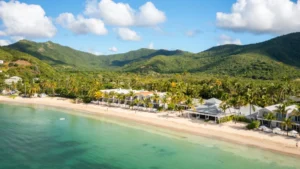
Taboga Island is the principal landmass of a small volcanic archipelago in the Gulf of Panama, which also includes Urabá Island and Plumilla Island. Covering an area of roughly 4.7 square kilometers (1.8 square miles), the island is characterized by steep, emerald-green hills that rise sharply from the Pacific, culminating in Cerro Vigía at an elevation of more than 300 meters.
Unlike the Caribbean side of Panama, which boasts white-sand coral keys, Taboga’s beaches feature a darker, volcanic-tinted sand that shifts dramatically with the Pacific tides. Playa Restinga, a wide stretch connected to the smaller island of El Morro by a narrow sandbar, serves as the primary recreational hub for visitors. The climate is distinctly tropical, marked by a pronounced dry season from December through April—the peak period for tourism—and a wet season from May to November, during which the island’s flora bursts into vibrant, colorful life, living up to its historic moniker.
The permanent population hovers around 1,500 residents, most of whom reside in the colorful, colonial-era settlement known simply as Pueblo de San Pedro. The village is a labyrinth of narrow, pedestrian-only pathways, as automobiles are virtually nonexistent on the island, replaced instead by small utility carts and the simple act of walking.
Historical Chronology of the Island of Flowers
To fully grasp the significance of Taboga Island, one must look deep into its historical archives, which trace the volatile and fascinating trajectory of Spanish colonization in the Americas.
Pre-Columbian and Early Contact Era
Before the arrival of Europeans, the island was inhabited by indigenous groups who subsisted on fishing and small-scale agriculture. The name "Taboga" is widely believed to derive from an indigenous word, aboga, meaning many fish, reflecting the abundant marine life surrounding the shores.
Spanish Conquest and Piracy
In 1515, just two years after Vasco Núñez de Balboa famously sighted the Pacific Ocean, Spanish conquistador Gaspar de Morales claimed the island for the Spanish Crown. Shortly thereafter, in 1549, the town of San Pedro was founded, establishing Taboga as one of the oldest European settlements on the Pacific coast of the Americas.
During the height of the Spanish colonial empire, the island served as a strategic port, a safe haven, and a provisioning stop for fleets navigating the wealth of Peru northward toward the Isthmus. However, its strategic value also made it a prime target for pirates and privateers. Most notably, in the late 17th century, the notorious Welsh privateer Henry Morgan utilized the waters around Taboga as a staging ground before launching his devastating raid on the original Panama City (Panama Viejo) in 1671.
The French Canal Era and Post-Impressionist Art
Centuries later, Taboga played a pivotal role in the ill-fated French attempt to construct an interoceanic canal in the late 1800s. Ferdinand de Lesseps’ company established a sanitarium on the island, utilizing its cooler breezes and perceived health benefits to treat workers suffering from yellow fever and malaria.
It was also during this era that Taboga secured a permanent place in global art history. In 1887, the legendary French Post-Impressionist painter Paul Gauguin spent several weeks living on the island. Seeking an escape from European civilization, Gauguin worked briefly as a laborer on the Panama Canal excavations before falling ill and retreating to Taboga, an experience that heavily influenced his artistic journey toward exoticism and tropical motifs.

Supporting Data and Tourism Infrastructure
In recent years, Taboga Island has experienced a steady resurgence in visitor numbers, fueled by significant investments in transportation and hospitality. Data from the Panama Tourism Authority (ATP) indicates that weekend tourism to the island has grown by upwards of 25% over the past five years, driven largely by day-trippers from Panama City and an influx of North American and European expatriates.
Ferries depart daily from the Amador Causeway in Panama City, operated by companies such as Taboga Express and Island Travel. The journey takes approximately 30 minutes, making the island one of the most accessible international island escapes in the hemisphere. Despite this proximity, Taboga has managed to retain its tranquil village atmosphere, largely due to strict municipal zoning laws that prevent large-scale commercial developments and high-rise hotel chains.
Accommodation on the island primarily consists of boutique bed-and-breakfasts, historic guesthouses, and locally owned rental properties. Dining options are concentrated along the main waterfront and village square, where establishments specialize in traditional Panamanian seafood dishes, including corvina (sea bass), red snapper, and patacones (fried green plantains).
Official Responses and Municipal Management
The rapid acceleration of tourism has presented local authorities and community leaders with unique governance challenges, sparking ongoing debates regarding infrastructure sustainability and resource management.
In official statements released by the Municipality of Taboga, local officials have emphasized a commitment to balancing economic development with environmental preservation. "Taboga is a living museum and a natural treasure," stated a municipal spokesperson during a recent regional tourism forum. "Our priority is to ensure that every visitor experiences the authentic charm of our island without compromising the delicate ecosystems that make it unique."
Key infrastructural initiatives currently underway or recently completed include:
- Waste Management Upgrades: The implementation of enhanced recycling programs and stricter regulations on single-use plastics to mitigate the impact of day-tourists on local marine ecosystems.
- Water Supply Improvements: Upgrades to the submarine pipeline connecting the island to the mainland’s water grid, addressing historical water scarcity issues during peak dry-season tourism spikes.
- Heritage Conservation: Collaborations with the National Institute of Culture (INAC) to restore historic structures, including the Church of San Pedro—widely reputed to be the second-oldest church in the continuous Pacific Americas—which houses invaluable religious artifacts dating back to the colonial period.
Local business associations have largely welcomed these measures, viewing sustainable management as essential to preserving the island’s long-term viability as a premier boutique destination.
Broader Impact and Economic Implications
The relationship between Panama City and Taboga Island serves as a compelling case study in micro-tourism economics. As urban centers across Latin America grow denser and more congested, the demand for accessible, low-impact natural retreats has skyrocketed.
For Panama’s broader economy, destinations like Taboga act as vital economic anchors for the domestic hospitality sector. Day-tourism drives revenue not only for island-based vendors, boat operators, and restaurant owners, but also for mainland service providers along the Amador Causeway. Furthermore, the island serves as a crucial testing ground for sustainable tourism policies that the Panamanian government hopes to replicate in more remote regions, such as Bocas del Toro and the Pearl Islands.
However, analysts note that challenges remain. The delicate balance between encouraging visitor volume and preventing environmental degradation requires constant vigilance. Overcrowding during major national holidays can strain the island’s finite resources, testing the limits of its sewage, water, and waste disposal systems. Consequently, tourism experts advocate for continued investment in carrying-capacity research and the promotion of mid-week travel to distribute visitor traffic more evenly throughout the year.
Conclusion
Taboga Island stands today as much more than a convenient beach escape from the capital; it is a living chronicle of Panamanian history, where the echoes of Spanish galleons, pirate raids, French canal engineering, and artistic exploration still resonate through cobblestone pathways and blooming bougainvillea. As the island navigates the complexities of modern tourism, its enduring allure lies precisely in its ability to transport travelers backward in time, offering a profound sense of peace and historical continuity just miles away from the modern world.