Irreparable Scars: Bureau of Land Management Investigates Vandalism at Ancient Utah Rock-Art Sites

The Bureau of Land Management (BLM) has launched a formal investigation into the recent desecration of two significant archaeological sites in the vicinity of Moab, Utah, where ancient petroglyphs—some dating back two millennia—were defaced by modern graffiti. The acts of vandalism, which involved the carving of names directly into sandstone panels, have sparked outrage among preservationists, tribal communities, and federal authorities, who warn that the damage may be permanent. The incidents serve as a stark indicator of the mounting pressures faced by cultural heritage sites in the American West as visitation rates to public lands continue to reach historic highs.
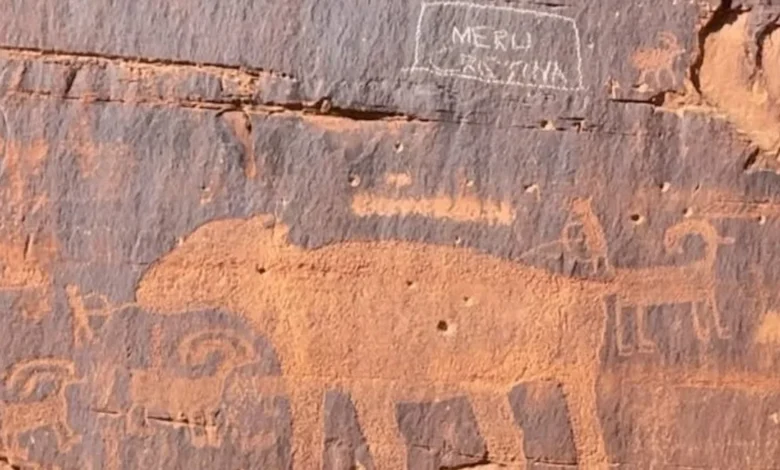
The vandalism was confirmed by the BLM on November 6, 2026, with officials identifying two specific locations impacted by the defacement: the Bear Panel, situated along the scenic Highway 279 near the Colorado River, and a separate panel located in the vicinity of the Hell’s Revenge trail, a high-traffic destination within the Sand Flats Recreation Area. At the Bear Panel, which is renowned for its intricate depictions of bears and bighorn sheep, vandals etched the name “Meru” into the stone. Simultaneously, at the site near Hell’s Revenge, the inscription “Craig W” was carved across multiple prehistoric figures.
A Chronology of Increasing Desecration
While the recent incidents have drawn immediate headlines, they are part of a troubling, multi-year trend of degradation affecting the archaeological landscape of the Colorado Plateau. The history of vandalism on public lands is not new, with early 19th-century explorers and settlers often leaving their own marks on rock faces. However, state officials and land managers have noted a marked shift in the nature and frequency of these events over the last six years.
In March 2026, the Grand County Sheriff’s Office responded to a similar report of graffiti at the Tusher Tunnel, an area frequently accessed by off-highway vehicle (OHV) enthusiasts. The accumulation of these events suggests a pattern of disregard for the sanctity of these sites. This localized surge in criminal activity mirrors broader national trends in the Western United States, where public interest in outdoor recreation has consistently outpaced the availability of site management, monitoring, and educational resources.
The Archaeological and Cultural Significance
The petroglyphs targeted by vandals are far more than mere carvings; they are vital historical records. According to Chris Merritt, the Utah State Historic Preservation Officer, the affected panels represent the artistic and spiritual output of Ancestral Puebloan and Fremont cultures, alongside the heritage of more recent Indigenous communities.
“These images are a physical expression of the past, their connection to their ancestors and to that landscape,” Merritt stated in an interview. “They will now forever be scarred by someone’s thoughtlessness, and that hurts the continuation of culture.”
For many Indigenous nations, these sites are living entities. The petroglyphs serve as maps, astronomical markers, and records of migration or ritualistic practices. When a name is carved over an ancient image, it is not merely an act of graffiti; it is an erasure of indigenous history and a violation of a sacred space. The “Bear Panel,” in particular, is considered a masterpiece of prehistoric art, providing a window into the cosmology of people who inhabited the Moab region long before the establishment of modern border lines.
The Complexity of Restoration
The physical removal of graffiti from porous sandstone is a process fraught with technical difficulties. Unlike modern surfaces, sandstone is highly absorbent, and its surface patina—the “desert varnish” formed over centuries of mineral deposition—is delicate.
Restoration efforts are currently being evaluated by BLM specialists, but the prognosis is grim. At the Hell’s Revenge site, the graffiti crosses directly over original carvings. Any attempt to mechanically remove the modern letters threatens to abrade the prehistoric artwork beneath.
The situation at the Bear Panel is perhaps even more precarious. The presence of a geological crack in the sandstone directly beneath the vandalism complicates the matter. If conservationists attempt to scrape or fill the graffiti, they risk compromising the structural integrity of the rock. According to experts, such interference could create new fissures, allowing moisture to seep into the stone. During the high-desert winter, the subsequent freeze-thaw cycles could cause the entire section of the rock face to fracture and collapse, leading to the permanent loss of the petroglyphs.
Merritt emphasized that any remediation strategy must prioritize the input of descendant tribal communities. “Five minutes of damage could take weeks of repair to do carefully to preserve the subsurface imagery and the rock face,” he noted.
Legal Implications and Enforcement
The federal government takes the protection of these sites seriously under the Archaeological Resources Protection Act (ARPA). Enacted in 1979, ARPA is designed to protect archaeological resources on public and Indian lands. Violations can lead to severe penalties, including fines of up to $20,000 and incarceration for up to two years for first-time offenders.
The legal consequences serve as a deterrent, yet enforcement remains difficult in the vast, remote terrain of the Utah desert. In a landmark case in November 2025, a woman who defaced petroglyphs on BLM land near Wire Pass received a sentence of 12 months probation and was ordered to pay $14,853 in restitution. The court also barred her from entering BLM-managed lands for the duration of her probation.
Despite these measures, the BLM faces the perennial challenge of policing thousands of miles of trails and dispersed camping areas with limited personnel. The agency is now appealing to the public for assistance, urging anyone with information regarding the individuals responsible for the damage at the Bear Panel or the Hell’s Revenge site to contact the Moab BLM Law Enforcement office at 435-259-2131.
Broader Implications for Public Land Stewardship
The current crisis highlights a fundamental tension in the management of public lands: the desire to provide public access to historic sites versus the mandate to preserve them for future generations. As the popularity of outdoor sports like mountain biking, rock climbing, and OHV driving continues to climb, the risk of accidental or intentional damage to cultural resources increases.
To combat this, the state of Utah has invested in the "Protect Our Past" campaign, an educational initiative aimed at fostering a culture of stewardship among outdoor enthusiasts. The program encourages visitors to adopt a “leave no trace” ethos that extends beyond trash to include the protection of historical, archaeological, and biological features. Furthermore, the state relies on a network of volunteer site stewards—citizens who monitor specific locations and report suspicious activity to authorities.
However, many experts argue that education and volunteerism are not enough. There is an increasing call for improved infrastructure, such as better signage at trailheads, the installation of physical barriers where necessary, and perhaps even restricted access to the most vulnerable sites.
As the BLM continues its investigation, the scars on the sandstone serve as a grim reminder of the fragility of the human story. The destruction of these petroglyphs is not a victimless crime; it is the theft of a collective heritage. The incident underscores the urgent need for a more robust, proactive approach to managing the delicate balance between public enjoyment and the preservation of the ancient history that defines the American landscape. For the people who view these panels as sacred, the damage is a profound loss that cannot be undone by a fine or a prison sentence. The focus must now turn to ensuring that the next generation of visitors understands that the value of these sites lies in their preservation, not their alteration.