From Workhorse to Holy Chariot: How South American Automakers Reengineered Midsize Pickups Into Pope Leo XIV’s Historic Open-Air Popemobile Fleet

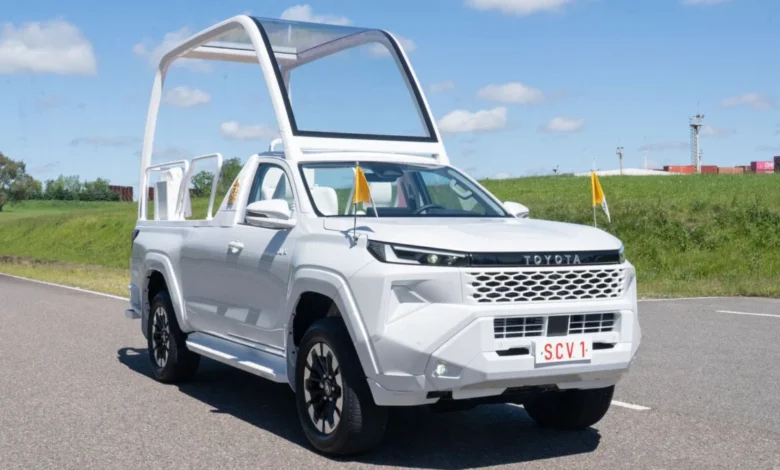
While the Vatican has progressively modernized its official motorcade with cutting-edge electric vehicles—including a customized Mercedes-Benz G-Class EV safely stored back in Vatican City—Pope Leo XIV opted for a vastly different vehicular strategy during his sweeping pastoral tour of South America. Leaving his high-tech European ride behind, the Pontiff traversed multiple nations relying entirely on an eclectic trio of custom-built, open-air ceremonial vehicles derived not from luxury platforms, but from ubiquitous regional workhorse pickups: the Toyota Hilux, the Chevrolet S10, and the Fiat Titano.
This unusual fleet of papal transport highlights a fascinating intersection between local automotive manufacturing, specialized regional coachbuilding, and the unique logistical demands of modern papal tours. Rather than shipping a standard European-spec vehicle overseas, the Vatican coordinated with regional automotive manufacturers and specialized coachbuilders in Argentina, Brazil, and Uruguay to engineer bespoke ceremonial transport tailored specifically to the infrastructure, cultural context, and security requirements of South America.
The Main Facts: A Tri-Nation Fleet of Customized Pickups
Pope Leo XIV’s South American pilgrimage required a resilient, highly adaptable fleet capable of navigating varied urban environments, large crowds, and long-distance motorcades across Argentina, Peru, and Uruguay. To fulfill these requirements, three major automakers with deep roots in South American industrial manufacturing stepped forward: Toyota, General Motors, and Stellantis.
In Argentina, local operations for Japanese manufacturer Toyota provided a pair of modified single-cab pickups that served as the primary Popemobiles during the Pope’s visits to Buenos Aires and Córdoba. In Peru, General Motors supplied a heavily modified Chevrolet S10 manufactured at its São José dos Campos facility in Brazil. Meanwhile, Stellantis turned to regional coachbuilder Nordex in Uruguay to transform a Fiat Titano into a custom open-air ceremonial chariot for the Pontiff’s engagements in Montevideo.
Each vehicle underwent extensive custom fabrication by regional coachbuilding specialists—Vallée Equipamientos in Argentina, Engesig in Brazil, and Nordex in Uruguay—transforming rugged utility trucks into diplomatic flagships equipped with protective polycarbonate domes, elevated white eco-leather thrones, auxiliary seating for security personnel, and official Vatican insignia.
Chronology of the Project and the Engineering Marvels Involved
The genesis of the South American Popemobile fleet began months prior to Pope Leo XIV’s arrival, rooted in careful logistical planning between Vatican security details and regional automotive subsidiaries.
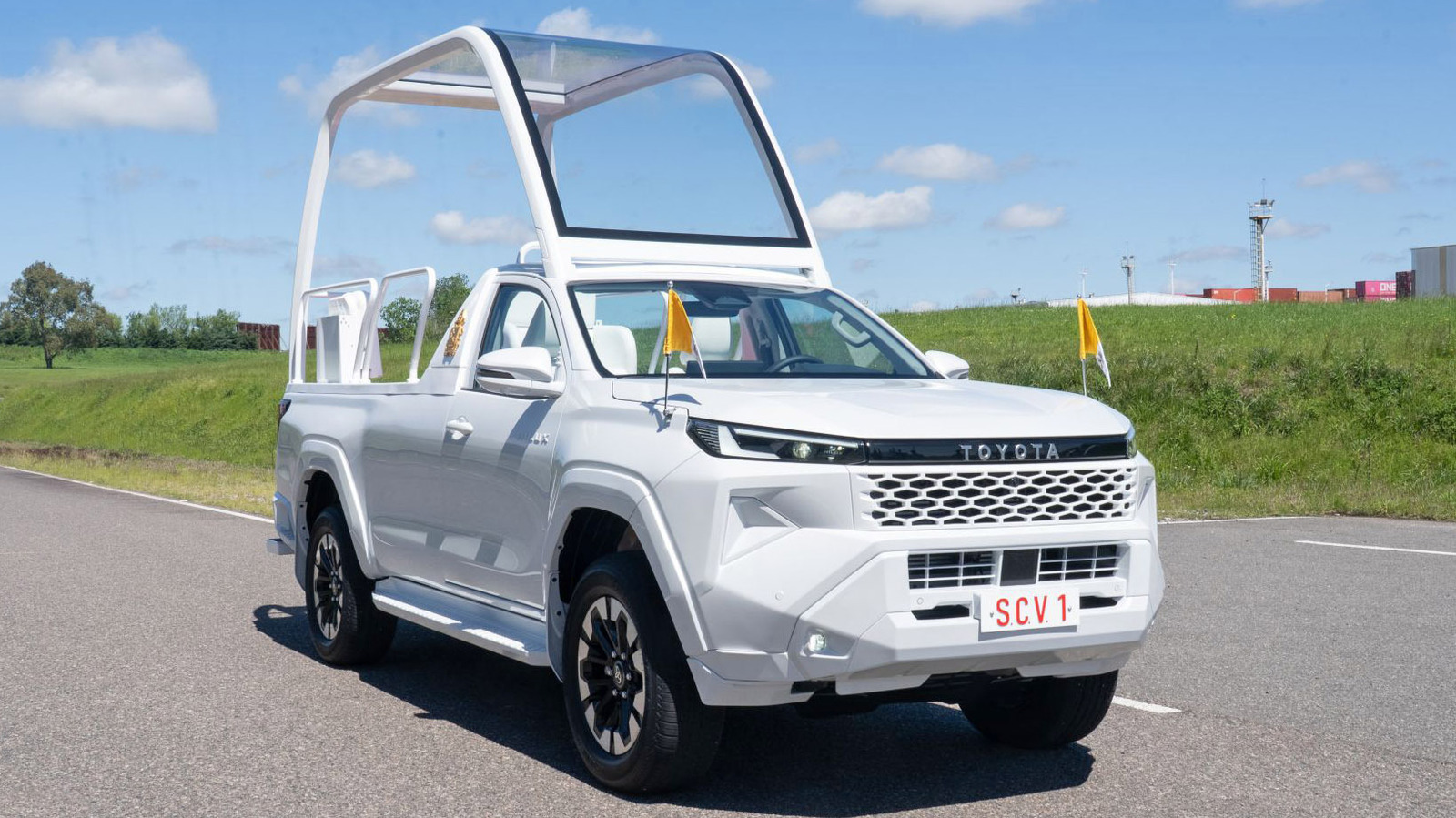
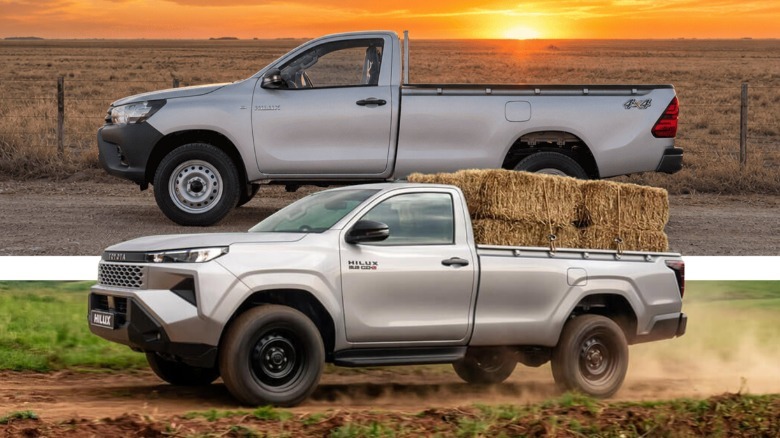
Automotive industry reports indicate that the project involving the Toyota Hilux began taking shape well before the official global debut of the ninth-generation Hilux platform. Toyota Argentina officially presented the Popemobile as a sophisticated preview of the ninth-generation Hilux workhorse. However, industry analysis from specialized outlets like Motor1 Brazil revealed that the conversion initiatives were officially approved and initiated while the previous eighth-generation platform was still the active standard.
Because the ninth-generation Hilux intentionally preserves the hardpoints, greenhouse, pillars, doors, and foundational architecture of its predecessor, regional coachbuilder Vallée Equipamientos was able to execute a seamless cosmetic fusion. The coachbuilders retrofitted the redesigned front fascia, modern fenders, updated lighting elements, and interior appointments of the upcoming model onto the reliable donor chassis.
Under the sheet metal, the Hilux retained its robust IMV ladder-frame chassis and standard high-torque turbodiesel engine. However, to guarantee a smooth, dignified ride suitable for a head of state navigating uneven road surfaces and massive crowds, engineers completely recalibrated the rear leaf springs and shock absorbers. The cargo bed was removed and replaced with a custom-engineered structure featuring an illuminated polycarbonate dome that extended the vehicle’s total height to 122 inches (3.1 meters). Access to the rear viewing platform was facilitated by custom-welded steps and a specialized cutout integrated directly into the tailgate.
A parallel engineering feat took place in Brazil and Uruguay. In Brazil, Engesig transformed a pair of Chevrolet S10 pickups sourced from the local factory. Because the regional S10 is sold exclusively in a dual-cab configuration, engineers had to perform extensive structural surgery, cutting away the rear cabin section to clear space for the papal observation deck. To compensate for the inherent loss of structural rigidity resulting from the removal of the C-pillars, engineers heavily reinforced the ladder-frame chassis. A secure ladder, an elevated mounting platform to maximize visibility, and auxiliary fold-down jump seats for security staff were installed under a transparent weather-resistant canopy.
In Uruguay, Stellantis relied on coachbuilder Nordex to convert a single-cab variant of the Fiat Titano—a midsize pickup that shares its underlying Changan-sourced ladder-frame architecture and 2.2-liter turbodiesel powertrain with the Peugeot Landtrek and Ram 1200. The Titano conversion featured a tailored rear dome, a white eco-leather throne, side-facing auxiliary seats, a plush red carpet, tubular safety handrails, and an electrically deployable rear staircase to assist the Pontiff during entry and exit.
Supporting Data and Regional Context
The decision to utilize regional midsize pickups was driven by a combination of symbolic outreach, manufacturing practicality, and supply chain efficiency. South America represents a crucial market for midsize body-on-frame pickup trucks, where models like the Toyota Hilux and Chevrolet S10 consistently rank among the best-selling vehicles.
According to data released by Toyota Argentina, the Hilux was specifically selected because it stands as the single most-produced vehicle within the country, anchoring thousands of local manufacturing jobs at the Zárate assembly plant. By utilizing domestically built vehicles, the Vatican and local organizers effectively minimized complex international shipping logistics while spotlighting the industrial capacity of South American manufacturing hubs.
Furthermore, the physical specifications of these bespoke vehicles reflect rigorous safety and ceremonial standards:
- Height Clearance: Ranging between 3.0 to 3.1 meters (approximately 118 to 122 inches) to accommodate the illuminated polycarbonate protective enclosures.
- Powertrains: Proven high-output turbodiesel engines designed to maintain low-speed stability during prolonged processions.
- Diplomatic Accoutrements: Hand-painted pearl white exterior finishes, matching body-side cladding, custom Vatican City State registration plates, hood-mounted diplomatic pennants, and official papal coats of arms emblazoned on the doors.
Official Responses and Industry Reception
Representatives from the participating automotive corporations expressed immense pride in contributing to the historic papal visit. Executives from Toyota Argentina noted that designing and engineering a Popemobile on an emerging platform represented a unique engineering challenge that showcased the technical competence of local design and fabrication teams.
Similarly, regional leadership from General Motors and Stellantis highlighted the humanitarian and cultural significance of supporting the Pope’s tour. Local dealerships and assembly plant workers frequently reported widespread public enthusiasm upon seeing homegrown vehicles adapted for such a profound global office.
While the Vatican has increasingly emphasized sustainability through the gradual integration of electric and hydrogen-fuel-cell vehicles—such as the custom hydrogen-powered Toyota Mirai introduced to the papal fleet in previous years—the deployment of conventional turbodiesel pickups in South America underscores a pragmatic approach to local operational realities. In regions where public infrastructure, vast touring distances, and crowd management require robust mechanical reliability, traditional body-on-frame utility platforms remain unmatched.
Broader Impact and Industrial Implications
The appearance of these custom pickup-based Popemobiles across Argentina, Peru, and Uruguay carries notable implications for the regional automotive sector. By placing upcoming and newly refreshed models directly into the global spotlight under the watchful eye of international media, the collaboration served as a masterclass in high-profile industrial marketing.
For consumers and industry analysts, the project demonstrated the exceptional flexibility of modern body-on-frame architectures. It proved that regional coachbuilders possess the engineering expertise to safely modify complex vehicle structures—such as reinforcing cut chassis frames and integrating advanced lighting and electrical systems—without compromising safety or reliability.
As Pope Leo XIV concluded his South American tour, the custom fleet left a lasting impression on both the faithful who gathered by the millions to catch a glimpse of the Pontiff and the automotive engineers who brought the project to life. By merging sacred tradition with rugged South American industrial might, these three unique pickup trucks secured a permanent place in the colorful, evolving history of the Vatican’s most iconic rolling symbols.