Rimac Automobili Concludes Production Run of the Nevera Hypercar as the Company Pivots Toward a New Era of Automotive Engineering

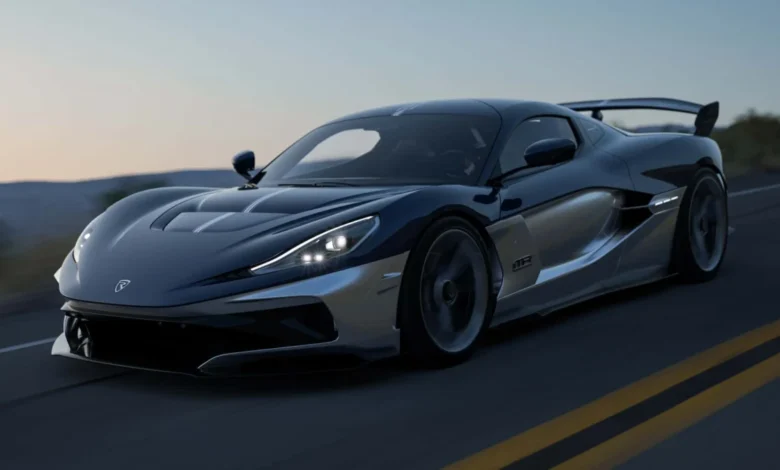
The era of the Rimac Nevera is drawing to a deliberate and calculated close. Mate Rimac, the visionary founder of the Croatian automaker, recently confirmed via social media that the company is finalizing the production run of its flagship electric hypercar. With the final 10 units of the track-focused Nevera R currently under assembly at the company’s state-of-the-art facility in Sveta Nedelja, the curtain is set to fall on a vehicle that redefined the performance benchmarks for battery-electric vehicles (BEVs) globally. By the end of this calendar year, all remaining units will have been delivered to their respective owners, marking the conclusion of a significant chapter in the history of Rimac Automobili.
A Legacy of Performance and Technical Disruption
Since deliveries officially commenced in 2022, Rimac has produced a total of 71 Nevera units. This figure comprises 51 standard Nevera models and 20 iterations of the high-performance Nevera R. While this total volume falls short of the ambitious 150-unit target initially projected when the vehicle was first unveiled as the C_Two concept at the 2018 Geneva International Motor Show, the company maintains that the project has been an overwhelming success from both an engineering and a strategic standpoint.
The Nevera served as a proof-of-concept for the viability of electric hypercars, demonstrating that high-voltage powertrains could not only match but significantly exceed the capabilities of traditional internal combustion engines. Its four electric motors, which generated a staggering 1,914 horsepower in the base configuration, allowed the vehicle to sprint from 0 to 60 mph in a breathtaking 1.85 seconds. These figures were not merely numbers on a spec sheet; they were industry-leading metrics that forced legacy manufacturers to rethink the potential of electric drivetrains.
The Nevera R, introduced to push the platform to its absolute physical limits, further refined this performance. Featuring an upgraded output of 2,107 horsepower, it shaved the 0-60 mph time down to 1.74 seconds. More impressively, the R variant achieved 0-124 mph in 4.38 seconds and sprinted to 186 mph in just 8.66 seconds, solidifying its status as one of the fastest accelerating production vehicles ever engineered.
Chronology of the Nevera Program
The lifecycle of the Nevera can be categorized into three distinct phases: inception, development, and market dominance.
- 2018: The C_Two concept is unveiled at the Geneva Motor Show. It promised a combination of autonomy, massive power, and rapid charging that was largely considered science fiction at the time.
- 2021: Rimac shifts from the concept phase to production, finalizing the Nevera branding. During this year, the company also established a formal partnership with Bugatti, setting the stage for the creation of Bugatti Rimac.
- 2022: The first customer deliveries begin. Nico Rosberg, the 2016 Formula 1 World Champion, famously took delivery of the first production model, signaling the vehicle’s acceptance among the world’s elite performance enthusiasts.
- 2023–2024: The Nevera breaks numerous world records, including speed and braking tests. The introduction of the Nevera R marks the final evolution of the platform.
- Late 2024: Production concludes as the company shifts its focus toward the next generation of hypercar technology and broader automotive solutions.
The Strategic Pivot: Why the Nevera Mattered
In his recent public address, Mate Rimac emphasized that the Nevera was never intended to be a high-volume product in the traditional sense. Instead, it functioned as an essential catalyst for the growth of the Rimac Group. "It’s the most sold electric hypercar in the world," Rimac stated. "Without that, there wouldn’t be the Tourbillon today; there wouldn’t be this factory. So, it did its job."
This statement highlights the "technology incubator" model that Rimac has pioneered. The hypercar was designed to develop, test, and validate proprietary EV components—such as high-density battery packs, advanced cooling systems, and complex torque-vectoring software—that the company now supplies to other major automotive manufacturers. The success of the Nevera provided the financial and technical credibility required for Rimac Technology to become a tier-one supplier to the global automotive industry.

Furthermore, the vehicle’s existence paved the way for the creation of Bugatti Rimac. The synergy between Rimac’s electrification expertise and Bugatti’s heritage in internal combustion luxury resulted in the recently announced Bugatti Tourbillon. This hybrid hypercar, which features an 8.3-liter naturally aspirated V16 engine paired with a sophisticated electric motor system, is a direct beneficiary of the lessons learned during the development of the Nevera.
Broader Implications for the Hypercar Market
The conclusion of the Nevera production run signals a broader trend within the automotive sector. As the industry moves past the initial "shock and awe" phase of electric performance, the focus is shifting toward integration and hybridization. The Nevera served its purpose by proving that electric cars could be visceral, engaging, and faster than anything else on the road. Now, the market is demanding a more nuanced approach—one that balances electrification with the visceral experience traditionally associated with high-end sports cars.
For Rimac Group, the future lies in diversification. Beyond hypercars, the company has ventured into the autonomous mobility space with Verne, a robotaxi service that aims to redefine urban transportation. By applying the same rigorous engineering standards used for the Nevera to the development of a mass-market autonomous platform, Rimac is attempting to transition from a niche hypercar manufacturer to a cornerstone of the future mobility ecosystem.
Industry Reception and Legacy
The automotive community has largely viewed the Nevera’s tenure as a transformative period for performance engineering. By setting record-shattering quarter-mile times (8.23 seconds for the Nevera R) and establishing a new paradigm for top speed in EVs (258 mph), the vehicle effectively silenced critics who claimed that battery power would never be suitable for the world’s most demanding drivers.
The 71 owners of the Nevera now hold a piece of automotive history. These vehicles represent the "first generation" of true electric hypercars, built at a time when the industry was still grappling with how to marry extreme performance with the weight constraints of lithium-ion battery technology. As the company moves forward, the Nevera will likely be remembered as the bridge between the analog era of high-performance internal combustion engines and the digital, electrified future.
Official Stance and Future Outlook
While Rimac has not yet disclosed specific details regarding a successor to the Nevera, the company’s trajectory suggests that their next vehicle will likely leverage even more advanced solid-state battery technology and perhaps a greater focus on modular vehicle architectures. The Rimac Group, through its subsidiary Rimac Technology, remains deeply embedded in the supply chains of several high-profile European and global automotive brands, suggesting that the "Rimac effect"—the integration of high-performance electric components into mainstream and luxury cars—is only just beginning.
As the final 10 Nevera R units make their way to their customers, the company is effectively closing the book on its first production model to dedicate its full engineering bandwidth to the next frontier. For the automotive industry, the lesson of the Nevera is clear: the transition to electrification does not signal the death of the hypercar, but rather its evolution into a more powerful, efficient, and technologically complex iteration of the dream machine. Whether through the hybrid power of the Bugatti Tourbillon or the future of autonomous transit with Verne, Rimac’s influence is firmly established, and the Nevera serves as the foundation upon which that legacy is built.