Why Volkswagen Rejected a Range-Extender for the ID. Buzz Despite Struggles in the American Electric Vehicle Market

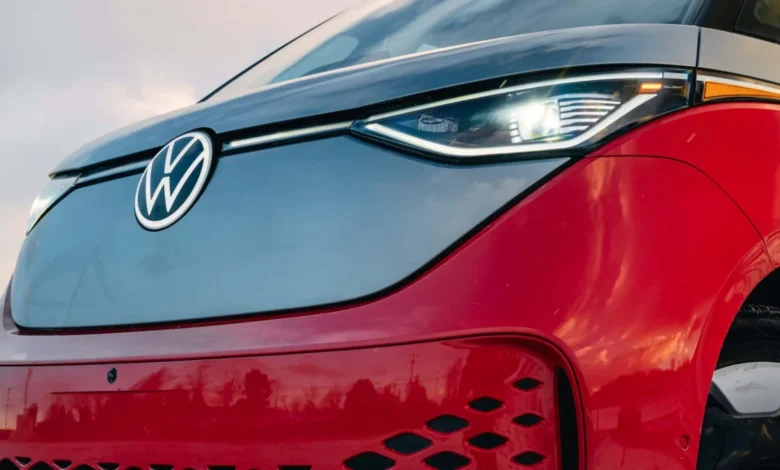
The Volkswagen ID. Buzz, a vehicle designed to marry the nostalgic charm of the legendary Type 2 Microbus with the cutting-edge technology of the electric era, has encountered a diverging path of success between the European and North American markets. While the retro-flavored electric minivan has achieved significant milestones globally, its performance in the United States has necessitated a strategic retreat and a re-evaluation of its mechanical identity. In a recent disclosure, Volkswagen executives revealed that while the company considered implementing a range-extending gasoline engine (EREV) to address consumer concerns regarding mileage, the very architecture that defines the vehicle ultimately made such a transformation impossible.
A Tale of Two Markets: Global Success vs. North American Headwinds
The global narrative for the ID. Buzz is one of remarkable growth. In 2025, Volkswagen Group reported the delivery of 60,700 units of the ID. Buzz and its commercial counterpart, the ID. Buzz Cargo. This figure represents a doubling of demand compared to the previous year, solidifying the model’s position as the eighth best-selling electric vehicle (EV) within the massive Volkswagen Group portfolio. In Europe, the vehicle has been embraced as both a lifestyle statement for families and a versatile tool for urban logistics, benefiting from a mature charging infrastructure and a historical affinity for small-to-midsized vans.
However, the transition to the United States market has proven significantly more arduous. During the same period, Volkswagen managed to move only 6,140 units across the U.S., a figure that fell well short of internal projections. This tepid reception has been attributed to a combination of factors, most notably the vehicle’s technical specifications and its premium positioning. The rear-wheel-drive variant of the ID. Buzz offers a modest EPA-estimated range of 234 miles, which many American consumers—accustomed to long-distance interstate travel—view as insufficient for a vehicle with a starting price of $61,545.
In response to these market conditions, Volkswagen took the unusual step of canceling the 2026 model year for the ID. Buzz in the United States. The company plans to spend the coming months clearing out existing 2025 inventory before reintroducing the nameplate for the 2027 model year. Volkswagen leadership characterized this as a "strategic decision" based on a "careful assessment of current EV market conditions," citing generally weak EV adoption rates in the U.S. rather than specific shortcomings of the vehicle itself.
The Engineering Paradox: Why a Range Extender Remained Off the Table
The struggle for sales in North America prompted internal discussions within Volkswagen Commercial Vehicles about how to broaden the ID. Buzz’s appeal. One potential solution was the development of an Extended-Range Electric Vehicle (EREV) powertrain. Unlike a traditional plug-in hybrid, an EREV uses a small internal combustion engine solely as a generator to charge the battery while the vehicle is in motion, thereby eliminating "range anxiety" without requiring a massive, heavy battery pack.
Stefan Mecha, the head of Volkswagen Commercial Vehicles, confirmed in an interview with the Australian publication GoAuto that the company had indeed explored the possibility of an EREV powertrain for the ID. Buzz. However, the proposal was ultimately vetoed due to insurmountable packaging constraints inherent to the vehicle’s design.
The ID. Buzz is built upon the MEB (Modularer E-Antriebs-Baukasten) platform, a dedicated architecture developed exclusively for battery-electric vehicles. A hallmark of the ID. Buzz’s design is its extremely short front overhang—a visual homage to the original "forward control" Microbus. This design choice, while aesthetically pleasing and space-efficient for passengers, leaves virtually no room for a combustion engine, cooling systems, or an exhaust apparatus.
Furthermore, the MEB platform was never engineered to accommodate the vibration, heat, and structural requirements of an internal combustion engine. With more than 20 models currently utilizing this architecture—including the ID.3, ID.7, and even Ford’s European-market Explorer and Capri—the cost of re-engineering the platform for a single model’s range-extending variant was deemed economically unviable.
Understanding the EREV Solution in the Global Context
While the ID. Buzz will remain a pure battery-electric vehicle, Volkswagen is not ignoring the potential of range-extender technology. The company’s strategy varies significantly by region, influenced by local consumer preferences and regulatory environments.

In China, where EREVs have seen a massive surge in popularity due to the vast distances between cities and varying levels of charging reliability, Volkswagen has already pivoted. The company recently launched the ID. Era 9X, a large six-seat SUV co-developed with SAIC. This model utilizes a 1.5-liter gasoline engine that functions strictly as a generator. This allows the vehicle to offer the smooth driving characteristics of an EV while providing a total range that exceeds 600 miles, catering specifically to the needs of the Chinese market.
Similarly, in the United States, Volkswagen’s newly revived Scout brand will embrace EREV technology. When the Scout Traveler SUV and Terra pickup truck enter production in 2027, they will be offered with range-extending options. This move is seen as a direct response to the unique demands of the American truck and SUV buyer, who often requires the ability to tow or travel into remote areas where high-speed charging is non-existent.
The Future of the Modular Electric Drive Matrix and the SSP Evolution
The limitations of the current MEB platform are a primary reason why the Volkswagen Group is accelerating the development of its next-generation architecture: the SSP (Scalable Systems Platform). While MEB was a pioneer in modular EV design, its inability to pivot back to combustion-based generators has highlighted a lack of flexibility in a fluctuating global market.
The SSP platform is being designed from the ground up to be more versatile. Reports indicate that the SSP will be capable of accommodating combustion engines that function solely as generators, effectively making EREV capability a "native" feature of the architecture. This platform is expected to debut around 2028, likely starting with an Audi product before trickling down to Porsche, Volkswagen, and Skoda models. By 2030, the SSP is intended to replace almost all of the group’s current electric and combustion platforms, creating a unified backbone that can adapt to the EV adoption rates of different global regions.
What to Expect from the 2027 ID. Buzz Refresh
As Volkswagen prepares for the ID. Buzz’s return to the U.S. market in 2027, the focus is shifting toward refinement and value. The one-year hiatus is intended to give the market time to stabilize and for Volkswagen to implement several updates based on early customer feedback.
The 2027 model year is expected to feature:
- Ergonomic Improvements: Volkswagen is moving away from the controversial touch-capacitive sliders on the steering wheel, replacing them with conventional physical buttons for more tactile and reliable operation.
- Aesthetic Options: New exterior colors and wheel designs will be introduced to keep the retro-styling fresh.
- The "Tourer" Package: To lean into the "van life" culture that the ID. Buzz was designed for, VW will offer a Tourer version. This package includes a fold-out mattress and platform, window blinds, ventilation panels for the front windows, and an integrated exterior table and chairs, making it a turnkey solution for weekend camping.
- Charging Infrastructure Transition: While the 2027 model will still utilize a North American Charging System (NACS) adapter rather than a native Tesla-style port, Volkswagen is working to ensure seamless integration with the Supercharger network to mitigate range concerns through better accessibility.
Conclusion: Navigating the Complexities of the American EV Transition
The story of the ID. Buzz and its rejected range extender serves as a microcosm of the larger challenges facing the global automotive industry. It highlights the tension between dedicated EV design and the practical realities of a consumer base that is not yet fully ready to abandon the security of gasoline.
For Volkswagen, the ID. Buzz remains a halo product—a vehicle meant to generate "buzz" and emotional connection to the brand. While the lack of an EREV option may limit its appeal to a specific niche of urban and suburban early adopters in the U.S., the company is betting that a combination of refined features, better software, and a more mature charging network will eventually allow the electric minivan to find its footing.
As the industry moves toward more flexible architectures like the SSP, the lessons learned from the ID. Buzz’s first foray into America will undoubtedly shape how the next generation of Volkswagens are engineered. For now, the ID. Buzz stands as a bold, if technically constrained, attempt to bridge the gap between a celebrated past and an electric future.