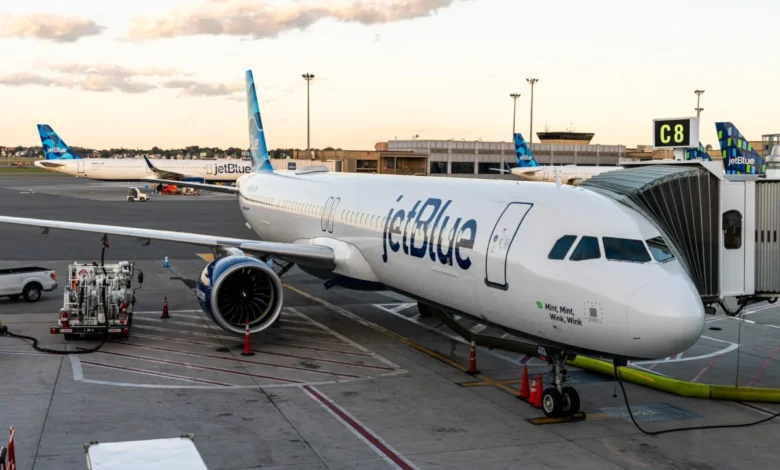
The shifting landscape of domestic aviation in the United States has entered a new phase of intense regional competition, anchored heavily in the sunbelt markets that continue to see unprecedented demographic and economic growth. JetBlue Airways has officially announced a major expansion of its operational footprint at Fort Lauderdale-Hollywood International Airport (FLL), introducing a robust slate of new nonstop routes alongside enhanced customer experience initiatives designed to cement the carrier’s status as a dominant airline in South Florida. This strategic maneuver underscores JetBlue’s ongoing network optimization efforts, which prioritize high-demand leisure and corporate travel corridors while reinforcing Fort Lauderdale as one of the airline’s premier focus cities alongside New York, Boston, and Los Angeles.
The announcement comes at a time when major U.S. carriers are aggressively vying for market share across the Sunshine State. With tourism numbers rebounding strongly and local populations swelling, airlines are reallocating capacity away from underperforming secondary markets to concentrate heavily on high-yield coastal hubs. Fort Lauderdale-Hollywood International Airport serves as a vital gateway for passengers traveling between the United States, the Caribbean, and Latin America, making it a critical asset for JetBlue’s long-term commercial strategy.
Main Facts of the Expansion
The newly unveiled schedule introduces several key nonstop routes connecting FLL to underserved or high-demand destinations across the United States and the wider region. While exact frequencies vary by season, the schedule additions are engineered to capture both outbound vacation traffic from South Florida and inbound tourism from key feeder markets in the Northeast and Midwest.
In addition to route additions, the expansion involves a comprehensive look at gate utilization, turnaround efficiency, and ground operations. JetBlue’s leadership has emphasized that the growth at FLL is not merely about adding flights, but about ensuring the operational reliability that passengers have increasingly demanded in the wake of post-pandemic scheduling turbulence. By optimizing aircraft scheduling and crew positioning at the Fort Lauderdale base, the airline aims to minimize cascading delays and improve on-time performance metrics across its entire network.
Furthermore, the expansion leverages JetBlue’s distinct product differentiators, including its renowned Mint premium service on select transcontinental and premium leisure routes, free high-speed broadband Wi-Fi, and live television offerings at every seat. These amenities have historically helped the airline carve out a loyal customer base, even in highly contested markets dominated by legacy carriers and ultra-low-cost competitors.
Chronology and Background Context
The roots of JetBlue’s modern South Florida strategy extend back more than two decades. Ever since the carrier established Fort Lauderdale as a major focus city in the early 2000s, FLL has functioned as a cornerstone of its domestic and international network. However, the path to this latest expansion has been shaped by a series of significant industry disruptions, regulatory hurdles, and corporate restructuring initiatives over the past several years.
The Post-Pandemic Pivot
Following the severe disruptions of the COVID-19 pandemic, JetBlue experienced a rapid surge in leisure travel demand, particularly to Florida destinations. During 2021 and 2022, the airline capitalized on this boom by rapidly increasing capacity across the state. However, persistent industry-wide pilot shortages, air traffic control staffing constraints, and supply chain bottlenecks soon forced a strategic recalibration.
By 2023 and 2024, JetBlue’s leadership—under both former CEO Robin Hayes and current executive leadership—began shifting away from pure capacity growth toward network rationalization. The aborted Northeast Alliance (NEA) with American Airlines and the subsequently blocked acquisition of Spirit Airlines forced JetBlue to look inward and refocus on organic growth within its core profitable strongholds.
The Path to 2026
Throughout 2025, JetBlue steadily laid the groundwork for a renewed focus on its strongest operational bases. The airline divested certain unprofitable routes, streamlined its fleet by accelerating the retirement of older aircraft types, and concentrated capital expenditures on high-performing hubs. By late 2025 and into 2026, financial stabilization measures began bearing fruit, allowing the airline to greenlight targeted expansions. Fort Lauderdale emerged as an ideal candidate for renewed investment due to its strong local origination traffic, robust connecting opportunities to Latin America, and favorable airport infrastructure agreements.
Supporting Data and Market Dynamics
To understand the economic rationale behind JetBlue’s FLL expansion, one must examine the broader metrics governing South Florida aviation. Fort Lauderdale-Hollywood International Airport handles tens of millions of passengers annually, consistently ranking among the top fifty busiest airports in the world.

Market data compiled by aviation analytics firms indicates that passenger throughput at FLL has not only recovered to pre-2020 levels but has surpassed them, driven by permanent migration trends favoring Florida.
- Capacity Share: JetBlue traditionally holds one of the largest market shares at FLL, frequently trading the top spot with Southwest Airlines. This latest expansion solidifies its competitive moat against low-cost rivals such as Spirit and Frontier, as well as legacy network carriers like Delta Air Lines and United Airlines.
- Yield and Demand: Corporate and premium leisure demand out of South Florida has shown remarkable resilience. Yields—a measure of average fare paid per mile per passenger—have remained relatively strong compared to more saturated business markets like Chicago or New York.
- Fleet Integration: The deployment of JetBlue’s modern Airbus A320neo and Airbus A321neo aircraft on these expanded routes provides significant fuel burn efficiencies and extended range capabilities. These aircraft reduce operating costs per available seat mile (CASM), enabling the airline to maintain competitive pricing while protecting profit margins against fluctuating jet fuel prices.
Official Responses and Stakeholder Reactions
Corporate leadership, airport authorities, and local tourism officials have welcomed the announcement, highlighting the mutual benefits of increased air connectivity for the regional economy.
JetBlue’s commercial planning executives noted during the initial briefing that Fort Lauderdale remains a vital engine for the carrier’s network profitability. Representatives stated that the airline is fully committed to providing South Florida travelers with competitive fares, superior onboard products, and reliable operational performance. The leadership team emphasized that listening to customer feedback was paramount in selecting the new route profiles, ensuring high load factors right out of the gate.
Locally, the Broward County Aviation Department, which operates Fort Lauderdale-Hollywood International Airport, expressed enthusiasm for the expanded partnership. Airport officials pointed out that increased service by a major carrier like JetBlue translates directly into job creation, enhanced local tax revenues, and greater global connectivity for residents of Broward County and the broader Miami-Fort Lauderdale metropolitan statistical area.
Tourism promotion boards, including Visit Lauderdale, also lauded the news. Industry analysts observe that reliable, high-frequency airline service is the lifeblood of South Florida’s hospitality sector, supporting thousands of jobs in hotels, restaurants, ground transportation, and entertainment venues.
Broader Impact and Implications for the Aviation Industry
The strategic expansion by JetBlue at FLL carries several broader implications for the U.S. domestic airline industry:
Intensified Regional Competition
The South Florida aviation market is notoriously cutthroat. With Spirit Airlines restructuring its operations, ultra-low-cost carriers shifting tactics, and legacy airlines aggressively deploying larger aircraft on Florida routes, JetBlue’s expansion signals a clear intent to defend its turf. By offering a hybrid model—combining low fares with high-end amenities like free Wi-Fi and seatback entertainment—JetBlue aims to capture both price-sensitive vacationers and travelers willing to pay a modest premium for comfort.
Infrastructure and Operational Realities
As passenger volumes continue to climb across U.S. airports, expansions of this scale place a spotlight on ground infrastructure. Fort Lauderdale-Hollywood International Airport has invested heavily in runway capacity, terminal modernizations, and baggage handling systems over the past decade. JetBlue’s ability to execute this schedule successfully will depend heavily on seamless coordination with airport operators and the Federal Aviation Administration (FAA) to manage airspace congestion efficiently.
Financial Health and Investor Sentiment
For financial markets and airline investors, this move represents a calculated step toward profitability. Wall Street has closely monitored JetBlue’s turnaround plan, demanding strict discipline regarding capital allocation and capacity growth. By doubling down on proven focus cities like Fort Lauderdale rather than speculative new markets, JetBlue management is signaling a pragmatic, risk-mitigated approach to network development.
As the new routes officially take effect and the expanded schedule ramps up through the busy winter and spring travel seasons, aviation analysts will closely track passenger load factors, yield performance, and on-time ratings. For consumers in South Florida, the immediate takeaway is clear: increased competition, a broader selection of nonstop destinations, and heightened service options are set to define the travel landscape at Fort Lauderdale-Hollywood International Airport for the foreseeable future.