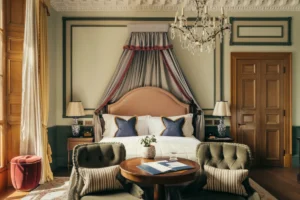
The coastal California real estate market has seen a resurgence of high-profile listings, but few carry the aesthetic imprint of an Academy Award-winning icon quite like the latest property to hit the shores of Laguna Beach. A four-bedroom, beachfront residence, which serves as the final design project completed by Diane Keaton, has officially entered the market with an asking price of $10.3 million. The property represents the culmination of a multi-year creative endeavor by the actor, whose passion for real estate development and historical preservation has become a well-documented aspect of her career alongside her legendary filmography.
A Chronology of a High-Stakes Renovation
The provenance of this 1976-built structure offers a compelling look at the volatile nature of luxury real estate investment. Diane Keaton, known for her meticulous eye and preference for monochromatic palettes, acquired the property in 2021 for $6.6 million. At the time, the purchase was viewed as a strategic acquisition, allowing the actor to apply her signature "quirky-chic" design philosophy to a prime piece of Southern California beachfront real estate.
Following a comprehensive renovation that saw the home undergo significant aesthetic shifts to align with her vision, Keaton listed and sold the property in 2022 for $7.9 million. While the transaction represented a respectable profit, the current $10.3 million valuation indicates a significant appreciation in the luxury coastal sector over the past two years. The current sellers, identified as an Arizona-based couple associated with the aviation parts industry, have opted to preserve the majority of Keaton’s design choices, effectively marketing the home as a "Keaton-designed" residence—a branding strategy that has historically added a premium to home valuations in the Los Angeles and Orange County markets.
Architectural Aesthetic and Design Philosophy
The residence, spanning approximately 2,700 square feet, serves as a masterclass in the design language that Keaton has cultivated over decades of home flipping. The aesthetic is defined by a rigid adherence to a black-and-white color scheme, a signature style that has become synonymous with the actor’s personal brand.
The exterior of the home features white shaker siding, contrasted sharply by a flat roof adorned with bold, black-shingle extensions. This visual dichotomy is carried into the interior, where exposed black brick walls create a striking tension against the soft, white wood-paneled cathedral ceilings. The open-concept living space is anchored by a central brick fireplace, serving as the focal point of the home. Floor-to-ceiling glass doors provide an seamless transition to the oceanfront decks, prioritizing the indoor-outdoor lifestyle that is essential to the Laguna Beach market.

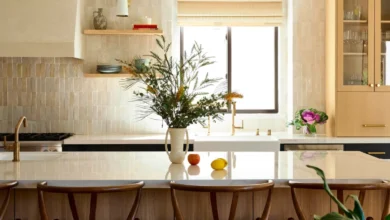
The kitchen, often the centerpiece of a Keaton design, features a marble island and is outfitted with cabinetry that reflects her affinity for high-contrast minimalism. The lower level of the home expands the living area to include a dedicated bar and entertainment space, while the upper-level primary suite is designed as a sanctuary, offering panoramic views of the Pacific Ocean, a private fireplace, and an ensuite bathroom equipped with a double vanity and a walk-in shower. A unique architectural detail includes a wooden staircase at the rear of the house that provides direct, private access to the sand, underscoring the property’s status as a true beachfront dwelling.
The Broader Impact of Celebrity Design
The listing of the Laguna Beach residence follows a trend of high-profile properties associated with Keaton returning to the market. Last month, a custom-designed farmhouse in Los Angeles, which had been previously owned and meticulously curated by the actor, successfully sold for $18 million. That transaction followed a series of price adjustments, reflecting the current complexities of the high-end luxury market where even "celebrity-designed" homes are subject to the broader economic forces of interest rates and buyer sentiment.
Industry analysts suggest that when a celebrity of Keaton’s stature puts their name on a renovation, it functions as a form of "lifestyle branding." For potential buyers, the value is not merely in the square footage or the location, but in the curation of a specific aesthetic experience. Keaton’s design work has been widely documented in architectural publications, creating a legacy of homes that are recognizable not just for their floor plans, but for their artistic composition.
Market Context and Real Estate Trends
The Laguna Beach market remains one of the most competitive in the United States, characterized by limited inventory and high demand for direct ocean access. The $10.3 million price point is indicative of the current barrier to entry for prime coastal real estate in Orange County.
According to data from local luxury brokerage reports, properties with unique architectural pedigrees—specifically those designed by high-profile individuals—tend to stay on the market for shorter periods than standard luxury inventory, provided the pricing aligns with market comparables. While the $10.3 million asking price is a significant markup from the $7.9 million sale in 2022, the lack of comparable beachfront inventory in the immediate area may support the valuation.
David Koffs and Brooke Wainwright of Luxre Realty have been tapped to represent the listing. Their involvement signals an emphasis on reaching high-net-worth individuals who value both the history of the property and the specific aesthetic contribution of the former owner.

Analysis of the "Keaton Effect"
The shift from the actor’s initial purchase to the current listing price offers a brief case study in the appreciation of renovated coastal assets. Keaton’s influence on the home’s value is twofold: first, the physical improvements made to the 1976 structure effectively modernized the home to meet contemporary standards of luxury, including structural upgrades and high-end finishes. Second, the "Keaton" provenance acts as a intangible asset, appealing to buyers who value the actor’s public persona and her well-known interest in historical and architectural preservation.
However, the fact that the property is once again hitting the market just two years after the last sale highlights the transient nature of luxury home ownership. It suggests that while the home holds significant appeal, the buyer demographic for such a specific, high-contrast design remains niche. The success of this listing will depend on the market’s appetite for homes that prioritize stylistic uniformity over the more traditional, neutral aesthetics often sought by developers.
Looking Ahead
As the real estate market continues to evolve, the legacy of Keaton’s design projects serves as a testament to the intersection of Hollywood and architecture. While she has largely stepped back from active real estate flipping, the influence of her aesthetic—characterized by the interplay of brick, wood, and a stark black-and-white palette—remains a recognizable force in Southern California design.
The sale of this Laguna Beach residence will be closely watched by observers of both the real estate industry and the celebrity lifestyle market. It serves as a benchmark for how much value a "brand-name" design can add to a property that is already bolstered by its prime location. For now, the property stands as a final, physical manifestation of Keaton’s design philosophy, waiting to see if a new owner will continue to preserve the vision she painstakingly installed, or if the home will undergo yet another transformation in the years to come.