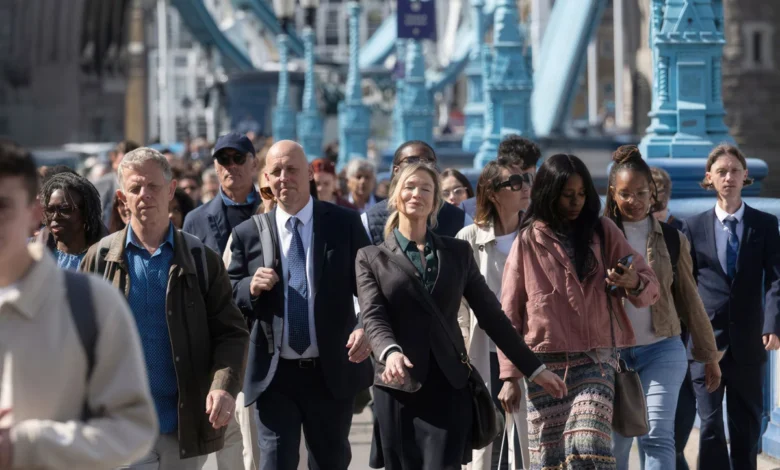
Bridget Jones is a figure as deeply woven into the fabric of modern British identity as the red double-decker buses that traverse the Thames or the historic chimes of Big Ben. Since her debut on the silver screen in 2001, the bumbling, cigarette-smoking, and perpetually relatable protagonist has served as a cultural ambassador for a specific version of London life—one defined by chaotic mishaps, career anxieties, and the enduring quest for romantic fulfillment. The franchise, based on the novels by Helen Fielding, has not only garnered critical and commercial success but has also transformed the city of London into a pilgrimage site for fans seeking to trace the footsteps of the world’s most famous "singleton." With the release of the latest installment, Bridget Jones: Mad About the Boy, the cinematic geography of the series has expanded, reflecting the character’s evolution from a twenty-something publicist to a mother navigating the complexities of modern life in the capital.
The Cinematic Legacy of Bridget Jones
The Bridget Jones film franchise consists of four major motion pictures: Bridget Jones’s Diary (2001), Bridget Jones: The Edge of Reason (2004), Bridget Jones’s Baby (2016), and Bridget Jones: Mad About the Boy (2025). Over the course of nearly a quarter-century, the films have collectively grossed over $750 million at the global box office, proving the universal appeal of Fielding’s creation. Central to this success is the performance of Renée Zellweger, who transformed herself into the quintessentially British heroine, alongside a revolving cast of romantic interests played by Hugh Grant, Colin Firth, Patrick Dempsey, and most recently, Leo Woodall.
The films are credited with popularizing the "chick-lit" adaptation genre and for showcasing London as a romantic, albeit rain-soaked, backdrop. Unlike the polished, high-society London often depicted in period dramas, the Bridget Jones series offers a more lived-in, accessible version of the city, moving from the bustling food markets of the South Bank to the leafy suburbs of the north.

A Chronology of the Franchise and its Geographic Shift
The timeline of the films tracks the socio-economic and personal growth of the titular character, which is mirrored in the choice of filming locations.
- 2001 – The Borough Market Era: In the original film, Bridget resides in a modest (by movie standards) flat above a pub in Borough Market. This period is defined by her career at a publishing house and her tumultuous relationship with Daniel Cleaver.
- 2004 – Expansion and International Flavour: While still anchored in London, The Edge of Reason saw the character travel to Thailand, though the emotional core of the film remained in the capital’s public parks and legal districts.
- 2016 – The Modern Professional: Bridget Jones’s Baby introduced a more mature Bridget, now a successful television news producer. The filming locations shifted toward more corporate and institutional settings, including modern hospitals and high-end event spaces.
- 2025 – The North London Transition: In Mad About the Boy, the narrative shifts significantly to Hampstead and Richmond. This move represents a transition into a different social stratum, characterized by family life and the "village feel" of London’s more affluent residential neighborhoods.
Borough Market: The Heart of the Original Narrative
For many fans, the quintessential Bridget Jones location is her apartment in Borough Market. Situated at 8 Bedale Street, the flat is located directly above The Globe pub. In the early 2000s, Borough Market was already a historic site, with roots dating back at least 1,000 years, but the film’s success contributed to its status as a premier tourist destination.
Real estate data suggests that a flat in this area, which Bridget ostensibly afforded on a modest assistant’s salary in 2001, would today be a multimillion-pound asset. The market itself remains a bustling hub for artisanal food, famous for stalls such as Bread Ahead and The Ginger Pig. The cinematic use of Borough Market captured a specific moment in London’s gentrification, bridging the gap between its industrial past and its future as a culinary mecca.
Hampstead Heath: A New Chapter in Mad About the Boy
The latest film, Mad About the Boy, marks a departure from the gritty charm of Southwark toward the elevated greenery of Hampstead. Director Michael Morris emphasized that Hampstead was chosen to reflect a sense of community and stability. "Hampstead is an important part of the movie: it has such a village, community feel," Morris stated during the film’s promotional cycle.

Hampstead Heath, spanning 790 acres, provides a dramatic natural backdrop for the character’s new life. The area is historically associated with intellectuals and artists, a fitting setting for a character who has matured into a different phase of adulthood. The production also utilized the white stucco architecture of South Kensington, specifically near the Victoria and Albert Museum, to establish a sense of traditional London elegance.
Notting Hill and the Cultural Continuity of the Rom-Com
Notting Hill has long been the spiritual home of the British romantic comedy, thanks in large part to the 1999 film of the same name. In Mad About the Boy, the franchise pays homage to this tradition by featuring the Electric Cinema on Portobello Road. Bridget’s date with Roxster McDuff (Leo Woodall) at this venue highlights one of the UK’s oldest working theaters.
Opened in 1910, the Electric Cinema is a Grade II listed building that has survived two world wars and the decline of the traditional cinema industry. Its inclusion in the film serves as a reminder of London’s architectural heritage and the enduring nature of its cultural institutions.
Hyde Park and the Italian Gardens: Scenes of Rivalry
One of the most memorable sequences in the franchise’s history is the fight between Mark Darcy (Colin Firth) and Daniel Cleaver (Hugh Grant) in The Edge of Reason. The ungainly brawl took place in the Italian Gardens at the northern edge of Hyde Park.

The gardens, commissioned by Prince Albert in the 1860s, feature elaborate fountains and Carrara marble statuary. The choice to have two high-status British men engage in a clumsy fistfight in such a refined setting provided the "cringe comedy" that is a hallmark of the series. This location remains a popular spot for tourists, who often recreate the scene near the Tazza Fountain.
Shoreditch and the Late-Night Culture
As the character of Bridget Jones evolved, so did the city around her. In The Edge of Reason, the production moved into Shoreditch, an area that was then at the forefront of London’s creative and nightlife boom. The Light Bar on Shoreditch High Street served as the backdrop for Bridget’s gatherings with her friends.
Shoreditch’s transformation from a neglected industrial district to a global tech and nightlife hub mirrors the franchise’s own journey through the shifting trends of the 21st century. The use of the Light Bar—a three-story Victorian power station converted into a social space—highlighted the "cool London" aesthetic of the mid-2000s.
Institutional London: Bloomsbury and Richmond
The films have also frequently utilized London’s institutional landmarks. In Bridget Jones’s Baby, University College Hospital (UCH) in Bloomsbury serves as a key location. This area, known for its association with the Bloomsbury Set and the University of London, provides a more sober, intellectual atmosphere. The hospital scenes, featuring Emma Thompson as Dr. Rawlings, ground the film’s comedic elements in the reality of the British National Health Service (NHS).

In contrast, the leafy suburb of Richmond provides the setting for some of the more picturesque moments in Mad About the Boy. Petersham House, a private residence in Richmond, was used for a pivotal scene involving a swimming pool. Director Michael Morris noted the difficulty of the shoot, which required multiple takes and underwater cameras, but praised the "impeccable" beauty of the location. Richmond’s proximity to the River Thames and its abundance of royal parks make it one of the most sought-after residential areas in the city.
Economic and Cultural Impact of Screen Tourism
The "Bridget Jones Effect" is a recognized phenomenon in the UK tourism industry. According to data from the British Film Institute (BFI), screen tourism accounts for a significant portion of international visitor spending. Films like Bridget Jones act as long-form advertisements for the city, showcasing its landmarks and lifestyle to a global audience.
Furthermore, the franchise has had a tangible impact on the businesses featured in the films. The Globe pub in Borough Market and the various cafes in Notting Hill continue to see high footfall from fans of the series. This synergy between the film industry and local commerce underscores the importance of location scouting in modern filmmaking.
Analysis of Implications and Broader Context
The shift in locations throughout the Bridget Jones series reflects a broader narrative about social mobility and the changing face of London. In the first film, Bridget represented the "everywoman" struggling to make ends meet in a central London that was still somewhat affordable for the middle class. By the final film, her move to Hampstead and Richmond suggests a character who has achieved a level of success and stability that is increasingly out of reach for the younger generation of Londoners.

Factual analysis of the production choices reveals a conscious effort by filmmakers to balance the "old" London of cobblestones and pubs with the "new" London of glass skyscrapers and gentrified neighborhoods. By doing so, the franchise has managed to remain relevant for over two decades, providing a cinematic map of a city in constant flux.
In conclusion, the Bridget Jones films are more than just romantic comedies; they are a historical record of London’s urban evolution in the 21st century. From the stalls of Borough Market to the heights of Hampstead Heath, the locations chosen for these films have become iconic symbols of the character’s journey, ensuring that Bridget Jones’s London remains a destination of choice for audiences worldwide.
Related posts: