The Overlook Film Festival: A Deep Dive into the Year’s Most Terrifying Cinematic Offerings

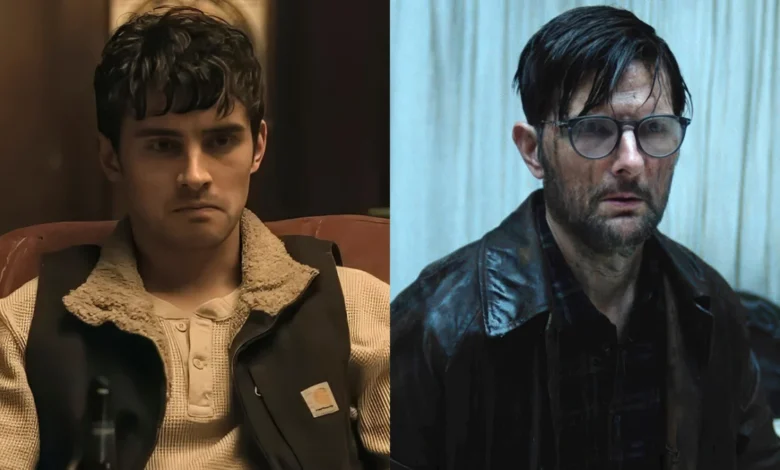
New Orleans, a city steeped in history and legend, once again played host to the Overlook Film Festival, a celebrated annual event dedicated to the art and experience of horror cinema. From May 2nd to May 5th, 2024, the historic French Quarter transformed into a sanctuary for genre enthusiasts, showcasing a diverse slate of feature films, short films, immersive live experiences, and insightful panel discussions. This year’s festival continued its tradition of presenting a potent mix of established studio productions, exclusive Shudder releases, and intriguing independent features awaiting distribution, solidifying its reputation as a vital hub for both emerging and seasoned voices in horror. The following is an in-depth look at some of the standout films that captivated and unsettled audiences during the 2024 iteration of the festival.
Affection: A Psychological Thriller of Identity and Manipulation
BT Meza’s directorial debut, Affection, emerged as a significant highlight, offering a disquieting exploration of memory, identity, and insidious control. The film centers on Ellie Carter, portrayed with compelling intensity by horror favorite Jessica Rothe, who awakens in unfamiliar surroundings, grappling with a stolen identity and a life she doesn’t recall. Assured by her supposed husband, Bruce (Joseph Cross), that her disorientation stems from a traumatic brain injury, Ellie begins to suspect a more deliberate and sinister truth lurks beneath the surface.
Meza skillfully crafts a narrative reminiscent of M. Night Shyamalan’s thematic preoccupations with belief and pastoral settings, yet injects a potent dose of visceral horror. The film’s strength lies in its intimate focus on a small cast, fostering a palpable sense of connection that is expertly strained as the narrative unfolds. Rothe, renowned for her physical prowess in the Happy Death Day franchise, delivers a performance that transcends mere terror, showcasing the profound psychological and physical toll of her character’s ordeal. With its inventive effects, unsettling body horror elements, and a narrative that keeps audiences guessing, Affection marks a promising and chilling introduction for Meza. The film is slated for a limited theatrical release on May 8th, offering a wider audience a chance to experience its disquieting narrative.
American Dollhouse: Deconstructing the Perils of Nostalgia and Family Rituals
John Valley’s American Dollhouse offers a darkly twisted take on Christmas horror, subverting the comforting tropes of holiday tradition. The film introduces Sarah (Hailey Lauren), a woman haunted by her past who seeks a fresh start in her inherited childhood home. Despite her brother Michael’s (Tinus Seaux) reservations about the dilapidated property and Sarah’s perceived immaturity, she hopes the move will provide catharsis. However, her neighbor, Sandy (Kelsey Pribilski), a peculiar adult woman who emulates childlike behavior, becomes an increasingly unnerving presence, fixated on Sarah adhering to her mother’s Christmas traditions.
What begins as an unsettling clash over holiday decorations escalates into a terrifying confrontation. Sandy’s own traumatic past fuels her unhinged insistence on conformity, creating a suffocating atmosphere of psychological dread. Valley, who described American Dollhouse as a "proto-slasher," uses the film to dissect the idealized image of the American family, exposing the rot beneath its veneer of rituals and values. The film’s narrative pits Sarah’s desire to escape her past against Sandy’s desperate attempt to preserve a distorted version of it, culminating in a brutal and frightening examination of what it truly means to be home for the holidays.
Boorman and the Devil: A Definitive Look at a Cult Classic’s Tumultuous Creation
David Kittredge’s documentary Boorman and the Devil delves into the complex and often maligned production of John Boorman’s Exorcist II: The Heretic (1977). Frequently cited as one of the era’s most significant cinematic failures, the film’s critical and financial downfall is a well-documented chapter in New Hollywood history. Yet, Kittredge’s film argues compellingly that regardless of one’s opinion on The Heretic itself, the sheer ambition, skill, and dedication poured into its creation are undeniable.
Featuring insightful interviews with director John Boorman, cast members Louise Fletcher and Linda Blair, key crew members, and esteemed film critics, Boorman and the Devil provides a comprehensive account of the film’s storied production, its disastrous reception, and its place within the broader cinematic landscape. The documentary masterfully blends humor and heartbreak, offering a poignant glimpse into the pressures faced by filmmakers and actors navigating studio demands, creative aspirations, audience expectations, and personal goals. Kittredge posits that a film that takes a monumental swing, even if it doesn’t land perfectly, is often more instructive and inspiring than a conventionally successful but uninspired work. The documentary serves as a powerful testament to the value of artistic boldness and the messy, often unpredictable, process of creating art, encouraging filmmakers to prioritize inventiveness and passionate storytelling over the pursuit of a flawless final product.
Buddy: A Nightmarish Subversion of Childhood Nostalgia
Casper Kelly, the visionary behind the viral sensation Too Many Cooks, delivers a potential new horror-comedy icon with Buddy. The film initially presents itself as It’s Buddy!, a wholesome 1990s children’s television program hosted by Buddy, a large, anthropomorphic unicorn voiced by Keegan-Michael Key. The show’s premise revolves around teaching children lessons in kindness and responsibility. However, this saccharine facade rapidly disintegrates, revealing a dark and terrifying reality.
Buddy’s benevolent persona crumbles to expose a possessive and murderous temper, particularly when the rules of his surreal world—populated by sentient furniture, a talking mailbox, and animated flora—are broken. As the children, Freddy (Delaney Quinn), Oliver (Tristan Borders), Wade (Caleb Williams), and Hannah (Madison Polan), attempt to escape Buddy’s clutches by venturing into the woods, a parallel narrative unfolds in the real world. Grace (Cristin Milioti), experiencing a strange and inexplicable connection to the show despite its supposed lack of existence, finds her sanity questioned by her husband Ben (Topher Grace). The film masterfully blurs the lines between fiction and reality, creating a gory and anxiety-inducing experience that is as hilariously absurd as it is shockingly malicious. Kelly expertly deconstructs the comfort found in childhood nostalgia, twisting the lens through which children’s television is perceived into something deeply unsettling and profoundly disturbing.
Goody Goody: Pregnancy Horror Redefined Through the Crucible of Labor
Raymond Creamer’s feature directorial debut, Goody Goody, offers a potent and original contribution to the subgenre of pregnancy horror. Eschewing the typical focus on gestation or post-birth supernatural phenomena, the film intensely centers on the fraught and terrifying experience of childbirth itself. Inspired by a family member’s home birth and historical accounts of witchcraft, Goody Goody masterfully blends scientific realism with ancient superstition.
The narrative follows Goody (Samantha Robinson) and Jayson (Colby Hollman) as they prepare for a natural home birth in their secluded cabin. However, their midwife, Sarah (Colleen Foy), begins to sense a disturbing anomaly with the baby. Beset by a blinding snowstorm and a loss of power, Sarah and Jayson’s sister, Candace (Zoe Renee), struggle to maintain control of the situation. It soon becomes terrifyingly clear that the unfolding events are far from natural. Creamer’s film builds suspense with deliberate pacing, cultivating a potent atmosphere of dread. The assured performances and steadily escalating tension prevent the narrative from ever becoming dull, expertly balancing the supernatural unknown and visceral body horror with moments of genuine hope and empathy, creating a deeply affecting and unnerving cinematic experience. Goody Goody is scheduled for release on Shudder later this year.
Hokum: Irish Folklore Meets Psychological Terror in a Mainstream Breakthrough
In a remarkably short span of six years, Irish filmmaker Damien McCarthy has ascended from independent horror obscurity to become one of the genre’s most anticipated voices. Following his acclaimed feature debut Caveat (2020) and the critically lauded Oddity (2024), McCarthy has cemented his reputation for weaving traditional Irish folklore with unsettling, cursed objects. His latest offering, Hokum, continues this trend, standing as one of the most compelling horror films of the first half of the year.
The film stars Adam Scott as Ohm Bauman, a depressed and embittered author who travels to Ireland, the site of his deceased parents’ honeymoon, to complete his bestselling "Conquistador Trilogy." The isolated hotel where he seeks refuge offers numerous distractions, including local legends of a witch confined to the hotel’s locked Honeymoon Suite. Following a personal tragedy that preys upon Ohm’s existing guilt, he decides to remain at the hotel after its closure to investigate. Encouraged by Jerry (a scene-stealing performance by David Wilmot), a local outcast and paranormal enthusiast, Ohm breaches the sealed-off suite.
Despite Ohm’s staunch disbelief in the supernatural, dismissing it as mere "hokum," he is soon besieged by horrors that exploit his deepest fears, forcing him to confront whether he deserves the torment he endures. McCarthy crafts a disorienting and terrifying "funhouse" experience, where jump scares are masterfully deployed, ranging from playfully unnerving to outright shocking. The film draws deeply from the rich tradition of Irish oral and written folklore, emphasizing the significance of history and place while retaining an aura of ancient mystery. With a compelling character arc, haunting imagery, and memorable set pieces, Hokum is a truly bone-chilling film that marks McCarthy’s significant arrival on the mainstream horror stage. The film is set for a theatrical release on May 1st.
Obsession: A Devastating Exploration of Desire and Its Perilous Consequences
Curry Barker’s Obsession possesses an electrifying quality that raises the hairs on the back of the neck and leaves a lingering, unsettling charge. Barker, who garnered a substantial following on YouTube for his anxiety-inducing short films and comedic sketches, elevates his craft in his first theatrical feature, delivering one of the year’s most upsetting, unhinged, and shocking horror movies. As of this writing, it stands as a personal favorite, a film so impactful it demands repeat viewing.
The narrative follows Bear (Michael Johnston), a socially awkward and somewhat pathetic music store employee harboring unrequited feelings for his childhood friend and coworker, Nikki (Inde Navarette). Unable to muster the courage to confess his affections, Bear resorts to a "One Wish Willow," a novelty item from a local crystal shop, to wish that Nikki loved him above all others. Miraculously, the wish is granted, but at a devastating cost: Nikki’s personality and sanity begin to unravel. Bear’s friends, Ian (Cooper Tomlinson, a frequent Barker collaborator) and Sarah (Megan Lawless), observe the alarming transformation.
What begins as Bear’s perceived dream come true quickly devolves into a suffocating nightmare as Nikki becomes pathologically possessive. The suffocation intensifies into outright horror as it becomes chillingly apparent that the entity inhabiting Nikki’s form is no longer the person Bear loved. The specific details of Nikki’s disturbing metamorphosis are best left for the viewer to experience, but the mental and physical alterations have undoubtedly infiltrated the reviewer’s nightmares.
Despite his nascent career, Barker demonstrates a seasoned understanding of what terrifies and amuses audiences, skillfully tapping into contemporary social anxieties. His versatility as a filmmaker is evident in his precise editing, which creates an almost preternatural sense of timing for maximum emotional impact. His ability to craft dialogue that feels remarkably authentic grounds the film in a claustrophobic reality. The performances are universally strong, but Inde Navarrette’s portrayal of Nikki is nothing short of extraordinary, leaving the audience—and this critic—shaking, with tears brought on by a potent cocktail of laughter and fear. Navarrette’s uncanny ability to contort her face and modulate her voice makes her performance feel almost supernatural. This is a role that will be discussed for years to come, and Obsession is a film that demands to be seen on the big screen, experienced communally with a crowd ready to gasp, laugh, and scream. Obsession is scheduled for theatrical release on May 15th.
Saccharine: Body Horror and Societal Anxieties in the Age of Weight Loss
Natalie Erika James, known for her unsettling work on Relic and Apartment 7A, ventures into the realm of body horror with Saccharine, a film that critiques the weight loss drug industry. The film centers on Hana (Midori Francis), a med student consumed by her weight and infatuated with her gym trainer, Alanya (Madeleine Madden). Desperate for a solution, Hana turns to an experimental, unapproved weight loss pill shared by a former classmate. Unable to afford the exorbitant cost, she uses her school’s lab to reverse-engineer the ingredients, only to discover the pill is composed of human ash. Driven by her desire for Alanya’s attention and unable to control her binge eating, Hana resorts to incinerating parts of a cadaver from her medical studies to produce the pills.
Despite growing concerns from her friend Josie (Danielle Macdonald) and Alanya regarding her rapid weight loss, Hana develops a dangerous dependency. The situation escalates as she begins to see the spectral figure of the cadaver she’s been consuming. This apparition grows larger and more influential, manifesting its presence and consuming Hana from within. Thematically, Saccharine is poised to spark significant debate, presenting a myriad of uncomfortable and challenging ideas regarding body dysmorphia and body acceptance culture. Regardless of where audiences land on the film’s messaging, its visual execution is undeniable. Beautifully shot with a wealth of overlapping, visceral imagery, the film cultivates a pervasive sense of dread, delivering solid scares relevant to the contemporary "Ozempic age." Saccharine is slated for release on Shudder later this year.
Trauma, or Monsters All: A Monster Mash That Confronts Modern Societal Ills
Larry Fessenden, a seminal figure in independent horror and an inspiration to many festival attendees, concludes his ambitious monster quadrilogy with Trauma, or Monsters All. The film masterfully brings together characters from his previous works: the vampire Sam (Fessenden) from Habit (1995), the Frankenstein-esque Adam (Alex Breaux) from Depraved (2019), and the werewolf Charley (Alex Hurt) from Blackout (2023), in a creature feature decades in the making.
The narrative introduces Cassandra (Laetitia Hollard), a young biracial writer who moves to Talbot Falls to research the revolutionary scientist George Washington Carver. Her research soon draws her into the town’s local history and persistent rumors of monsters, particularly after witnessing a figure resembling Frankenstein’s monster outside her window. Compelled to investigate, Cassandra publishes an article exposing the town’s hidden past, inadvertently making herself a target for those who wish to maintain the status quo and jeopardizing the hard-won peace of Adam and Charley, who reside on the town’s outskirts.
Meanwhile, the vampire Sam arrives in Talbot Falls, drawn by the presence of the other monsters, and exacerbates the situation by turning Charley’s love interest, Sharon (Addison Timlin), into a vampire. The malevolent Polidori (Joshua Leonard) also reappears, seeking to reclaim Adam, whom he views as a valuable asset. As Cassandra finds herself ostracized in her new home and hunted by a racist faction and the very monsters she exposed, she and her love interest, Agnes (Aitana Doyle), are forced to re-evaluate their responsibilities to history and to themselves.
Trauma, or Monsters All pays homage to the classic Universal Monster films, even featuring a direct recreation of the poster art for Frankenstein Meets the Wolf Man (1943) during a pivotal battle between Adam and Charley. However, in true Fessenden fashion, the film transcends mere pastiche, offering a profound social commentary relevant to contemporary America. It challenges the very definition of a "monster," examining how race, sexuality, history, and environmental concerns shape the narratives we tell and how we tell them. The film suggests that society has become fixated on manufactured enemies while the true monsters—those in positions of power—remain largely unexamined. While acknowledging the importance of remembering history, Fessenden highlights the work of influential individuals like Carver as beacons for shaping a more positive future. The film posits that revolution can be found not only in understanding historical oppression but also in the transformative power of science and art. Trauma, both personal and national, has shaped the present, but moving forward requires releasing the past to heal and unite against the genuine threats that plague society. Fessenden’s latest work continues the thematic threads of his directorial debut, No Telling (1991), offering not definitive answers, but crucial ideas for confronting the multifaceted horrors of the modern world.