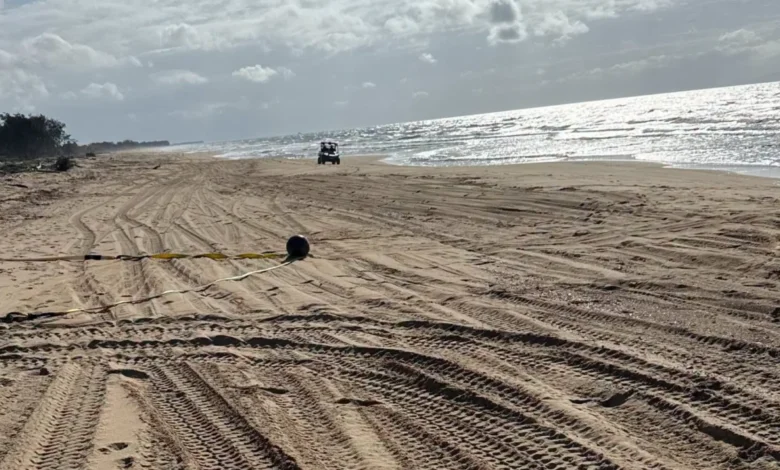
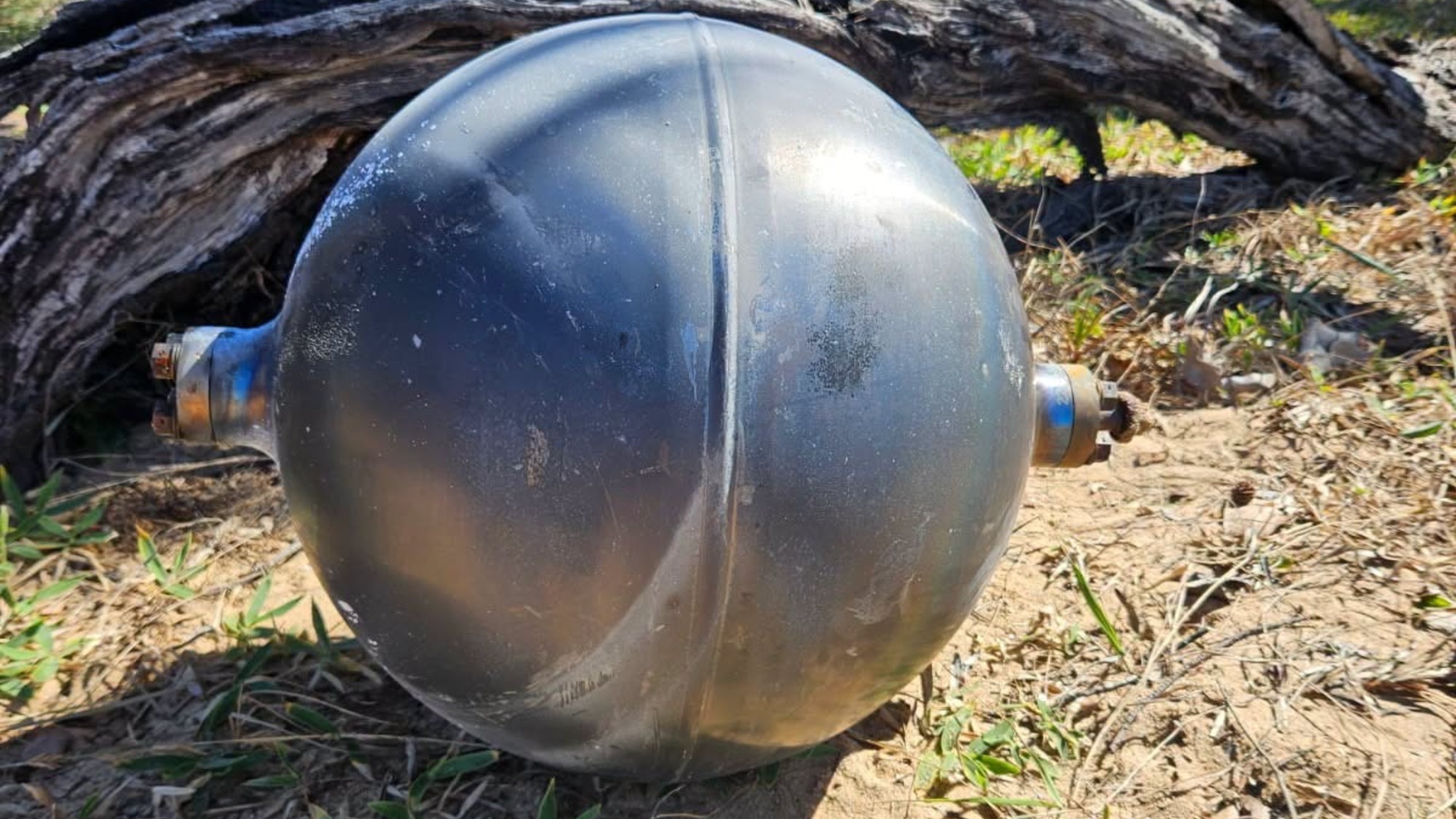
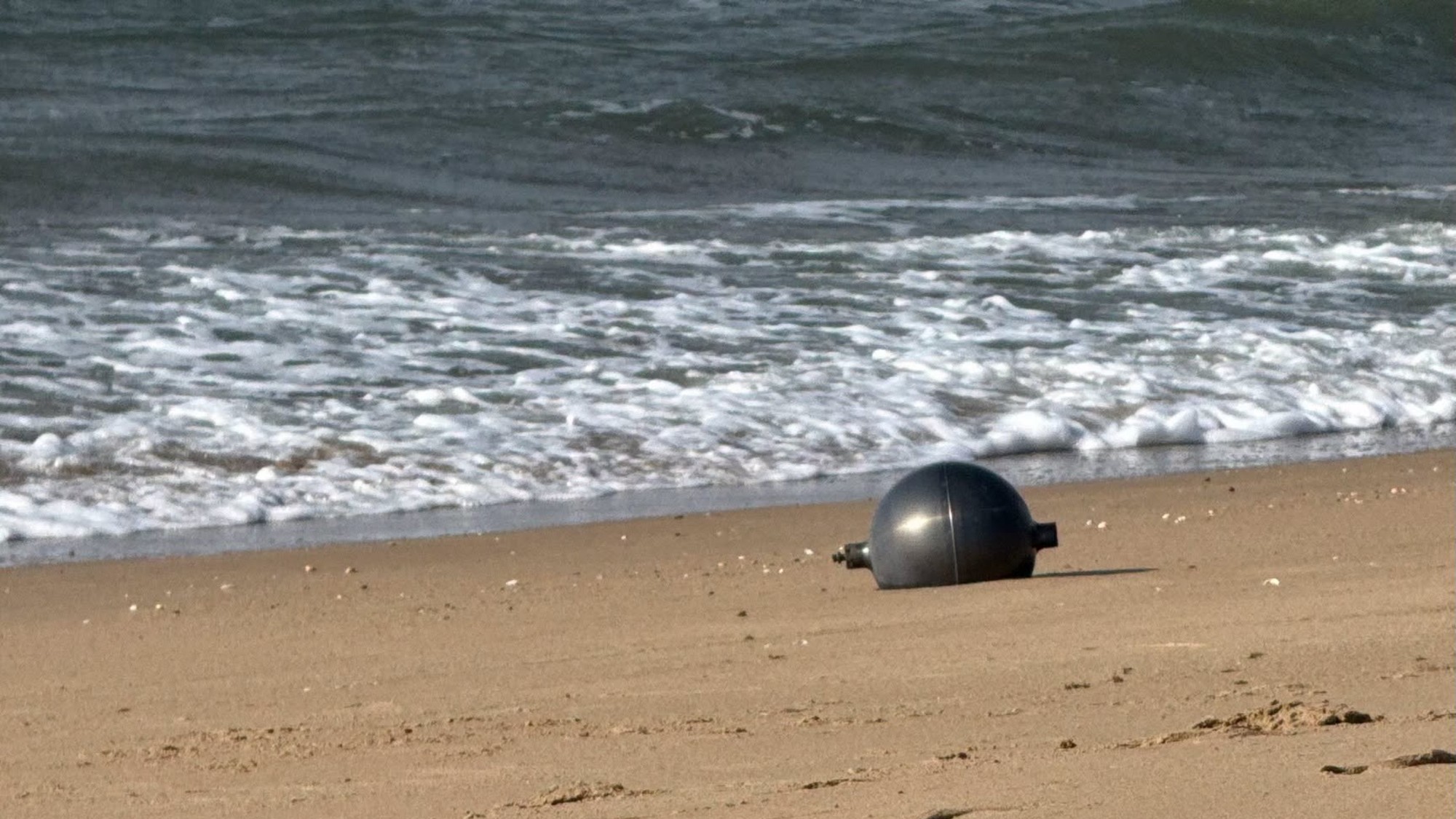
The tranquil shores of Forrest Beach in Queensland, Australia, recently became the unlikely landing site for remnants of humanity’s foray into space, igniting a fresh wave of discussions surrounding the growing issue of orbital debris. In early July 2026, local residents discovered several peculiar metallic spheres, prompting an immediate response from the Australian Space Agency and emergency services. These objects, now widely believed to be pressure vessels from a foreign rocket body, have underscored Australia’s unfortunate recurring role as a recipient of falling space junk.
The discovery unfolded in the small seaside community of Forrest Beach, located near Ingham. Queensland Fire Department crews were swiftly deployed to assist partner agencies in managing the situation. Scientific teams, prioritizing public safety, safely secured a number of the spherical objects and established a 165-foot (50-meter) exclusion zone around them. While the Australian Space Agency has stated that the objects are likely pressure vessels from a space launch vehicle, the precise nature and origin of the debris are still under active investigation.
This latest incident adds to a growing list of space debris discoveries in Australia, solidifying its reputation as a "fall guy" for orbital remnants. The nation has a historical association with space junk, dating back to the dramatic reentry of the U.S. Skylab space station in 1979, which scattered debris across Western Australia. More recently, a piece of a SpaceX Dragon trunk from the Crew-1 mission was found in New South Wales in 2022. This was followed by a pressure vessel that washed ashore in Perth in 2023, identified as originating from an Indian booster rocket, and a section of a Chinese Jielong-3 rocket that was found in the Australian Outback in October 2025.
The increasing frequency of such events has prompted the Australian Space Agency to develop clear guidelines for the public. While the specific three-step protocol has not been detailed in this report, it is understood to involve immediate reporting of discoveries, avoiding direct contact with potential debris, and allowing authorized agencies to handle the situation. The government’s obligation under international law to notify the launching authority of any recovered space debris, and potentially return it upon request, highlights the complex diplomatic and legal ramifications of these incidents.
An Unwanted Legacy: A Chronology of Space Debris in Australia
Australia’s unique geographical position, coupled with its extensive coastlines and vast, sparsely populated landmasses, makes it a frequent destination for uncontrolled reentries of orbital hardware. The timeline of significant space debris finds in Australia paints a clear picture of this ongoing challenge:
- 1979: Skylab’s Fiery Return: The remnants of the U.S. Skylab space station, a pioneering orbital laboratory, reentered Earth’s atmosphere and scattered across Western Australia. While the event generated significant public interest and some debris was collected, it highlighted the unpredictable nature of large spacecraft deorbiting.
- 2022: SpaceX Dragon Trunk: A section of a SpaceX Dragon trunk, a component of the Crew-1 mission spacecraft, was discovered on a beach in New South Wales. This marked a more recent instance of orbital hardware reaching Australian soil, underscoring the continuing presence of such material in orbit.
- 2023: Indian Booster Debris: A pressure vessel, identified as part of an Indian PSLV (Polar Satellite Launch Vehicle) rocket, washed ashore in Perth, Western Australia. The recovery of this component pointed to debris originating from international space programs.
- October 2025: Chinese Rocket Fragment: A significant section of a Chinese Jielong-3 rocket was found in the Australian Outback. The discovery of smoldering wreckage emphasized the potential hazards associated with uncontrolled atmospheric reentry.
- July 2026: Forrest Beach "Space Balls": The most recent incident involved the discovery of multiple metallic spheres on Forrest Beach, Queensland. These objects are believed to be pressure vessels from a foreign rocket, reinforcing the ongoing trend of such discoveries.
The Science Behind Survivability: Why These Spheres Endure
Marlon Sorge, executive director of the Aerospace Corporation’s Center for Orbital and Reentry Debris Studies (CORDS), offers crucial insights into why certain space debris items, like the metallic spheres found in Australia, are capable of surviving their perilous journey through Earth’s atmosphere.
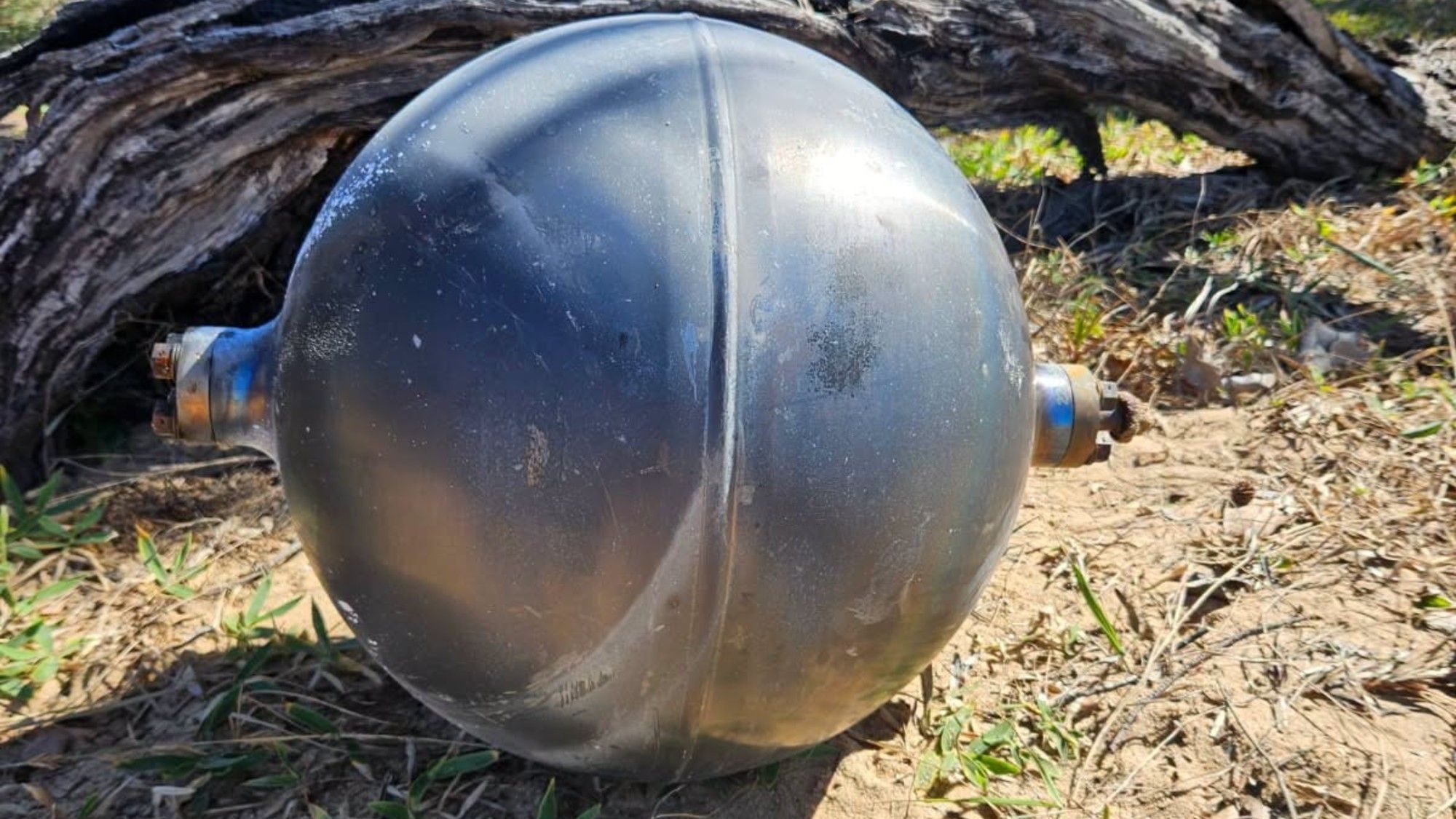
"Very often they will be made of something like titanium which is really good at surviving," Sorge explained to Space.com. He elaborated that these spherical objects tend to decelerate more effectively than a solid, monolithic hunk of metal. This phenomenon, often described as a gentler "float down," allows them to shed velocity over a greater distance. "They can ‘float down’ a little bit more gently than some other things," he said.
The design of these pressure vessels plays a significant role. They are engineered to withstand immense internal pressures during space missions, a characteristic that inadvertently makes them highly resilient to the extreme temperatures and stresses of atmospheric reentry. While often perceived as solid metal, their construction can be optimized for structural integrity and lightweight efficiency.
"In spite of them being metal, they tend to decelerate more than, say, a solid hunk of metal," Sorge reiterated. Furthermore, once on the surface, these intact spheres are generally more recognizable as manufactured objects than fragmented pieces of metal. The assertion that "even if they heat up, they don’t care" speaks to the remarkable thermal resistance of materials like titanium, allowing them to maintain their structural integrity through the intense heat generated by atmospheric friction.
Sorge also pointed out that materials like titanium are increasingly recognized as a potential concern in space debris studies. The use of Composite Overwrapped Pressure Vessels (COPVs), common in advanced space hardware, also presents similar challenges regarding survivability during reentry.
Mitigating the Risk: Towards Responsible Space Operations
The persistent issue of uncontrolled reentry and subsequent debris landing on Earth raises critical questions about current space practices. Experts like Sorge advocate for a fundamental shift in how rocket upper stages and other large components are handled at the end of their operational life.
"In the bigger picture with [rocket] upper stages," Sorge stated, "just don’t let them randomly reenter. Bring them down via controlled reentry and then if they are survivable it doesn’t matter because you dump them somewhere where there aren’t any people." This implies a preference for guided deorbit maneuvers that steer spent rocket bodies into designated, uninhabited areas, typically remote ocean regions, to minimize the risk to populated landmasses.
The "space balls" found in Australia are clearly the result of uncontrolled reentry events, Sorge emphasized, highlighting their descent from the sky and subsequent arrival onshore. The Aerospace Corporation, with its extensive experience in studying recovered pressure vessels, welcomes contributions from nations that become recipients of such space objects.
Detailed analysis of recovered debris can provide invaluable data. Examining the condition of the recovered material, the extent of thermal exposure it endured, and even what it didn’t experience during reentry can offer critical insights into atmospheric dynamics and material science. Such hands-on assessments are crucial for refining reentry models and understanding the behavior of different materials under extreme conditions.
A significant challenge in identifying the origin of falling debris lies in tracking its trajectory during the reentry process. Sorge noted that if observers could effectively track and observe incoming debris on its descent, it would be extremely helpful in pinpointing its origin. "If we get an impact location and a time of reentry that really helps us figure out what’s going on," he said.
There is a growing consensus within the scientific and aerospace communities that greater attention must be paid to the implications of reentering human-made space objects. Sorge concluded, "The real challenge is that this is still an area that we don’t completely understand. We get surprises now and again, because we know only so much. There’s certainly a lot more awareness now than earlier years to be proactive in thinking about this."
The Physics of Descent: Atmospheric Drag and Orbital Mechanics
Michelle Hanlon, executive director of the Center for Air and Space Law at the University of Mississippi School of Law, provides a broader perspective on why space debris frequently ends up in diverse locations worldwide, including Australia.
"It may seem surprising that pieces of the same rocket can show up in Australia, Canada or on a farm in Africa, but that’s actually what we’d expect," Hanlon commented. She explained that objects in Low Earth Orbit (LEO) traverse vast swaths of the globe as the Earth rotates beneath them. When a reentry is not precisely controlled, the final landing point can vary significantly, extending over thousands of kilometers, depending on the precise moment atmospheric drag becomes the dominant force.
Given that over 70% of the Earth’s surface is covered by oceans, it is statistically probable that most space debris eventually lands in the sea. However, Hanlon noted, "Every now and then, though, a tough piece survives and lands somewhere people can find it – or lands in the ocean and gets swept swiftly to shore."
Identifying the Source: The Challenge of Origin and Traceability
The pressure vessels, like those recently discovered in Queensland, exemplify debris that is particularly prone to surviving reentry. Hanlon elaborated, "They’re built to withstand enormous pressures, so they are also among the pieces most likely to survive reentry. That’s why they seem to turn up so often."
The question of identifying the "country of origin" for recovered space debris is complex. Hanlon expressed skepticism about the efficacy of simply stamping components with origin labels. "I’m not sure stamping everything with a country-of-origin is the answer," she stated. She argued that many objects can already be identified through their design, serial numbers, or by cross-referencing them with launch and registration records. Moreover, there is no guarantee that such a label would survive the harsh conditions of reentry.
Instead, Hanlon believes the more pressing issue is traceability. "Can authorities quickly figure out what the object is, whether it poses any danger and which state should be contacted? Better information-sharing and better tracking would be far more useful than a ‘Made in’ stamp." This suggests a need for improved international cooperation and data exchange systems to rapidly assess and attribute reentering objects.
The Growing Space Economy and Its Debris Footprint
Hanlon also pointed to the burgeoning space sector as a contributing factor to the increased number of observed reentries. "One thing I’d also point out is that we’re seeing more of these simply because we’re launching a lot more things into space. That’s actually a sign of how active the space sector has become, not necessarily that it’s becoming less safe," she explained.
Even with a high success rate for controlled reentries, the sheer volume of launches means a greater number of reentries will occur. This, in turn, increases the probability that a particularly robust piece of debris might survive atmospheric transit and land in an unexpected location.
The recent incident of "space balls" in Australia serves as a poignant reminder that space activities do not conclude with the mission’s operational phase. Hanlon emphasized, "End-of-life disposal is now just as much a part of responsible space operations as launch."
Adding a touch of cosmic irony, Hanlon noted the timing of these discoveries with the impending release of "Spaceballs: The New One," a sequel to the popular 1987 science fiction comedy, which is reportedly being filmed in Australia. While the film’s narrative is purely fictional, the real-world phenomenon of space debris landing on Earth continues to be a significant and evolving challenge for humanity’s presence in orbit. The ongoing analysis of the Forrest Beach debris will undoubtedly contribute to a better understanding of orbital mechanics, material science, and the critical need for responsible stewardship of the space environment.
Related posts: