The Lotus Emira 420 Sport Signals the High-Performance Zenith of the Internal Combustion Era at Hethel

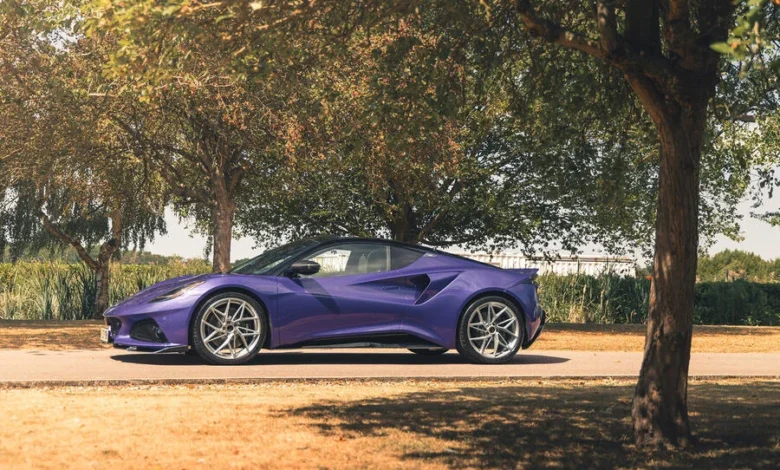
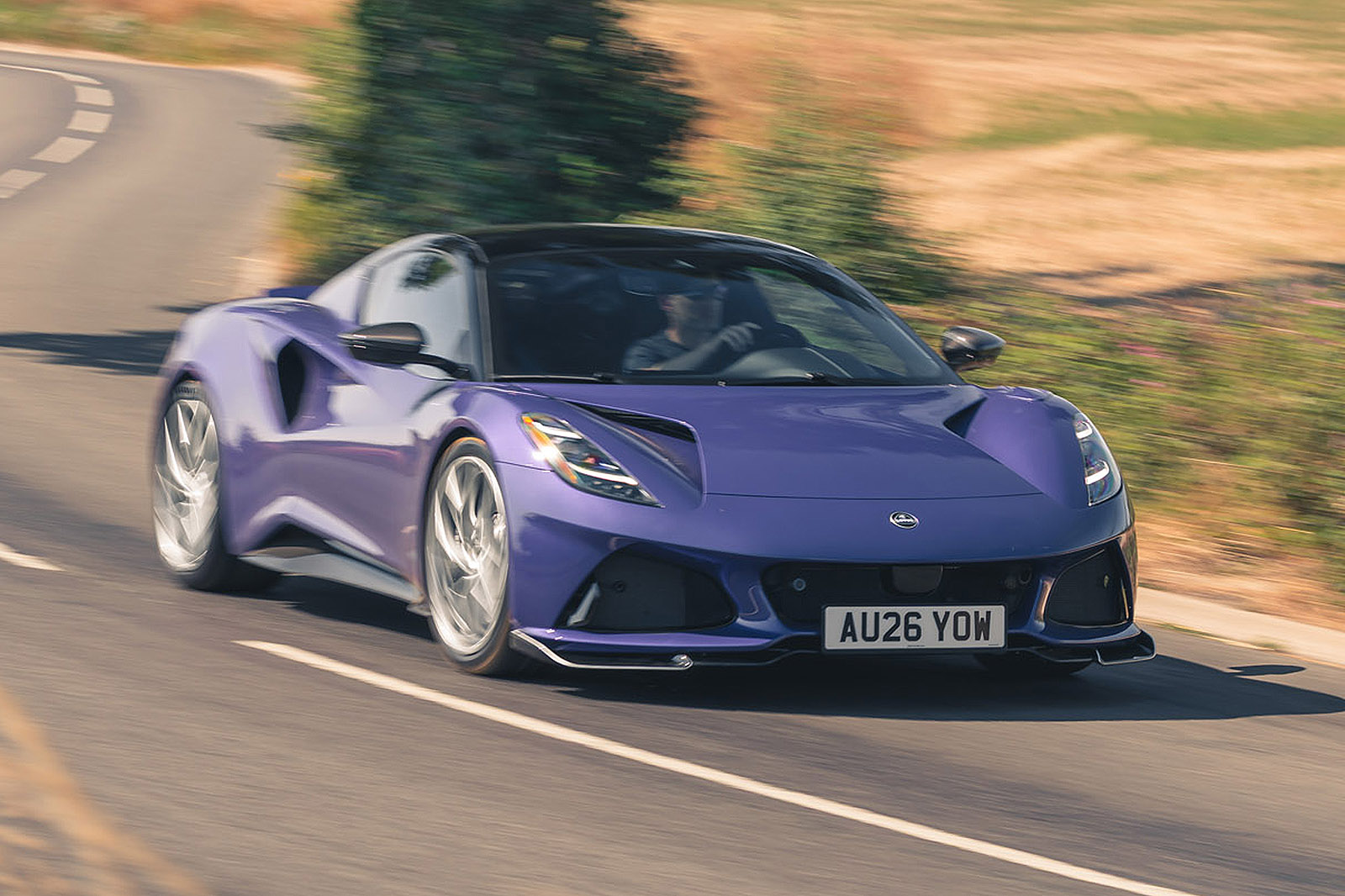
Lotus Cars has officially introduced the Emira 420 Sport, a vehicle that represents a significant evolution in the brand’s final internal combustion engine (ICE) lineup. As the automotive industry pivots toward electrification, the 420 Sport serves as a refined bridge between the lightweight legacy of the Norfolk-based manufacturer and the high-tech performance standards of the modern era. This new variant introduces a suite of mechanical and software enhancements designed to sharpen the driving experience, positioning it as a more focused alternative to the standard Emira Turbo SE while maintaining the daily usability that has become a hallmark of the Emira platform.
Advanced Powertrain Engineering and Performance Metrics
At the heart of the Lotus Emira 420 Sport lies a familiar yet revitalized power unit. The vehicle utilizes the Mercedes-AMG 2.0-litre turbocharged four-cylinder engine, a powerplant renowned for being one of the most power-dense production engines in the world. Through what engineers describe as a "software tickle"—a comprehensive recalibration of the engine management system—Lotus has extracted additional performance from the M139-derived unit.
The resulting figures are a peak power output of 416bhp and a maximum torque of 369lb ft. These numbers represent an increase of 16bhp and 15lb ft over the existing Emira Turbo SE. This power is delivered to the rear wheels via an eight-speed dual-clutch transmission (DCT), which has been optimized to handle the increased load while providing the rapid-fire gear changes expected of a track-oriented sports car. While the increase in raw output is modest on paper, the integration of the software updates is intended to provide a more linear power delivery and a broader torque curve, enhancing the car’s responsiveness during mid-corner transitions and high-speed overtakes.
The Lightweight Handling Pack: A Technical Deep Dive
While the engine receives significant attention, the defining characteristics of the 420 Sport are found within its chassis and suspension architecture. As standard, the vehicle is equipped with bespoke Bilstein dampers and a ride height that has been lowered by 5mm compared to the base model. This lower center of gravity is aimed at reducing body roll and improving aerodynamic efficiency at high speeds.
However, the pinnacle of the 420 Sport’s engineering is the optional Lightweight Handling Pack. This package is central to the vehicle’s identity as a driver-focused machine, offering a total weight reduction of 25kg over the standard Emira. This mass reduction is achieved through the implementation of high-performance components:
- Titanium Exhaust System: Not only does this reduce weight at the rear of the vehicle, but it also improves thermal management and provides a more resonant acoustic profile.
- Lithium-Ion Battery: A significant weight-saving measure over traditional lead-acid units, contributing to better weight distribution.
- Carbon-Fibre Louvred Engine Cover: Replacing the standard glass or plastic units, this component sheds kilograms while aiding in engine bay cooling.
Crucially, the Lightweight Handling Pack replaces the Bilstein setup with advanced Multimatic dampers. These units utilize "trick" spool valving technology—a system famously used in Formula 1 and on the Ford GT—allowing for highly precise control over damping forces. The system provides 11 distinct "clicks" of adjustment, enabling owners to fine-tune the suspension for specific track conditions or varying road surfaces.
Chassis Dynamics and the Hethel Proving Grounds
Testing of the Emira 420 Sport at Lotus’s historic Hethel test track reveals a machine that is both tireless and highly engaging. With the Multimatic dampers set to a higher stiffness level (specifically "nine" during track evaluations), the car demonstrates exceptional composure. It corners flatly, minimizing lateral pitch, yet retains enough suspension travel to communicate the limits of grip to the driver.
The steering remains one of the vehicle’s standout features. In an era where most manufacturers have transitioned to purely electric power steering (EPAS), Lotus continues to utilize a hydraulically assisted rack. This choice preserves a level of tactility and "heft" that is often lost in modern sports cars. The steering is fast and precise without becoming nervous or "flighty," allowing the driver to place the front wheels with surgical accuracy.
The 420 Sport feels inherently sharper than the standard Emira, though the transition to this sharper edge is managed with typical Lotus poise. Even when equipped with the optional Michelin Pilot Sport Cup 2 tires—a "sticky" compound designed for maximum dry-weather traction—the car remains approachable. It allows the driver to work up to and slightly beyond the limit of grip, offering a predictable breakaway that encourages expressive cornering angles without the fear of sudden snap-oversteer.
Interior Craftsmanship and Ergonomic Enhancements
Inside the cabin, the Emira 420 Sport maintains the "richly finished" aesthetic that marked a departure from the spartan interiors of the Elise and Exige. However, bespoke trim materials are scattered throughout the snug cockpit to distinguish the Sport variant.
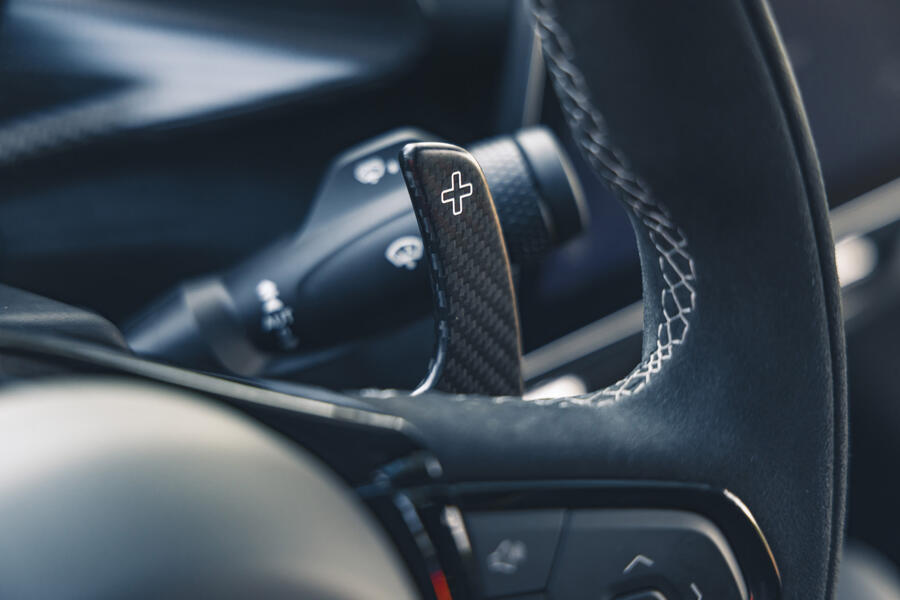
One of the most significant ergonomic upgrades is the introduction of new, longer gearshift paddles constructed from carbon fibre. These paddles are not merely cosmetic; they feature a revised mechanical action that provides a more positive "click-clack" sensation upon engagement. This tactile feedback is essential for a car using a dual-clutch transmission, as it strengthens the connection between the driver and the powertrain during high-intensity driving. The cabin remains a focused environment, balancing high-quality materials with the functional requirements of a performance vehicle.
Comparative Analysis: Road versus Track Performance
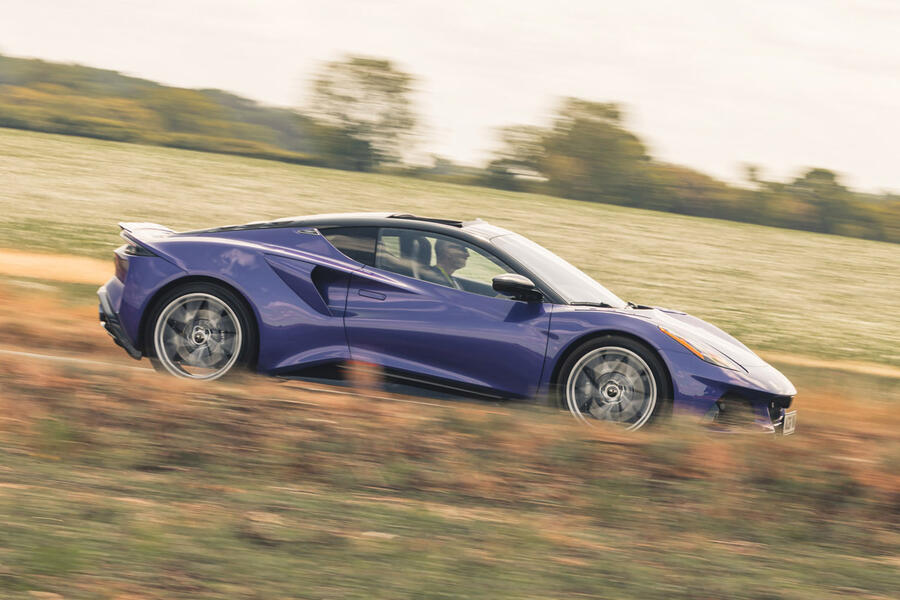
A critical aspect of the Lotus DNA is the "effortless lack of inertia," a quality that the 420 Sport exhibits on both the circuit and the open road. On public highways, the vehicle is remarkably biddable and adjustable. It flows through corners with a grace that belies its track-ready credentials.
The braking system is strong and progressive, particularly when the components are up to operating temperature. However, the system requires a degree of sensitivity during low-speed, urban driving. The bite is immediate and powerful, which, while beneficial on a track, makes smooth "limo stops" in traffic difficult to execute without significant practice.
The ride quality, even with the dampers dialed back to a softer setting (such as "five"), is firm. It is a reminder of the car’s intent, yet it avoids being harsh. The suspension possesses a sophisticated ability to soak up mid-corner bumps that would typically deflect a track-biased machine off its intended line. This "breathability" of the chassis is a classic Lotus trait, ensuring that the car remains stable and planted on the imperfect surfaces of B-roads.
Strategic Implications and the Powertrain Paradox
Despite the numerous successes in chassis tuning and aerodynamics, the 420 Sport faces a complex challenge regarding its powertrain character. While the AMG-sourced engine is a "devastating performer" when on boost—providing acceleration that makes higher-tier supercars feel unnecessary on public roads—it lacks the distinct personality found in Lotus engines of the past, such as the supercharged V6.
The new titanium exhaust system attempts to inject aural excitement with pops and cracks on the overrun in Sport and Track modes. Nevertheless, the engine can feel somewhat characterless in standard driving conditions. Furthermore, there is a perceptible "lag" at lower revolutions, and the throttle response occasionally lacks the instinctive precision found in the car’s steering and braking systems.
This "powertrain paradox" highlights the difficulty of modern sports car manufacturing: balancing the need for high-output, emissions-compliant turbocharged engines with the visceral, immediate response demanded by enthusiasts.
Historical Context and Market Position
The Emira 420 Sport arrives at a pivotal moment for Lotus. Under the ownership of Geely, the company is undergoing a massive transformation, launching the Eletre SUV and the Emeya hyper-GT as part of its "Vision80" strategy to become a global luxury electric brand by its 80th anniversary.
As the final ICE model, the Emira carries the weight of 75 years of heritage. The 420 Sport variant is positioned to compete directly with the Porsche 718 Cayman GTS 4.0 and the Alpine A110 R. While the Porsche offers the allure of a naturally aspirated flat-six and the Alpine offers extreme lightness, the Lotus Emira 420 Sport finds its niche by offering a "middle ground" of exotic mid-engine design, sophisticated damping technology, and a level of daily usability previously unseen in the brand’s history.
The introduction of the 420 Sport underscores Lotus’s commitment to its core fanbase even as it moves toward a silent, electric future. It is a celebration of mechanical grip, hydraulic feedback, and internal combustion—a final, high-octane salute from the engineers at Hethel. For collectors and driving enthusiasts, the 420 Sport represents the most refined iteration of the traditional Lotus formula, packaged in a body that remains one of the most striking designs in the contemporary sports car market.