New MIT Study Explores Improving Autonomous Driving Tech By Letting The Car Tell You What It’s Doing And Why

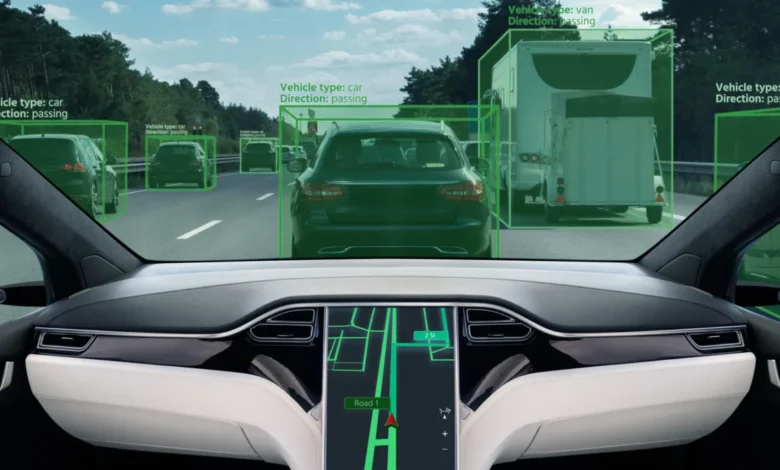
As regulatory landscapes shift to accelerate the deployment of autonomous vehicles (AVs) on American roadways, safety researchers are racing to bridge the profound communication gap between machine intelligence and human occupants. A groundbreaking study recently published in the scientific journal Nature by researchers at the Massachusetts Institute of Technology (MIT) in collaboration with autonomous vehicle technology company Motional introduces a novel approach to this challenge: a system that translates a vehicle’s machine-learning rationale into human-understandable real-time explanations.
The research arrives at a critical juncture in the evolution of automated transportation. Federal transportation policy has increasingly favored deregulation, with regulatory bodies exploring frameworks that streamline the introduction of vehicles lacking conventional driver controls such as backup brake pedals or emergency levers. However, this regulatory push often outpaces public trust and technological maturity. Numerous well-documented incidents—ranging from autonomous robotaxis inadvertently obstructing emergency vehicles and first responders to partial driving automation systems failing to detect stationary obstacles, pedestrians, and cyclists—have highlighted the vulnerabilities inherent in current AI architectures. By introducing a mechanism for autonomous systems to verbalize their real-time perceptions and decision-making processes, the MIT and Motional study proposes a foundational shift in how humans interact with, monitor, and ultimately trust autonomous technology.
Inserting AI into AI: The Mechanics of CW-Net
To achieve real-time translation of machine logic, the research team developed an innovative architecture designated the Concept-Wrapper Network (CW-Net). Conventional deep-learning models governing autonomous vehicles operate as "black boxes," processing millions of numerical inputs from lidar, radar, and camera arrays to execute driving maneuvers without providing explicit justifications for their choices. While these systems are highly efficient at navigating complex environments, their lack of transparency leaves human safety drivers and passengers entirely in the dark regarding why a vehicle accelerates, decelerates, or halts unexpectedly.
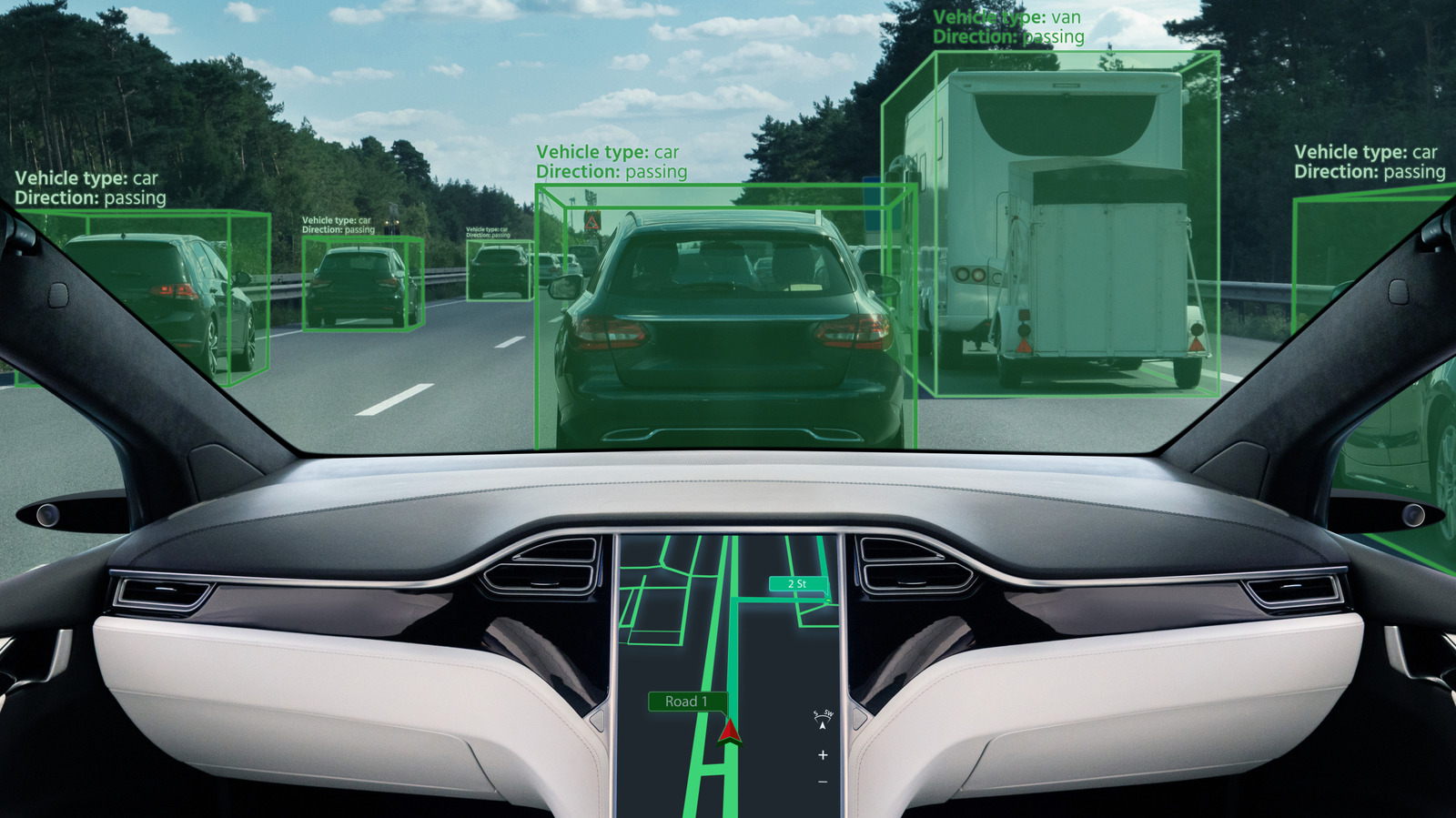
CW-Net functions as an auxiliary AI layer trained on a vast corpus of 130 million distinct driving scene examples, each annotated with multiple semantic concepts. The system is programmed to recognize and categorize fundamental driving variables, including directional intent (left, right, straight), speed parameters (stopping, slowing, accelerating), and spatial relationships (identifying intersections, traffic lights, pedestrians, and vehicles being followed). When integrated into an autonomous vehicle’s core machine-learning stack, CW-Net acts as an interpreter, translating raw neural network activations into coherent, descriptive explanations delivered to the vehicle’s occupants.
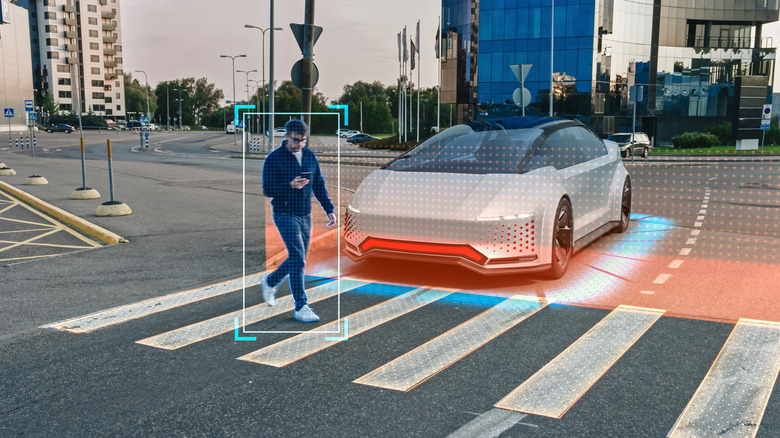
During real-world operational testing, the utility of this translation layer became immediately apparent. In one documented test scenario, an autonomous vehicle equipped with CW-Net came to an abrupt halt behind a traffic cone. While the human test driver initially assumed the traffic cone was the direct catalyst for the stop, the vehicle’s audio feedback explicitly stated it was "approaching stopped vehicle," revealing a misclassification within the AI’s spatial assessment. This discrepancy provided engineers with precise diagnostic data to refine the perception system. In separate evaluations involving complex urban cycling infrastructure, the feedback mechanism allowed human operators to detect instances where the AV struggled to isolate cyclists, enabling the driver to proactively intervene, adjust vehicle velocity, and avert potential hazards.
Bridging the Gap in Partial and Full Automation
While fully autonomous robotaxis represent the frontier of driverless technology, the implications of real-time explainable AI extend profoundly into consumer-grade driver assistance systems. Features such as General Motors’ Super Cruise, Ford’s BlueCruise, and Tesla’s Autopilot or Full Self-Driving (Supervised) configurations are classified as Level 2 automation systems. These technologies manage longitudinal and lateral vehicle control under specific conditions, but they legally and operationally require the human driver to remain fully attentive and prepared to take over at a moment’s notice.
A persistent safety challenge associated with Level 2 systems is driver complacency and situational disengagement. When drivers do not understand the system’s operational boundaries or why a vehicle initiates a sudden maneuver, reaction times suffer. Industry safety advocates suggest that an interactive feedback system capable of explaining vehicle behavior in plain language could significantly enhance driver vigilance. By actively communicating its immediate objectives—such as announcing a lane change due to slower traffic ahead or confirming the detection of a merging vehicle—the system maintains a continuous cognitive loop between the human and the machine, mitigating the risks of mode confusion and driver distraction.
Broader Industry Efforts: Vehicle-to-Vehicle Collaboration
The MIT and Motional initiative is part of a broader, multi-institutional scientific push to enhance the safety and situational awareness of automated fleets through advanced communication networks. Parallel research initiatives at institutions such as New York University’s Tandon School of Engineering and the University of California, Los Angeles (UCLA) Mobility Lab are exploring decentralized intelligence sharing among connected vehicles.
At NYU, engineering teams have developed protocols enabling autonomous vehicles to share localized environmental data across a broader cloud network. Under this framework, an autonomous vehicle operating exclusively within a dense urban grid like Manhattan can assimilate real-time road condition data, hazard reports, and traffic anomalies recorded by other fleet vehicles in geographically distinct areas like Brooklyn, even if it has never navigated those specific streets personally. This cross-pollination of operational data accelerates fleet-wide learning and prepares vehicles for edge cases before they encounter them firsthand.
Concurrently, research at UCLA focuses on mitigating human-induced and environmental blind spots through vehicle-to-vehicle (V2V) communication. In complex urban intersections where physical obstructions—such as dense foliage, parked delivery trucks, or architectural elements—conceal pedestrians or crossing cyclists, connected vehicles can relay telemetry data to one another. If a secondary vehicle approaching an intersection from an alternate angle detects a hidden hazard, it can instantly broadcast a proximity warning to approaching autonomous units, preemptively factoring unseen variables into the navigation algorithm.
Implications and Policy Considerations
The integration of explainable AI frameworks like CW-Net and collaborative V2V data-sharing networks addresses a fundamental psychological and technical barrier in the adoption of autonomous transportation: opacity. For the broader public to accept driverless technology, users must be able to comprehend the decision-making rationale of autonomous systems, particularly when errors occur. Real-time narrative feedback transforms passengers from passive, anxious observers into informed participants who can monitor system reliability and supply crucial telemetry feedback to software engineers.
However, these technological advancements also underscore ongoing debates regarding the rapid pace of regulatory deregulation. Critics and transportation safety advocates argue that as regulatory frameworks move to eliminate traditional human-operated redundancies, the burden of safety relies entirely on software that remains vulnerable to unforeseen edge cases. While academic and private-sector researchers continue to develop sophisticated diagnostic tools and communication layers to make autonomous driving safer and more predictable, industry analysts emphasize that robust validation, standardized safety metrics, and comprehensive testing must remain central priorities before autonomous vehicles become ubiquitous fixtures on public thoroughfares.