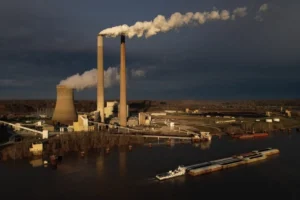
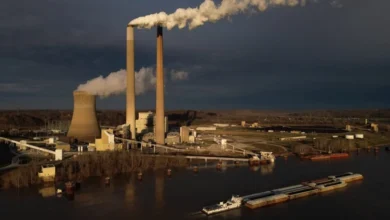
Trump Administration EPA Repeals Biden Power Sector Carbon Rules as AI-Driven Energy Demands Reshape the U.S. Coal Landscape

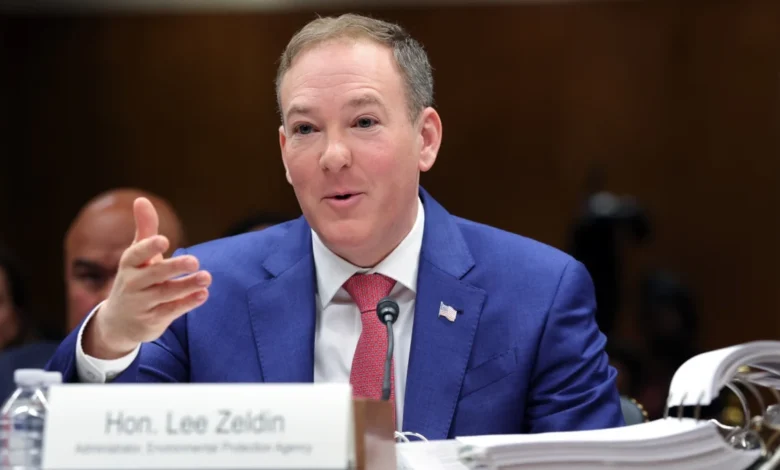
The United States Environmental Protection Agency has officially announced plans to dismantle all federal carbon emissions regulations governing the domestic electricity sector, a decisive move that paves the way for power utilities nationwide to operate without federal greenhouse gas caps. Revealed at an international energy summit in Texas by EPA Administrator Lee Zeldin, the sweeping regulatory rollback targets the cornerstone climate policies established during the Biden administration. By eliminating these federal mandates, the agency is effectively removing restrictions that compelled electric utilities to either transition away from coal-fired generation or deploy costly carbon capture technologies.
The decision marks the latest chapter in a two-decade regulatory pendulum that has defined American energy and environmental policy. As consecutive presidential administrations pivot between aggressive decarbonization strategies and deregulation, the long-term planning of the American power grid has been repeatedly disrupted. While federal climate targets have frequently foundered in the courts or through executive reversals, broader market forces—most notably the historic fracking boom and the sudden, unprecedented surge in electricity demand driven by artificial intelligence and data centers—have simultaneously reshaped the viability of coal.
The Weight of Coal in Global Climate Dynamics
Coal remains universally recognized by climate scientists as the most carbon-intensive of all major global energy sources. Since the dawn of the industrial era, the combustion of coal has accounted for nearly half of all cumulative global carbon dioxide emissions, matching the combined output of oil and natural gas. Furthermore, coal generates significantly higher volumes of carbon dioxide per unit of energy produced than either petroleum or natural gas.
Given these metrics, mainstream climate consensus identifies the rapid phaseout of coal-fired power generation as the single most impactful structural adjustment the global economy can execute to mitigate the trajectory of global warming. Yet, translating this scientific imperative into durable domestic policy has proven exceptionally difficult within the framework of United States federal governance.
A Twenty-Year Regulatory Whiplash
The modern history of federal intervention in the American coal sector is characterized by intense partisan shifts and legal battles. Nearly twenty years ago, the policy debate centered on whether the executive branch possessed the authority to accelerate the retirement of aging coal infrastructure.
Following legislative failures under the Obama administration to enact a nationwide carbon tax, the EPA formulated the Clean Power Plan. This regulatory framework sought to compel electric utilities to significantly reduce carbon output by shifting away from coal-fired generation toward lower-emitting alternatives.
However, the policy faced fierce legal challenges from fossil-fuel-producing states and industry stakeholders. Ultimately, President Donald Trump’s administration repealed the rule during his first term. The legal battles culminated in a landmark Supreme Court ruling affirming that the executive branch could not unilaterally force utilities to abandon specific fuel sources without explicit congressional authorization.
To navigate these judicial constraints, the Biden administration introduced a revised framework in 2024. Rather than imposing an outright ban or a mandatory transition away from coal, the 2024 rule established a flexible compliance mechanism. Utilities were given the option to either retire their coal-fired generating units sometime in the 2030s or retrofit them with advanced carbon capture and sequestration (CCS) machinery capable of trapping nearly all smokestack emissions. Both compliance pathways were projected to yield a substantial reduction in power sector carbon pollution.
The Current Repeal and Official Justifications
The Trump administration’s newly announced repeal sweeps aside the Biden-era framework entirely. Utilizing a rationale mirroring its earlier decision to roll back greenhouse gas standards for motor vehicles, the EPA argued that the underlying science of anthropogenic climate change involves sufficient regulatory uncertainty to warrant the elimination of federal caps. Additionally, the agency emphasized consumer financial relief, asserting that deregulation will lower electricity bills and protect household budgets.
"For over 15 years, the Obama and Biden administrations implemented a war on coal to destroy reliable and affordable energy," declared EPA Administrator Lee Zeldin during his address at the Texas energy summit. "We are working to go even further so that American energy can be fully unleashed. Realizing the full potential of American energy means more jobs, lower prices, and a more prosperous America."
Industry analysts note that while the regulatory whiplash creates headline-grabbing political conflict, neither the Obama nor the Biden rules ever fully took effect long enough to fundamentally drive decarbonization through regulatory compulsion alone. Instead, other federal initiatives—such as the massive tax subsidies for wind, solar, and storage deployed under the Inflation Reduction Act—have exerted far more consistent economic pressure on the energy market.
Economic Signals and Market Realities
The removal of federal targets deprives utility executives of a standardized regulatory compass, according to environmental economists. Kenneth Gillingham, a professor of environmental economics at Yale University and a former economic adviser to the Obama administration who helped draft the original Clean Power Plan, emphasized the importance of regulatory clarity.
"The reason to have a target is that it sends a clear signal to decision-makers in companies," Gillingham explained. "If you’re on the fence between choosing two things, you might as well choose the one that’s in line with the target. That’s been undermined. There has to be some teeth behind it."
Despite the absence of stringent federal mandates, American coal consumption has plummeted dramatically over the past two decades. This decline was not primarily driven by environmental edicts, but by the shale fracking revolution. The extraction boom unlocked vast domestic reserves of natural gas, driving down fuel prices and making it economically advantageous for utilities to decommission coal plants in favor of cleaner-burning gas facilities. Although natural gas combustion still produces greenhouse gases, it does so at roughly half the rate of coal, helping to reduce overall U.S. power sector emissions by nearly 50 percent from peak historical levels.
Public Health Consequences and Environmental Impacts
The rollback of the Biden-era carbon rule is anticipated to slow the ongoing retirement schedule of remaining coal assets, carrying measurable consequences for public health. Beyond greenhouse gases, coal-fired power plants emit severe particulate matter, sulfur dioxide, nitrogen oxides, and toxic heavy metals such as mercury. These pollutants are linked to thousands of premature deaths annually, along with chronic respiratory ailments and cardiovascular complications worldwide.
Projections accompanying the 2024 Biden EPA rule estimated that accelerating coal plant closures would have prevented approximately $370 billion in cumulative health damages and climate-related economic impacts. Specifically, the regulatory agency calculated that the standards would have averted hundreds of thousands of asthma attacks, reduced emergency room visits, and prevented over 1,200 premature deaths annually by the year 2035. Environmental advocates argue that the new repeal effectively externalizes these substantial medical and social costs onto local communities living near legacy power infrastructure.
The Artificial Intelligence Boom and the Coal Resurgence
Complicating the transition away from coal is the explosive growth of artificial intelligence and the exponential expansion of energy-intensive data centers. When the Biden administration formulated its 2024 rule, federal analysts anticipated a steady, uninterrupted contraction of coal capacity driven by eroding economic competitiveness.
However, the modern data center boom has abruptly reversed baseline electricity demand forecasts. As technology conglomerates race to secure continuous, baseload power to feed massive server farms, utility companies across several regional transmission organizations—particularly in the Midwest and Mid-Atlantic—have experienced a financial windfall from keeping older generating units online. High wholesale electricity prices have rendered previously unprofitable coal plants lucrative once more.
Consequently, major utilities have begun postponing the planned retirement dates of their legacy coal assets. A prominent example is Southern Company, a major energy provider operating across Georgia, Mississippi, and surrounding states. Under prior planning cycles, Southern intended to shutter its major coal-burning facilities in Mississippi by 2028. However, facing surging industrial demand from data center developments, the company announced updates indicating that these plants will remain operational well into the 2030s.
Efforts by Southern Company in previous years to incorporate commercial-scale carbon capture technology at its facilities—such as the ill-fated Kemper County energy project—suffered high-profile engineering collapses and financial failures. Environmental coalitions have strongly criticized the life-extension of these coal units, questioning whether projected AI power demands justify reversing long-term decarbonization commitments. Meanwhile, the Trump administration has actively encouraged this pivot, going so far as to issue direct orders keeping certain coal plants online past their scheduled retirement dates—actions that have already encountered initial legal setbacks in federal court.
Future Outlook for the American Energy Sector
As the regulatory framework resets under the current administration, future executive branches aiming to curb domestic carbon emissions will confront familiar structural challenges: how to manage the terminal decline of a legacy fuel source that refuses to vanish entirely.
Some energy economists suggest that short-term policy interventions and data center demands may only temporarily delay an inevitable transition. Because America’s operational coal fleet is aging rapidly, the capital expenditures required to maintain aging boilers and environmental controls often exceed the economic returns of keeping them online, regardless of federal deregulation. Many utilities may ultimately determine that transitioning to natural gas, renewables, or nuclear energy remains the most prudent long-term investment.
"We have more electricity demand than we did before, which is, on the margins, going to make it easier for a coal plant to stay on," Gillingham noted. "But the trend is pretty clear, and you can only fight markets so much."