EPA eliminates rule that limits planet-warming greenhouse gas emissions from power plants

A Fundamental Shift in Regulatory Philosophy
The decision marks the culmination of a multi-year effort to reorient the EPA’s mission, moving away from a primary focus on decarbonization and toward an agenda centered on industrial deregulation and the preservation of fossil fuel infrastructure. Under the new policy framework, the federal government will no longer prioritize the forced retirement of aging, high-emission plants. Instead, EPA officials argue that utility companies are better positioned than federal bureaucrats to determine the most cost-effective strategies for meeting regional electricity demands.
Critics of the decision, however, contend that this rollback effectively nullifies the progress made toward mitigating the long-term risks of climate change. For decades, the energy sector has served as the primary battleground for American environmental politics, with the EPA frequently caught between the competing pressures of economic growth and public health protection. This latest directive suggests a definitive pivot toward the latter, favoring short-term economic relief for coal and natural gas operators over long-term greenhouse gas reduction targets.
Chronology of Regulatory Friction
The path to this repeal is rooted in a decade of legal and administrative tug-of-war. To understand the current climate, one must look at the progression of power plant regulation in the United States:
- 2015: The Obama administration introduces the Clean Power Plan (CPP), the first national standard to limit carbon emissions from existing power plants. The plan faced immediate legal challenges from states and coal companies.
- 2016: The Supreme Court issues an unprecedented stay on the Clean Power Plan, effectively freezing its implementation while lower courts debated its legality.
- 2019: The Trump administration formally repeals the Clean Power Plan, replacing it with the Affordable Clean Energy (ACE) rule, which offered states more flexibility and focused on efficiency improvements rather than system-wide emissions caps.
- 2021-2022: The Biden administration moves to reinstate more aggressive climate targets, including the use of the Clean Air Act to mandate significant reductions in carbon output, often requiring the adoption of carbon capture and storage (CCS) technology.
- 2025-2026: The current administration initiates the review process to repeal the Biden-era restrictions, leading to the final decision to remove the emissions limits entirely, citing economic necessity and energy security.
The Economic and Industrial Landscape
The $300 billion figure cited by the EPA represents the aggregate cost savings for the power sector over the next two decades. Proponents of the repeal argue that these costs—largely tied to the expensive retrofitting of plants with carbon capture technology or the early decommissioning of coal assets—would have ultimately been passed down to consumers through higher electricity bills.
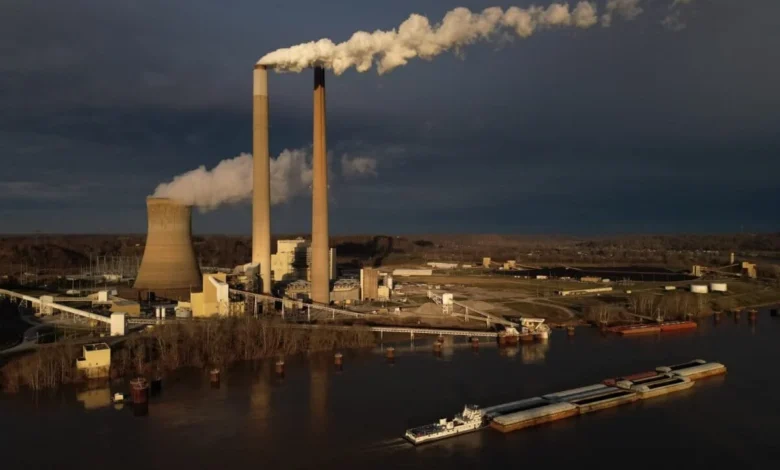
Data from the U.S. Energy Information Administration (EIA) shows that while coal usage has declined significantly over the past twenty years, it still accounts for a vital portion of the baseload power generation in regions like the Ohio River Valley and the Appalachian coal belt. By removing the pressure to phase out these assets, the administration aims to stabilize electricity prices in these regions. However, market analysts point out that the economic reality of the energy market is already heavily skewed against coal, regardless of federal regulation. The plummeting cost of natural gas, combined with the increasing efficiency and declining price of utility-scale solar and wind, has rendered many coal plants economically uncompetitive even in the absence of federal emissions mandates.
Stakeholder Responses and Public Discourse
The reaction to the repeal has been starkly divided along ideological and economic lines. Utility operators, particularly those with significant investments in legacy coal assets, have largely welcomed the regulatory relief. Trade groups representing the coal and natural gas industries issued statements applauding the move, arguing that the previous regulatory environment was an "overreach" that threatened the stability of the national grid.
Conversely, environmental advocacy groups have condemned the decision as a reckless abandonment of scientific consensus. "This is a direct assault on our ability to combat the climate crisis," said a spokesperson for a leading environmental law firm. "The EPA is essentially choosing to ignore the clear mandate of the Clean Air Act, which requires the protection of the atmosphere from pollutants that endanger public health and welfare."

Public health organizations have also raised concerns, noting that while the new policy focuses on greenhouse gases, the continued operation of aging coal plants also results in higher emissions of particulate matter, mercury, and sulfur dioxide. These pollutants are directly linked to respiratory illnesses, cardiovascular disease, and other long-term health complications for communities living in close proximity to industrial power hubs.
Broader Implications for Global Climate Commitments
The international implications of this policy shift are significant. The United States has historically used its domestic climate policies as a benchmark for international negotiations, including those under the Paris Agreement. By repealing domestic emissions limits, the U.S. faces potential diplomatic friction with global partners who are increasing their own commitments to decarbonization.
Analysts suggest that this move could create a "decoupling" effect, where private-sector investment in renewable energy continues to grow driven by market forces and state-level mandates, even while federal policy pivots toward fossil fuels. Several states, including California, New York, and Washington, have already signaled their intent to maintain or strengthen their own emissions standards, regardless of the federal rollback. This creates a fragmented regulatory landscape, where energy companies must navigate a patchwork of state-level requirements that may be significantly more stringent than the federal baseline.
Technical Analysis: The Future of the Grid
From an engineering perspective, the transition of the electrical grid is a complex process. The primary challenge remains the "intermittency" of renewable energy. While the repeal of these rules allows coal plants to operate longer, it does not solve the fundamental issue of how to provide reliable power when the sun is not shining or the wind is not blowing.
The debate over the EPA’s decision touches on a deeper technical disagreement: should the grid transition be forced via regulatory mandates, or should it evolve organically based on the market’s ability to provide low-cost, reliable electricity? The current administration’s stance is that the market should dictate the pace of change, and that premature closures of coal plants threaten the "baseload" power necessary to prevent grid failures during extreme weather events.
Critics, however, argue that this perspective ignores the long-term cost of climate-related disasters. They point to the increasing frequency of extreme heatwaves and storms as evidence that the "cost" of burning fossil fuels is not just found in the price of electricity, but in the massive recovery efforts required after climate-linked natural disasters.
Conclusion
The EPA’s decision to repeal greenhouse gas emission limits on power plants marks a definitive turning point in American energy policy. By prioritizing immediate cost relief for the utility sector and moving away from federally mandated decarbonization, the agency has set the stage for a new era of energy development. Whether this move will truly "unleash" American energy or merely delay an inevitable technological transition remains the central question. As the legal challenges inevitably mount and state-level policy interventions continue to evolve, the impact of this decision will likely be felt for decades to come, shaping both the economic future of the energy sector and the environmental health of the nation.