The total disappearance of the ice mass commonly known as St. Mary’s Glacier in Colorado’s Front Range represents a significant, if not unexpected, threshold in the state’s environmental history. For the first time in recorded history, this iconic snowfield—a fixture of local culture, recreation, and hydrology—has melted entirely, leaving behind nothing but bare, rocky earth. While scientists have long warned of the fragility of these high-altitude features, the event serves as a stark, tangible indicator of the accelerated climatic shifts affecting the American West.
A Legacy of Ice and Recreation
Situated approximately 45 minutes from Golden, Colorado, St. Mary’s has served as a critical destination for generations. Though geologically classified as a perennial snowfield rather than a true glacier—as it lacks the internal movement and mass characteristic of glacial ice—it has functioned as a surrogate glacier for the surrounding community. For over a century, since the Victorian era, the site has provided a refuge from summer heat.
Beyond its historical role as a scenic destination, it became a cornerstone of Colorado’s outdoor culture. It was a staple of youth summer camps, a training ground for backcountry enthusiasts, and a rare refuge for skiers looking to maintain their turns during the arid months of July, August, and September. The loss of the ice mass is not merely an environmental tragedy; it is the erasure of a cultural landmark that helped define the identity of the Colorado Front Range.
Chronology of a Disappearing Feature
The decline of St. Mary’s is not a sudden occurrence but the culmination of decades of environmental stress. Photographic evidence from the early 21st century provides a clear visual record of its rapid retreat. By 2014, the snowfield exhibited significant thinning, a trend that continued through 2016 and into the 2020s.
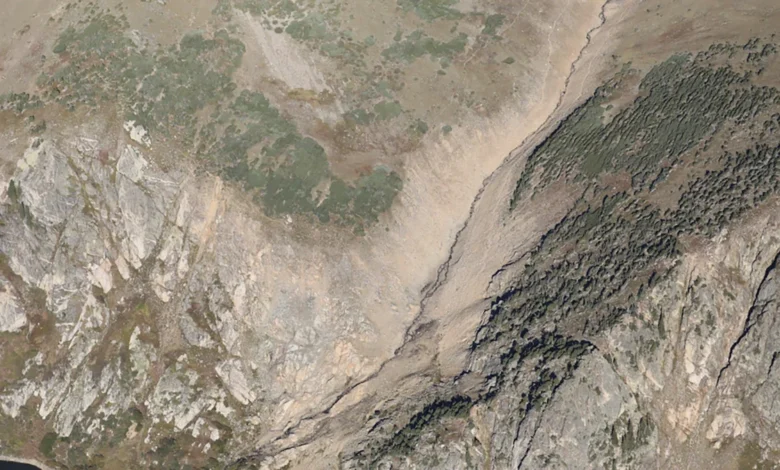
The immediate catalyst for the 2026 total melt was a "perfect storm" of adverse weather conditions. The region experienced its lowest winter snowpack in 40 years during the 2025-2026 season, failing to replenish the mass lost during the previous year. This insufficient winter accumulation was followed by a summer of record-breaking heat, which acted as an accelerant, stripping away the remaining ice that had survived in the protected, sun-shielded gully.
Scientific Context and Data Analysis
Dr. Dan McGrath, a professor of geosciences at Colorado State University, has spent years monitoring the health of Colorado’s high-alpine ice. Using advanced Light Detection and Ranging (LIDAR) technology, McGrath and his team have mapped the precise volumetric changes of these features. Their findings paint a bleak picture of a "one-way street" toward disappearance.
Research conducted at the nearby Andrews Glacier in Rocky Mountain National Park provides a predictive model for the rest of the Front Range. Between 2010 and 2020, Andrews Glacier saw a modest recession of approximately six inches per year. Between 2020 and 2024, that rate of loss accelerated to three feet annually. The most recent data for the 2025-2026 cycle revealed a catastrophic thinning of 11 feet—a three-fold increase in the rate of decay within a single year.
This data suggests that the mechanisms maintaining these ice masses—winter wind deposition and protection from direct solar radiation—are no longer sufficient to offset the thermal energy absorbed during increasingly long and hot summers. As McGrath notes, the "savings account" of accumulated ice has been fully depleted. While a particularly heavy winter could theoretically result in a temporary return of snow to the gully, the baseline climate has shifted to a point where long-term recovery is statistically improbable.
Broader Environmental and Hydrological Implications
The collapse of St. Mary’s Glacier is a micro-scale reflection of a global crisis. Glacial retreat is a primary driver of rising sea levels, but on a regional level, the loss of these features has immediate consequences for the high-alpine ecosystem.
- Hydrological Disruption: Perennial snowfields act as natural water towers, slowly releasing moisture throughout the driest months of the year. The total loss of these features alters the timing and volume of runoff into the watershed, potentially impacting downstream vegetation and alpine stream temperatures.
- Ecosystem Stress: Many alpine species rely on the specific micro-climates created by persistent ice and snow. The disappearance of these patches threatens the biodiversity of the high country, as the cooling effect they provide vanishes.
- Hazardous Conditions: As noted by international researchers, the melting of glaciers often triggers secondary geological hazards. The exposure of previously ice-covered rock faces can lead to increased rockfall, slope instability, and, in more extreme mountainous terrain, the formation of unstable glacial lakes that pose flood risks to lower-elevation communities.
Expert Perspectives and Public Reaction
The loss of St. Mary’s has resonated deeply with the public. For residents who have hiked the gully for decades, the transition from a shimmering white expanse to a barren, rocky landscape is a sobering visual representation of climate change.
"It’s been a part of the culture of Colorado for decades," Dr. McGrath stated, acknowledging the emotional weight of the loss. "From a recreation perspective, from an identity of Colorado perspective, it’s really significant."
While the scientific community views this through the lens of data, the human experience of the event remains grounded in the sense of loss. The disappearance of the ice mass signals that the "new normal" of the Colorado climate is one that the alpine environment is increasingly unable to sustain.
Looking Forward
The fate of St. Mary’s serves as a harbinger for other nearby features. The Arapahoe Glacier, which looms over Boulder, is reported to be in a similarly precarious state, with recent assessments suggesting it is barely clinging to its existence. The Isabelle Glacier, located near Brainard Lake State Park, is currently reduced to fragmented patches of discolored, crusty ice.
For policymakers and environmental managers, the lesson of St. Mary’s is clear: the rate of change is accelerating faster than anticipated. While the scientific community will continue to monitor these sites, the focus is shifting from "conservation" to "documentation"—recording the final stages of these features before they vanish entirely.
The closure of this chapter in Colorado’s environmental history underscores the reality that, while nature is resilient, it is also subject to the laws of thermodynamics. The slushy, snow-filled gully that once provided joy to thousands of children and solace to thousands of hikers has become a silent witness to a warming planet. As the ice fades into memory, the focus turns to what other ecological assets the state stands to lose if the current climatic trajectory remains unchanged. The disappearance of St. Mary’s Glacier is not merely a local news item; it is an alarm bell ringing from the highest peaks of the Rockies.