Porsche Patent Unveils Sophisticated Simulated Manual Transmission for Future Performance Vehicles

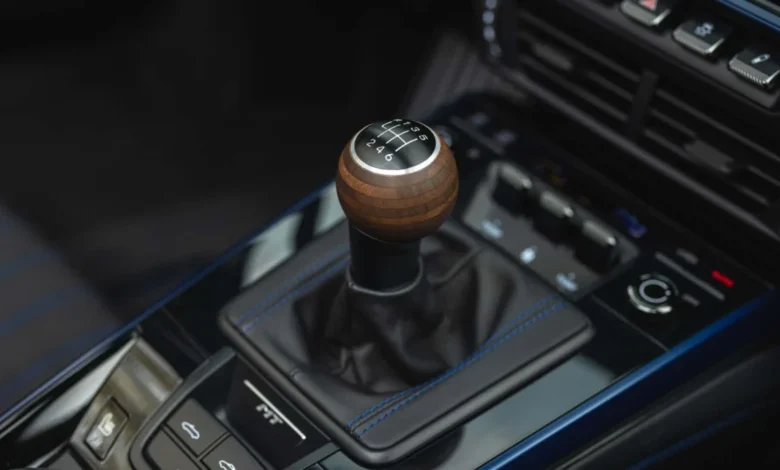
The automotive industry is currently navigating a period of profound transformation, characterized by a rapid transition toward electrification and the increasing reliance on software-defined vehicle architectures. Amidst this shift, Porsche has filed a new patent with the European Patent Office (DE102025109563A1), detailing a highly advanced simulated manual transmission system. This technology aims to preserve the visceral, tactile engagement of a traditional manual gearbox while leveraging the technical precision of modern dual-clutch automatic transmissions (DCTs). By integrating a clutch pedal and a multi-stable gear selector, Porsche is exploring a middle ground that caters to driving purists in an era where mechanical manual gearboxes are being phased out due to emissions regulations and performance requirements.
The Technical Evolution of the Porsche Patent
The recently uncovered filing describes a versatile transmission system capable of operating in three distinct modes. At its core, the system utilizes a dual-clutch transmission architecture, which is inherently efficient and lightning-fast. However, the innovation lies in the software and interface layer that translates driver input into the transmission’s mechanical behavior.
The first operational mode functions as a standard automatic transmission. In this configuration, the vehicle handles all gear changes, requiring minimal input from the driver beyond selecting Drive, Reverse, or Neutral. This is the mode expected for daily commuting or heavy traffic, where comfort and efficiency take precedence over driver engagement.
The second mode transitions the system into a sequential setup. Familiar to many modern sports car owners, this allows the driver to toggle through gears manually using paddle shifters mounted on the steering wheel or the primary shift lever. This mode bypasses the need for a clutch pedal, allowing for rapid-fire gear changes that utilize the dual-clutch system’s high-speed mechanical capabilities.
The third, and most innovative, mode introduces a full manual simulation. By depressing a physical third pedal—the clutch—the driver gains manual control over the transmission’s engagement. In this mode, the monostable gear selector—which typically returns to a center position—becomes a multi-stable unit. It mimics the physical "gates" and tactile feedback of a traditional manual H-pattern shifter. The software is designed to interpret the engagement of the clutch pedal and the movement of the gear lever to provide the resistance and feedback associated with mechanical gear meshing. If the driver fails to operate the clutch correctly or selects an inappropriate gear, the system is designed to replicate the consequences, such as engine stalling or mechanical "bucking," thereby requiring a higher level of skill and precision from the operator.
Historical Context and the Decline of the Manual Transmission
To understand the significance of this patent, one must examine the broader trend in the automotive market. For decades, the manual transmission was the gold standard for enthusiast vehicles. However, the rise of high-performance automatic and dual-clutch systems—pioneered largely by Porsche’s own PDK (Porsche Doppelkupplung) technology—has rendered the traditional manual gearbox less efficient in terms of acceleration and fuel economy.
Between 2010 and 2024, the availability of manual transmissions in the United States and Europe plummeted. According to industry data, manual transmission vehicles now account for less than 1% of new car sales in many markets. The primary drivers of this decline include the superiority of DCTs in track-focused scenarios, the need for lower CO2 emissions, and the complexities of integrating manual transmissions with advanced driver-assistance systems (ADAS) and hybrid powertrains.
Porsche, however, has maintained a stronger commitment to the manual gearbox than most of its competitors, specifically in its 911 and 718 model lines. Yet, as the brand moves toward an electrified future, it faces the challenge of maintaining the "Porsche DNA"—which includes the engaging tactile experience of the driver-machine interface—in vehicles that may no longer have a physical connection between the engine and the gearbox.
Industry Peers and Competitive Software Solutions
Porsche is not operating in a vacuum. Other high-end manufacturers have recognized that while enthusiasts demand efficiency, they also crave the psychological rewards of manual operation.

Koenigsegg, the Swedish hypercar manufacturer, introduced the "Light Speed Transmission" (LST) and the "Engage Shift System" (ESS). Their system is designed to provide the best of both worlds: a nine-speed automatic that can function as a traditional manual. By using specific software profiles, the Koenigsegg system can simulate the feel of a manual transmission, allowing the driver to select gears manually while retaining the benefits of a modern multi-clutch setup.
Ferrari has similarly ventured into this space with the 12Cilindri, which features an eight-speed dual-clutch transmission capable of simulating manual gear changes. Reports indicate that the Ferrari system is intentionally tuned to be unforgiving; it provides the same tactile feedback as a manual, including the risk of stalling or "jerking" if the driver mistimes a shift. This approach demonstrates that luxury manufacturers are prioritizing the experience of driving as a premium feature, even if the underlying mechanics are entirely automated.
Furthermore, Hyundai has been testing similar technology for its electric vehicle lineup. The South Korean manufacturer has filed patents for a shift-by-wire system that provides physical feedback to the driver to mimic the feeling of a manual transmission. This suggests that the "simulated manual" may eventually become a standard feature in high-performance EVs, where the lack of an engine note and mechanical vibration creates a disconnect between the driver and the road.
Implications for the Future of Automotive Design
The implications of the Porsche patent are significant for the broader automotive landscape. First, it confirms that Porsche intends to bridge the gap between traditional combustion engines and the electrified era without sacrificing the character of its sports cars. The ability of this system to function in both hybrid and combustion platforms suggests that the technology is designed to be modular and scalable across the company’s entire fleet.
Second, the patent highlights a shift in how car companies view software. Instead of software being used purely for safety or infotainment, it is now being used to curate an emotional experience. By "gamifying" the transmission, Porsche is essentially creating a high-fidelity simulator within a real-world vehicle. This could prove to be a vital strategy for maintaining brand loyalty among enthusiasts who are wary of the "numb" driving experience often associated with electric powertrains.
However, there are technical hurdles. Replicating the exact "bite point" of a clutch pedal through electronic sensors requires extremely low latency and high-resolution haptic feedback. If the feeling is not authentic, it risks being perceived as a gimmick rather than a genuine improvement. Porsche’s reputation for engineering excellence suggests that if they proceed with this technology, the refinement level will likely be high, but the challenge remains in satisfying the most discerning of automotive enthusiasts.
Economic and Regulatory Considerations
From a regulatory standpoint, the move toward simulated manuals is a strategic hedge. As governments impose stricter emissions standards, automakers are forced to optimize engine and transmission synchronization to the millisecond. A physical manual transmission is often less efficient than a computer-controlled system. By using a "fake" manual that is electronically controlled, Porsche can satisfy the driver’s desire for a third pedal while ensuring that the vehicle remains within the parameters of modern fuel efficiency and emissions requirements.
This approach also simplifies maintenance and manufacturing. Producing a dual-clutch transmission is significantly cheaper and more efficient than maintaining separate production lines for manual and automatic gearboxes. By using a single, software-defined hardware setup, Porsche can offer multiple driving experiences via a simple over-the-air (OTA) update or a drive-mode selection, effectively future-proofing their vehicle platforms.
Conclusion
The disclosure of Porsche’s simulated manual transmission patent marks a pivotal moment in the evolution of performance driving. As the industry moves away from the mechanical simplicity of the past, manufacturers are turning to sophisticated software to replicate the traits that enthusiasts hold dear. Whether this technology will successfully capture the soul of the traditional manual gearbox remains to be seen, but the concerted efforts of Porsche, Ferrari, and Koenigsegg indicate that the "three-pedal experience" is unlikely to vanish entirely. Instead, it is set to undergo a digital metamorphosis, ensuring that the art of driving remains a craft, even in an age defined by automation. The final test for Porsche will be the implementation; if the system can provide the genuine sense of mastery and mechanical sympathy that defines a true manual car, it may well become the new gold standard for the performance vehicles of the coming decade.