Achilles Tendon Injuries Are the Most Common Type of Injury in Runners and Modern Footwear May Be the Culprit

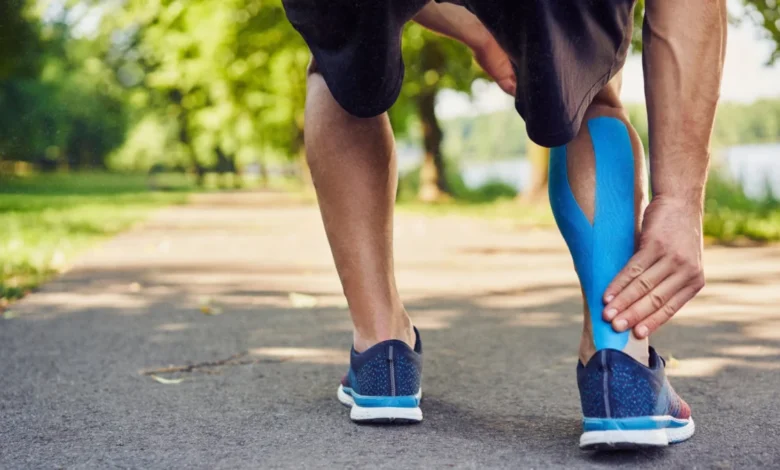
In Greek mythology, the hero Achilles was rendered nearly invincible by his mother, Thetis, who dipped him into the River Styx. However, the heel by which she held him remained exposed, creating a singular vulnerability that ultimately led to his demise via an arrow strike during the Trojan War. This ancient narrative serves as a poignant, if unintentional, metaphor for the modern distance runner. Just as the legendary warrior was undone by a weakness in his heel, contemporary athletes are increasingly finding their training regimens derailed by persistent, slow-to-resolve injuries to the Achilles tendon and the interconnected calf complex.
As of late 2026, clinical observations from physical therapists and sports medicine practitioners suggest a concerning uptick in chronic calf strains and tendinopathy. While the Achilles tendon has historically been recognized as the most common site of injury for distance runners—particularly those exceeding a threshold of 25 miles (40 kilometers) per week—the current landscape of running-related pathology appears to be shifting. The rise in these stubborn, recurring issues has prompted experts to examine the intersection of human biomechanics and the rapid evolution of modern footwear technology.
The Evolution of Running Footwear and Biomechanical Stress
The last decade has seen a revolution in shoe manufacturing, characterized by the widespread adoption of high-stack, highly cushioned foams and the integration of rigid plates. While these innovations have undoubtedly pushed the boundaries of human speed and efficiency, they have introduced new variables into the biomechanical equation. Matt Klein, an assistant professor of physical therapy at George Fox University, has observed a distinct shift in patient presentations over the past 24 months. According to Klein, the clinical trend suggests that recurrent calf strains have become significantly more frequent, challenging the conventional recovery protocols that previously sufficed for most runners.
The hypothesis connecting this trend to footwear centers on three primary design features: increased longitudinal stiffness, the compression dynamics of soft foams, and the geometry of rocker-bottom soles.
In the first instance, the industry-wide move toward stiffer footwear—even in models lacking carbon-fiber plates—forces the calf musculature to generate greater force to achieve propulsion. When a shoe is engineered to resist bending, the natural lever mechanics of the foot are altered, shifting the burden of energy return and stabilization onto the triceps surae (the calf muscle group). Over thousands of strides, this increased load can lead to chronic fatigue and tissue degradation in the Achilles tendon.
Furthermore, the sophisticated, high-energy-return foams utilized in "super shoes" present a secondary complication. While these materials are marketed for their shock-absorbing capabilities, they can behave unpredictably under load. Research indicates that many runners, even those who believe they possess a midfoot or forefoot strike, land heavily on the heel. When a runner impacts a highly compressible, soft foam heel, the functional drop—the height difference between the heel and the toe—decreases significantly. For runners wearing zero-drop or low-drop shoes, this compression can lead to a "negative-drop" scenario, placing the ankle in an aggressively dorsiflexed position. This position forces the calf to produce maximum contractile force to stabilize the foot, a state that increases the risk of strain when sustained over long-distance efforts.
The Complexity of Clinical Data and Research Findings
Despite these anecdotal clinical observations, establishing a direct causal link between shoe design and injury prevalence remains a complex task for researchers. Daniel Jandacka, a kinesiologist at the University of Ostrava in the Czech Republic, notes that while the hypothesis regarding modern footwear is "certainly worthy" of rigorous investigation, his own team’s research has not yet identified footwear as a solitary, primary risk factor.
The difficulty in isolating footwear as a cause stems from the multifactorial nature of running injuries. As Dr. Jandacka explains, the etiology of Achilles and calf issues is influenced by a confluence of variables, including total training volume, individual recovery capacity, baseline tissue strength, and specific running mechanics. "Footwear may play a role," Jandacka notes, "but training load, recovery, tissue capacity, running biomechanics, and individual adaptation are also likely important contributors."
This systemic view is supported by broader sports science literature, which emphasizes that injury is rarely the result of a single piece of gear. Instead, the interaction between the runner’s unique gait and the shoe’s structural properties creates a "load distribution profile." If the profile is mismatched—such as a runner with limited ankle mobility using a highly cushioned, unstable shoe—the risk of repetitive stress injury increases exponentially.
Moving Beyond Gear: The Necessity of Functional Strength
In light of these findings, experts are shifting the focus from purely selecting the "right" shoe to developing the "right" foot and ankle capacity. Jay Dicharry, a researcher at Oregon State University–Cascades and author of Running Rewired, argues that runners often place too much reliance on footwear to compensate for underlying functional deficits. "Shoes do affect where the load goes," Dicharry says, "but they don’t fix your problems."
The prevailing wisdom among sports medicine professionals is that if the foot and ankle lack the intrinsic strength to stabilize the body during the stance phase of running, no amount of cushioning or rocker geometry will prevent injury. Instead, the solution lies in proactive neuromuscular training. Dicharry advocates for exercises that mimic the functional demands of running—specifically those that require the foot to maintain stability while the runner is in motion.
One such protocol involves single-leg stability drills, often referred to as "the hardest easy exercise." By standing on one leg and performing controlled movements—such as reaching or passing an object—the runner forces the intrinsic muscles of the foot and the stabilizers of the ankle to engage. This activity, while simple in appearance, is designed to enhance the foot’s ability to manage impact forces, effectively "bulletproofing" the Achilles complex against the stresses of modern footwear.
Implications for the Future of Running
As the running industry continues to push the limits of technology, the disconnect between elite-level engineering and the needs of the recreational athlete may widen. The current generation of shoes is designed for maximum efficiency at high speeds, often assuming a level of biomechanical perfection that the average hobbyist does not possess.
The implications for the future are clear: runners must become more discerning regarding their equipment choices and more dedicated to supplemental strength training. The shift toward "rocker" geometry in footwear, while helpful for some, acts as a crutch for others whose calf muscles have become deconditioned by reliance on overly compliant foam.
Looking ahead, the sports medicine community is likely to advocate for a more personalized approach to gear. This includes:
- Individualized Gait Analysis: Determining whether a runner’s specific foot-strike pattern is compatible with high-stack, soft-foam shoes.
- Training Load Management: Using objective data (such as heart rate variability and ground contact time) to monitor for early signs of tissue fatigue before it manifests as clinical tendinopathy.
- Specific Strength Training: Integrating calf-eccentric exercises and intrinsic foot-strengthening drills into the weekly training load as a prerequisite for long-distance running.
In summary, while the Achilles tendon remains the "weak link" of the human running apparatus, it is not an inevitable failure point. The rise in calf and ankle injuries is a signal that as our tools evolve, so too must our understanding of how to maintain the biological systems that power our movement. By balancing the benefits of modern technology with a rigorous, evidence-based approach to physical conditioning, runners can continue to pursue their goals without succumbing to the "Achilles heel" that has challenged athletes since the time of the ancients. The path forward is not found in a single, miracle shoe, but in the deliberate cultivation of structural resilience and a more nuanced understanding of the runner-shoe interface.