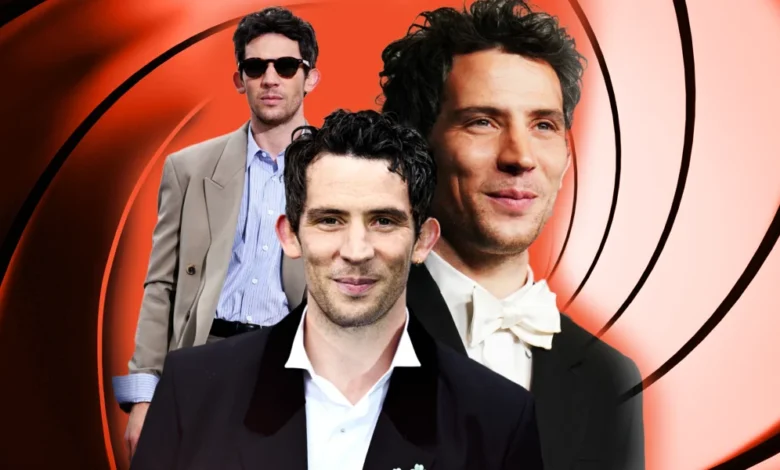
The search for the next James Bond has officially entered its most intense phase, with industry reports indicating that the list of final contenders for the coveted role has been narrowed down to a select group of actors. Among the names reportedly in the mix for the iconic British spy are Callum Turner, Jack Lowden, and Josh O’Connor, alongside a mystery candidate whose identity remains undisclosed. This casting process, which follows the conclusion of Daniel Craig’s five-film tenure, represents a critical juncture for Eon Productions as the franchise seeks to define the character for the 2026-2030 era.
A Legacy in Transition
The James Bond franchise, which originated with Ian Fleming’s 1953 novel Casino Royale, has historically navigated shifts in cultural expectations by reinventing its lead actor. From the suave, mid-century charm of Sean Connery to the heightened, gadget-focused theatricality of Roger Moore, and finally the gritty, introspective realism of the Daniel Craig era, the role has always required an actor capable of balancing traditional iconography with contemporary relevance.

Following the global success of No Time to Die (2021), which grossed over $774 million at the worldwide box office, the producers are tasked with a daunting challenge: maintaining the franchise’s status as the gold standard of action cinema while adapting to an audience that has evolved significantly since the mid-2000s. The current shortlist reflects a shift toward actors who possess both dramatic gravitas and a unique, non-traditional screen presence.
Profile of a Candidate: The Case for Josh O’Connor
Josh O’Connor has emerged as a particularly compelling, albeit polarizing, figure in the casting conversation. At 36, the Cheltenham-born actor brings a filmography that blends prestige television with high-concept indie cinema. His Emmy-winning portrayal of Prince Charles in Netflix’s The Crown demonstrated his ability to inhabit complex, historically significant figures with nuance and restraint.
However, his recent work in Luca Guadagnino’s Challengers and Rian Johnson’s Wake Up Dead Man: A Knives Out Mystery has showcased a different facet of his range. In these projects, O’Connor demonstrated a capacity for "modern charisma"—a magnetic, unpredictable energy that deviates from the rigid, stoic archetypes of Bond’s past. Industry analysts suggest that this "off-kilter" quality is exactly what a director like Denis Villeneuve—who is reportedly attached to the next project—might be seeking. By moving away from the "video game simulation" aesthetic of previous iterations, O’Connor offers a version of Bond that is grounded, relatable, and human.

The Director’s Vision: Denis Villeneuve and the Franchise Pivot
The potential involvement of Denis Villeneuve as a director for the upcoming installment has injected a new layer of prestige into the speculation. Villeneuve, known for his work on Dune and Blade Runner 2049, is celebrated for his ability to modernize massive intellectual properties while maintaining a singular, auteur-driven vision.
Villeneuve’s casting history—most notably his selection of Timothée Chalamet for the role of Paul Atreides—reveals a pattern of identifying talent that is on the precipice of global superstardom. When Chalamet was cast, he was a respected actor with limited blockbuster experience; by the time Dune reached theaters, he was a global icon. If Villeneuve is indeed involved in the Bond process, the casting of O’Connor would mirror this strategy: choosing an actor who is highly capable but not yet synonymous with the "action hero" archetype, thereby allowing the director to mold the character anew.
The Competitive Landscape
While O’Connor’s name has captured the most public discourse, the other rumored contenders bring their own distinct advantages. Callum Turner has cultivated a reputation for intense, high-stakes performances, most notably in the Apple TV+ series Masters of the Air. His physicality and screen presence align more closely with the traditional "leading man" expectations of the franchise.

Jack Lowden, meanwhile, presents a "seamless" transition. His six-season run on Slow Horses has effectively served as a long-form audition for the role of a British intelligence officer. His familiarity with the genre, combined with the critical acclaim the show has received, makes him a low-risk, high-reward candidate. The inclusion of a "mystery candidate" in the reporting by Deadline further complicates the field, suggesting that Eon Productions is keeping its options open for an actor who may not yet be at the forefront of the public’s imagination.
Chronology of the 007 Succession
- 2021: No Time to Die premieres, marking the final performance of Daniel Craig as James Bond.
- 2022-2024: Eon Productions maintains a period of silence regarding the future of the franchise, focusing on the 60th-anniversary celebrations of the film series.
- Early 2025: Initial screen tests for potential candidates begin in secret.
- Late 2025: Reports confirm that a shortlist has been finalized, with industry rumors highlighting O’Connor, Turner, and Lowden.
- Future: An official announcement regarding the director and the lead actor is expected in the coming months, with production timelines likely aiming for a 2027 or 2028 release.
Market Implications and Brand Identity
The financial stakes for Eon Productions and its distribution partners are immense. The James Bond franchise is a cornerstone of global cinema, and the choice of lead actor dictates the marketing strategy for the next decade. Historically, the announcement of a new Bond is met with initial skepticism; fans famously protested the casting of Daniel Craig in 2005, citing his height and hair color as reasons he was "unfit" for the role.
Today, that skepticism has been replaced by an understanding that the character must evolve to survive. Data from recent audience sentiment analysis suggests that viewers are increasingly drawn to "complex protagonists"—characters with internal flaws and moral ambiguity. O’Connor’s ability to portray characters who are morally gray, such as his role in La Chimera, aligns with this market shift.

Conclusion: The Path Forward
The discourse surrounding Josh O’Connor’s candidacy is, in many ways, the best endorsement he could receive. The fact that his potential casting elicits a debate about what a "Bond" should look and act like proves that he is a transformative choice. A franchise that is 25 films deep cannot rely on the same tropes indefinitely. By prioritizing an actor who brings a modern, distinct, and perhaps unconventional energy to the role, the producers have the opportunity to redefine the myth of 007.
Whether it is O’Connor, Turner, Lowden, or the whispered mystery candidate, the next James Bond will have the heavy burden of legacy and the rare opportunity of a blank slate. As the industry awaits official confirmation, the current casting cycle stands as a testament to the enduring power of the character and the relentless, often grueling, process of finding the next face of global espionage.