The National Oceanic and Atmospheric Administration (NOAA) has officially unveiled a set of proposed regulations that would fundamentally alter the protection status of the Pacific Islands Heritage (PIH) Marine National Monument. The proposal, published on November 9, 2026, seeks to open a massive expanse of ocean—exceeding one million square kilometers, or roughly double the landmass of California—to commercial fishing activities. This regulatory shift targets the waters surrounding Johnston Atoll, Wake Island, and Jarvis Island, specifically permitting industrial-scale fishing in the zone between 50 and 200 nautical miles from these landmarks. While the inner 50-nautical-mile radius remains restricted, the potential for expanded commercial access in this ecologically sensitive region has triggered an immediate and contentious debate between federal administrators, conservationists, and indigenous stakeholders.
A Chronology of Policy Shifts and Legal Challenges
The move to open the PIH to commercial interests is not an isolated policy decision but rather the latest development in a long-standing tug-of-war between conservation mandates and the drive for expanded domestic resource extraction.
The trajectory of this issue gained momentum in April 2025, when the Trump administration issued a presidential proclamation calling for the "unleashing" of commercial fishing operations within the PIH. Following this executive directive, NOAA Fisheries attempted to authorize fishing in specific sectors of the protected monument through a formal letter. That administrative maneuver was met with a swift legal challenge led by a coalition of conservation groups represented by the environmental law organization Earthjustice. In a significant victory for environmental advocates, a federal court ruled against the agency, nullifying the attempt to bypass formal rulemaking procedures.
Undeterred by the court’s decision, the administration has returned to the issue through the formal regulatory process. By publishing the proposed rules in the Federal Register, NOAA is seeking to provide a legal foundation for the opening of these waters. This period of public comment, which remains open until December 9, 2026, serves as the next critical juncture in this ongoing dispute. Environmental legal experts, including David Henkin of Earthjustice, have already signaled their intent to initiate further litigation if the rules are finalized, arguing that the proposal ignores the ecological necessity of maintaining these waters as a sanctuary.
Ecological Significance and Biodiversity Hotspots
The Pacific Islands Heritage Marine National Monument is widely recognized by marine biologists as a critical repository of global biodiversity. The area is defined by a complex mosaic of ecosystems that have remained relatively insulated from industrial pressure for years. According to data provided by the Pacific Islands Heritage Coalition, the monument hosts a diverse array of geological and biological features essential to the health of the broader Pacific Ocean.
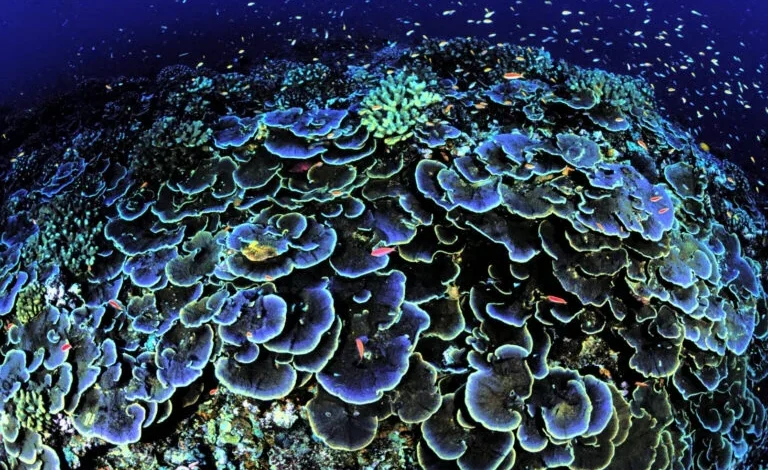
The region contains 165 documented seamounts—underwater mountains that act as vital hubs for marine life. These features generate upwelling currents that bring nutrient-rich waters to the surface, supporting a robust food web that includes migratory species such as sharks, rays, whales, and sea turtles. Furthermore, the area is home to coral reef systems that have evolved over millennia, with some structures estimated to be 5,000 years old. These reefs are not merely static geological features; they serve as critical nursery grounds for fish populations that drift across the Pacific, influencing the health of fisheries far beyond the monument’s boundaries.
Conservationists argue that allowing commercial vessels to operate within these waters introduces risks that the current proposal fails to adequately address. These risks include the incidental bycatch of threatened species, the potential for oil spills, and the disruption of acoustic environments essential for marine mammal navigation and communication.
The Economic Rationale and NOAA’s Position
In its supporting documents for the proposed rule, NOAA Fisheries maintains that the policy change is consistent with its mandate to support the long-term sustainability of U.S. fisheries. The agency posits that the expansion of fishing grounds will provide logistical benefits to the U.S. commercial fleet, potentially increasing yields and reducing operational costs for vessels currently forced to travel further afield.
However, the agency’s own internal assessments offer a nuanced view. While the proposal aims to facilitate industry expansion, NOAA simultaneously admits that the anticipated economic benefits of opening the PIH are likely to be "minor." This acknowledgment has drawn scrutiny from critics who question why the government would risk significant ecological damage for what appears to be a marginal gain in operational efficiency.

From the administration’s perspective, the policy is framed as a matter of sovereignty and economic competitiveness. By authorizing fishing in the U.S. Exclusive Economic Zone (EEZ) surrounding these remote islands, officials argue they are maximizing the utilization of American resources. The goal, according to the April 2025 proclamation, is to reduce reliance on foreign-caught seafood and bolster the domestic fishing industry by providing access to historically restricted, high-value fishing zones.
Cultural and Indigenous Perspectives
The opposition to the proposal is rooted not only in environmental science but also in the deep cultural and historical significance of the Pacific waters. For Pacific Islanders, the monument is more than a legal designation; it is a vital part of a heritage tied to the ocean.
William Aila, a Native Hawaiian fisherman and former chair of the Hawai‘i Department of Land and Natural Resources, has been a vocal critic of the government’s plans. Aila emphasizes that the ocean has historically served as a place of connection and identity for Pacific peoples. He argues that the government’s classification of potential environmental harm as "negligible" fundamentally misunderstands the interconnectedness of these marine ecosystems and the cultures that depend on them.
"These same waters provide threatened and endangered wildlife a rare refuge where they can feed, breed, and recover," Aila stated. His perspective highlights a growing movement among indigenous communities to assert a greater role in the management of marine protected areas, arguing that current federal management often prioritizes industrial exploitation over the preservation of ancestral waters and biodiversity.
Analysis: Implications for Marine Protection
The proposed regulations for the PIH represent a litmus test for the future of marine protected areas (MPAs) in the United States. If the rule is finalized, it would set a significant precedent, potentially signaling a shift where the "protected" status of national monuments becomes subject to the prevailing political or economic priorities of the executive branch.
From an environmental policy standpoint, the implications are twofold. First, the reduction of the "no-take" zone could fragment existing migratory corridors, making it more difficult for species like sea turtles and sharks to navigate safely across the Pacific. Second, the reliance on an administrative definition of "negligible" harm—which critics argue ignores the cumulative, long-term impact of industrial fishing—could be used as a template for opening other protected areas to commercial exploitation.
The economic analysis also remains a point of contention. Critics point to global studies on marine reserves, which suggest that "spillover effects"—where fish populations from protected areas migrate into adjacent, fished waters—provide a greater long-term economic return than the immediate harvest within the protected zone. By allowing commercial activity in the monument, the government may be trading long-term stock sustainability for short-term harvest increases.
Next Steps and Public Participation
As the December 9 deadline for public comment approaches, the federal government faces a high-stakes decision. The outcome of this process will likely determine the fate of the monument’s integrity for the foreseeable future. The sheer scale of the area involved—covering 1 million square kilometers—ensures that the final decision will have ramifications far beyond the borders of the Pacific Islands Heritage Marine National Monument.
While the government continues to advocate for the proposal as a balanced approach to resource management, the coalition of environmentalists and cultural advocates remains prepared to escalate the matter. With the previous court ruling acting as a historical benchmark, the legal landscape is primed for a renewed challenge. For now, the future of these pristine Pacific waters rests on the weight of public testimony and the ability of the legal system to interpret the protections originally afforded to the monument under the Antiquities Act and other relevant environmental statutes.
As stakeholders await the final determination, the debate continues to center on a fundamental question: Is the primary value of a national monument found in the resources it can yield for the present, or in the biodiversity it preserves for the future? For the administration, the answer leans toward economic utility; for conservationists and indigenous leaders, the answer remains rooted in the sanctity of a vanishing wild.