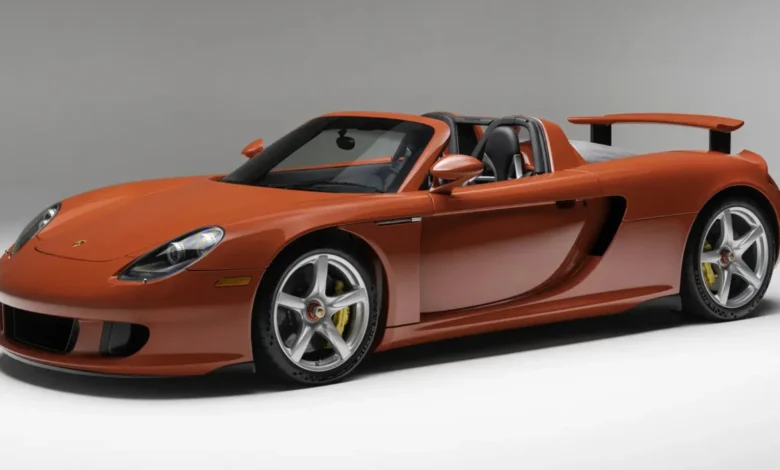
The collector car market continues to redefine financial expectations for late-20th and early-21st-century performance vehicles, with icons from the 1990s and 2000s regularly commanding figures that far exceed their original MSRPs. A prime example of this unprecedented market trajectory is set to cross the auction block next month through RM Sotheby’s. A meticulously maintained, highly rare Guards Red 2004 Porsche Carrera GT is projected to achieve between $5.5 million and $6.5 million. If the vehicle hits the higher end of these pre-auction estimates, it will command approximately 17 times its original retail price of roughly $390,000 when it was first introduced to the United States market.
The escalating value of the Carrera GT is part of a broader macroeconomic and enthusiast trend. Only a few years ago, acquiring a pristine, low-mileage example of Porsche’s analog flagship required an investment hovering under $1.5 million. In recent years, however, values have surged aggressively. Multiple Carrera GTs have broken the $3 million barrier at public auctions, culminating in a landmark sale earlier this year that reached $6.7 million. Industry analysts attribute this sharp valuation spike to a growing appreciation for analog supercars in an era dominated by heavily computerized, turbocharged, and electrified hypercars.
Rarity and Factory Specifications
The extraordinary valuation of this specific 2004 model is driven heavily by its factory specifications and limited production numbers. Porsche manufactured a total of just 1,270 units of the Carrera GT globally between 2003 and 2006 at its facility in Leipzig, Germany. Among these limited units, exterior color rarity plays a massive role in collector desirability.
This particular car is finished in Guards Red, making it one of only 80 examples globally to leave the factory in this iconic shade. Furthermore, historical registry data indicates that only 42 of those Guards Red models were built to United States specifications, establishing the vehicle as an exceptionally scarce find for domestic collectors. Beyond its paintwork, the car has lived a deeply sheltered, pampered existence. According to the official RM Sotheby’s auction catalog, the odometer reads a mere 2,203 miles, suggesting the vehicle has been treated primarily as an investment-grade static display rather than a daily driven track car.
An Exhaustive, Five-Figure Mechanical Service
Maintaining a vehicle of this caliber is an extraordinary financial undertaking, particularly given the specialized engineering required to service its motorsport-derived components. Earlier this year, the owner dispatched the car to Graham Rahal Performance in Indiana to undergo a comprehensive maintenance and preservation overhaul. The resulting service invoice totaled an astonishing $88,056.
The service regimen was extensive, covering both modern convenience upgrades and critical powertrain maintenance. To enhance usability while retaining originality, the original factory radio was replaced with an updated unit featuring modern Bluetooth connectivity. Additionally, the car was fitted with a brand-new Öhlins suspension system, and the exhaust was modified to optimize acoustic delivery. To complement the vehicle, the owner also purchased an official, factory-matching Carrera GT dark gray luggage set at a staggering cost of $24,249.
The mechanical servicing of the powertrain alone accounted for $46,601 of the total bill, which included $7,200 dedicated strictly to specialized technician labor. Service records show that mechanics replaced the ignition coils, air filters, twin intake camshafts, spark plugs, thermostat, and a comprehensive array of specialized O-rings and fastening bolts. To ensure optimal mechanical health, the engine was replenished with fresh 0W40 Mobil 1 Supercar synthetic engine oil, fresh coolant, and new transmission gear oil.
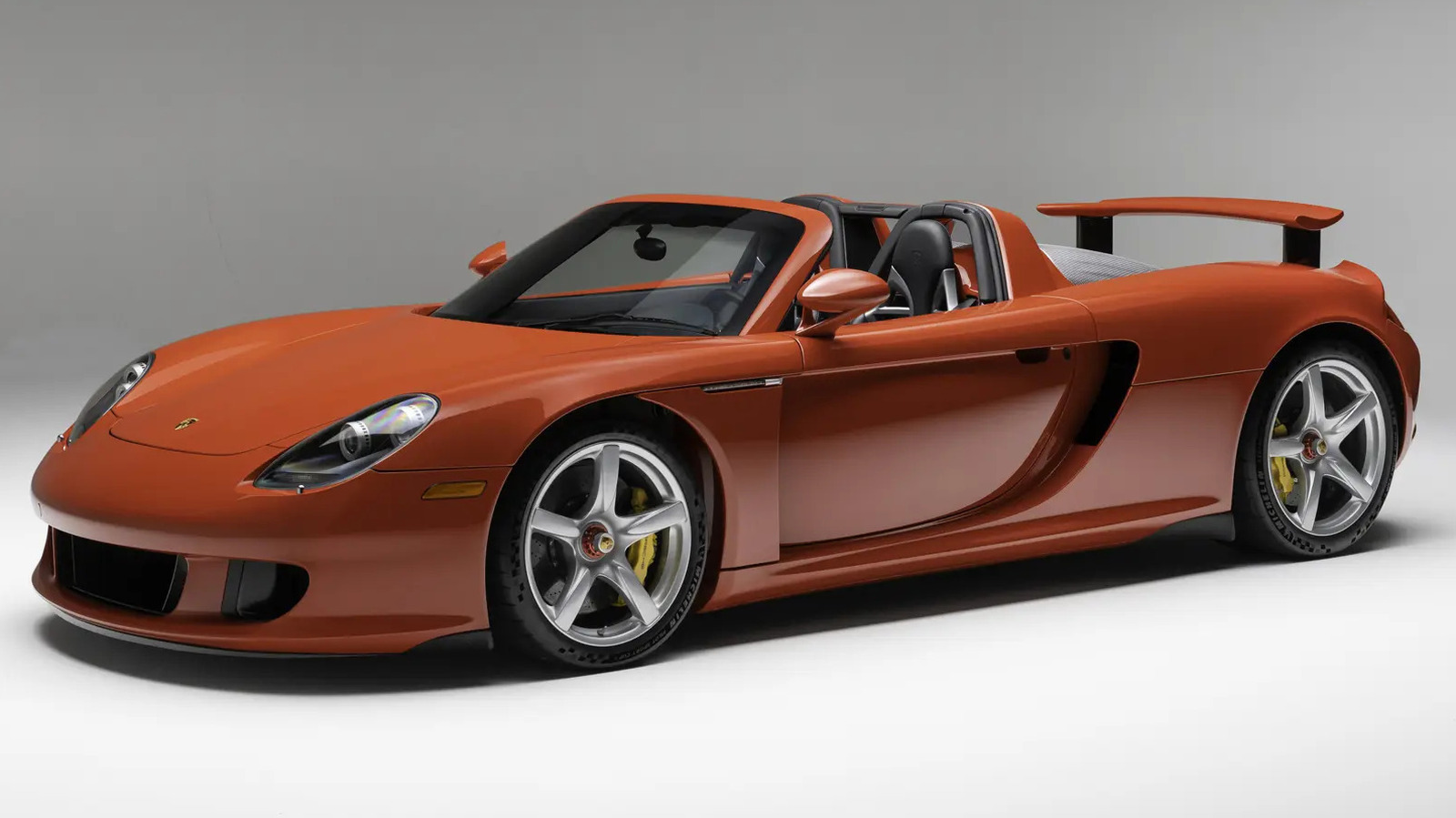
Chronology and Development of the Analog Legend
The genesis of the Porsche Carrera GT remains one of the most fascinating chapters in modern automotive history. The vehicle’s roots trace back to an aborted Le Mans prototype racing project. In the late 1990s, Porsche developed a new V10 engine intended for endurance racing competition. However, rule changes and a corporate shift toward the Cayenne SUV project temporarily shelved the racing program.
Refusing to let the masterpiece of an engine go to waste, Porsche engineers repurposed the powerplant for a dedicated road-going halo car. The concept debuted to universal acclaim at the 2000 Paris Motor Show, prompting overwhelming customer demand that forced Porsche to greenlight full-scale production. Manufacturing officially commenced in 2003, with the first customer deliveries taking place shortly thereafter. Production concluded in May 2006, slightly ahead of schedule due to impending safety and airbag regulatory changes in the United States that would have required costly structural redesigns.
The Heart of the Beast: The Iconic V10 Powertrain
What ultimately cements the Carrera GT’s legendary status within automotive lore is its powertrain. It remains the sole production road car in Porsche’s storied history to be powered by a V10 engine.
The naturally aspirated 5.7-liter dry-sump powerplant is an engineering marvel, engineered to deliver visceral performance without the intervention of modern electronic driving aids or turbochargers. The engine generates a formidable 603 horsepower at a screaming 8,000 rpm, accompanied by 435 pound-feet of torque peaking at 5,750 rpm. Power is routed exclusively to the rear wheels through a traditional six-speed manual transmission, operated via a high-performance carbon-ceramic clutch.
This pure, unadulterated mechanical layout makes the Carrera GT notoriously challenging to master, earning it a reputation among professional drivers and enthusiasts alike as a true driver’s car that demands absolute respect. Unlike modern hypercars equipped with lightning-fast dual-clutch transmissions and complex all-wheel-drive torque-vectoring systems, the Carrera GT relies entirely on human input, mechanical grip, and analog feedback.
Broader Market Implications and Future Outlook
The upcoming sale of this Guards Red 2004 Porsche Carrera GT serves as a bellwether for the upper echelon of the collector car market. Market analysts and auction houses are watching closely to see whether valuations for analog supercars will continue their aggressive upward trajectory or begin stabilizing.
The convergence of low mileage, extreme color rarity, documented recent servicing by a premier specialist facility, and single-digit production pedigree places this vehicle in a premier asset class. As modern automotive engineering shifts rapidly toward electrification, autonomy, and heavy digital integration, the demand for tactile, high-revving internal combustion masterpieces from the turn of the millennium shows no signs of waning. For high-net-worth collectors, acquiring a machine like this is no longer merely about automotive ownership; it is about securing a tangible piece of internal combustion history that can never be replicated again.