The Convergence of Power and Profit: How Donald Trump’s Second Term Redefined American Political Corruption

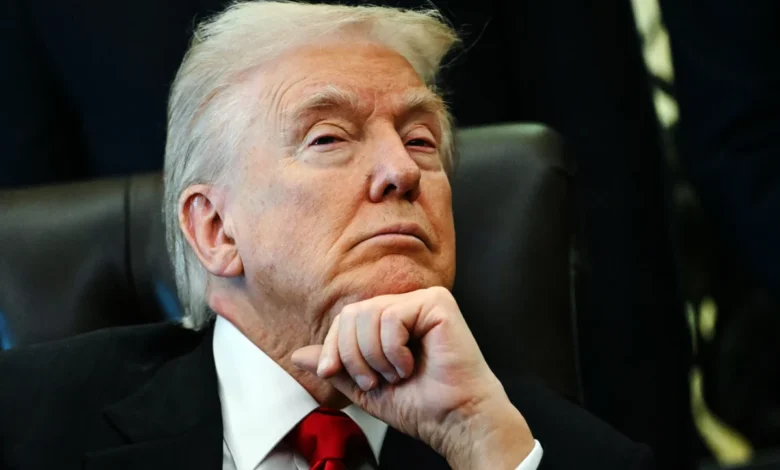
On the evening of May 22, 2025, a presidential transport departed the South Lawn of the White House, carrying Donald Trump across the Potomac River to his private golf club in Sterling, Virginia. The flight marked a continuation of a blurring boundary between executive responsibilities and private commercial interests that has come to characterize modern American governance. Trump arrived at the Trump National Golf Club to host an exclusive dinner for top holders of a cryptocurrency bearing his name, an event that underscored the unprecedented intersection of presidential authority and digital asset speculation.
Outside the gates of the private club, more than one hundred demonstrators gathered, holding placards denouncing what they termed cryptocurrency corruption and asserting that public office was not for sale. Inside, a crowd of approximately 200 guests—more than half of whom were reportedly based outside the United States—awaited the president’s arrival. The guest list included prominent international figures such as China-born crypto billionaire Justin Sun, alongside numerous anonymous digital wallet holders. The White House did not release an official attendee roster, and credentialed reporters were excluded from the proceedings.
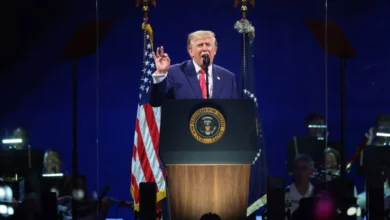
Trump delivered a brief address praising the cryptocurrency sector and outlining his administration’s initiatives to integrate digital assets into traditional American financial institutions. Following his remarks, the event concluded with a brief musical presentation. The gathering served as the culmination of a promotional campaign launched weeks earlier via digital platforms tied to the memecoin initiative, offering top-ranking digital asset holders exclusive access to the nation’s chief executive.
The Roots of Transactional Governance
To understand the architecture of this second-term administration, political historians and analysts frequently examine Trump’s formative years in the New York boroughs of Queens and Brooklyn. Raised by real estate developer Fred Trump, the future president observed firsthand how municipal politics and private development operated in tandem. The elder Trump cultivated relationships with local Democratic party organizations, securing government-backed financing and municipal decisions that directly influenced project valuations. Figures such as political boss Meade Esposito and lawyer Roy Cohn imparted lessons on leveraging institutional frameworks, countering accusations through aggressive litigation, and viewing government mechanisms as instruments for personal and commercial advancement.
During his initial term in office from 2017 to 2021, Trump retained ownership of his commercial empire while delegating daily operations to his adult children. Properties such as Mar-a-Lago and Washington hotels served as venues where lobbyists, foreign officials, and political donors purchased access and influence. Following his departure from office, these commercial enterprises expanded to include digital trading cards, media ventures, and substantial cryptocurrency undertakings.
Upon returning to the White House in January 2025, the scale of these interwoven interests expanded exponentially. The second administration saw a convergence of public regulatory powers and private family ventures, encompassing foreign real estate developments, licensing agreements, and digital asset protocols. Observers noted that corporations, foreign governments, and domestic entities engaged with a presidency that directly controlled tariffs, corporate mergers, federal contracts, regulatory oversight, executive pardons, and technological access.
Global Expansion and Digital Assets
The international footprint of the Trump Organization grew significantly during the second term, expanding into regions including Vietnam, Saudi Arabia, Qatar, and the United Arab Emirates. In the Middle East, high-profile financial transactions involving sovereign-backed investment funds and World Liberty Financial—a cryptocurrency venture associated with the Trump family—drew intense scrutiny from ethics watchdogs and financial regulators.
Notably, an Abu Dhabi investment vehicle linked to senior Emirati officials acquired a substantial stake in World Liberty Financial, with significant proceeds directed toward entities controlled by the Trump family. Subsequent policy decisions by the administration, including agreements granting foreign nations access to advanced American artificial intelligence hardware and the resolution of high-profile federal investigations involving prominent cryptocurrency executives, amplified concerns regarding potential conflicts of interest.
Domestically, major technology corporations, defense contractors, and legal firms navigated the new political landscape through strategic financial accommodations. Inaugural fundraising committees amassed record-breaking sums from corporate donors with active federal interests. Furthermore, executive directives targeting prominent law firms and academic institutions prompted several major organizations to commit hundreds of millions of dollars in pro bono legal services and financial settlements in exchange for regulatory relief and the restoration of federal grants.
Institutional Precedents and Legal Architecture
The mechanisms of influence during Trump’s second term departed significantly from historical scandals such as Teapot Dome or the Watergate break-in. While past administrations faced scrutiny over officials accepting bribes or utilizing federal agencies for partisan political objectives, the second Trump presidency integrated commercial profit-seeking directly into the apparatus of executive power. Trump retained substantial financial interests in ventures that benefited directly from government policies, rendering traditional distinctions between public duty and private enrichment obsolete.
The legal environment surrounding the presidency also shifted markedly. Following the Supreme Court’s 2024 ruling on presidential immunity, subsequent judicial decisions in 2026 curtailed the independence of federal regulatory bodies, granting the executive branch broader removal authority over agencies such as the Federal Trade Commission. These structural changes enhanced presidential leverage over corporate mergers, antitrust proceedings, and regulatory enforcement, compounding the value of maintaining favorable financial relationships with the administration.
Concurrently, traditional oversight mechanisms exercised by the legislative branch remained largely subdued. Despite the unprecedented volume of foreign and domestic capital flowing into family-affiliated enterprises, congressional inquiries into potential conflicts of interest were virtually absent, maintained by a legislative majority closely aligned with the executive agenda.
Implications for American Democracy
Scholars of American political development have characterized the governance model of Trump’s second term as a transition from traditional transactional politics to a deeply institutionalized, relational system of influence. Rather than relying on isolated quid pro quo arrangements, the administration fostered an environment where continuous commercial patronage, digital asset investment, and institutional accommodation yielded systemic advantages.
By effectively collapsing the traditional barrier between private commercial enterprise and public executive authority, the administration established a global framework where presidential power and personal wealth operated as a singular entity. As regulatory oversight contracted and executive immunity expanded, the foundational tenets of accountability and separation of powers faced unprecedented stress tests, leaving lasting alterations on the landscape of American governance.