Macklemore Dropped from Ed Sheeran Tour Amid Allegations of Coordinated Corporate Censorship Over Pro-Palestine Advocacy

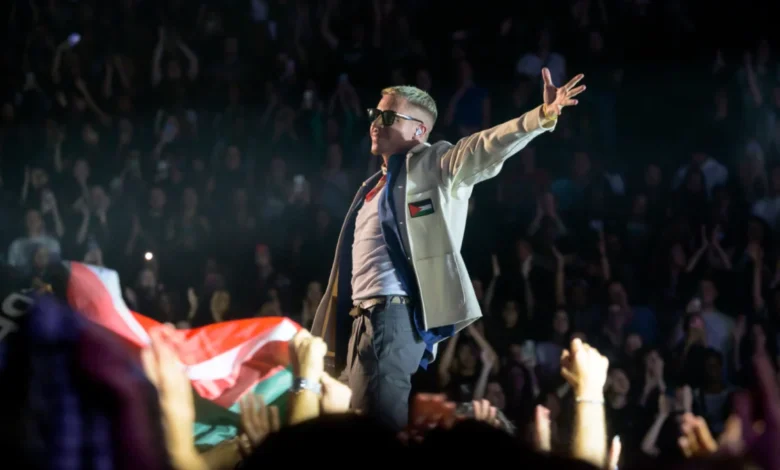
The recent removal of rapper Macklemore from Ed Sheeran’s ongoing concert tour has ignited a firestorm regarding the intersection of corporate power, stadium ownership, and the suppression of political speech. The controversy, which centers on Macklemore’s vocal support for Palestinians amidst the ongoing conflict in Gaza, has led to a broader conversation about the influence of billionaire venue owners over the cultural landscape. As the music industry grapples with these developments, the incident highlights a growing trend where artists face professional repercussions for taking public stances on volatile geopolitical issues.
The sequence of events leading to the rapper’s removal began to crystallize in early September 2024. Macklemore, who had been serving as a supporting act for Ed Sheeran’s tour, performed at MetLife Stadium in New Jersey on September 4 and 5. During these performances, he prominently featured his 2024 track, Hind’s Hall, a song explicitly addressing the humanitarian crisis in Gaza and the campus protest movements demanding divestment and a ceasefire. The song serves as a tribute to Hind Rajab, a five-year-old Palestinian girl killed in 2024, and has become an anthem for activists worldwide.
Following these performances, allegations emerged that New England Patriots owner Robert Kraft had exerted significant pressure on Sheeran’s management team. According to statements made by Macklemore, Kraft reportedly signaled that the rapper would be barred from performing at Gillette Stadium, a Patriots-owned venue, due to his political advocacy. Furthermore, the rapper alleged that Kraft mobilized a network of fellow NFL stadium owners to issue an ultimatum to Sheeran’s team: retain Macklemore and risk losing access to major professional sports venues across the United States.
Chronology of the Disruption
The pressure campaign appears to have been swift and decisive. By mid-September, the collaborative tour faced a major fracture. The venues in question—which include homes to the Philadelphia Eagles, Atlanta Falcons, Carolina Panthers, Indianapolis Colts, Dallas Cowboys, and Tampa Bay Buccaneers—all operate under the control of powerful team owners.
By Tuesday afternoon following the initial reports, the professional fallout was evident. Four remaining opening acts scheduled for the tour announced their withdrawal in a show of solidarity with Macklemore. Among those stepping down was the producer and artist Finneas, who publicly stated, “Artists must not be silenced when they speak up for the oppressed. I have decided to withdraw from my upcoming tour dates with Ed Sheeran. I stand with Palestine and its people.”
This mass withdrawal underscores the growing divide within the music industry. While Sheeran remains one of the world’s most commercially successful artists, the ability of stadium conglomerates to curate the political atmosphere of their events has set a precedent that many in the artistic community now view as a direct threat to freedom of expression.
The Role of Corporate Venue Control
The venues hosting the Sheeran tour are largely owned by the same entities that operate the NFL’s most lucrative stadiums. While these facilities are often built or subsidized with public funds, they are operated as private enterprises. This structure allows owners to enforce contractual stipulations that effectively serve as a mechanism for political censorship.
A notable contrast has been drawn between the treatment of Macklemore and other performers. For instance, Kanye West, who has faced widespread condemnation for antisemitic rhetoric, has continued to book and perform in these same stadiums with little to no visible pushback from ownership groups. This disparity has led critics to argue that the censorship is not motivated by a concern for public discourse or hate speech, but specifically targets pro-Palestinian advocacy.
Official Responses and Political Repercussions
The incident has drawn attention from federal lawmakers, further elevating the issue from a private industry dispute to a matter of public policy. Representative Alexandria Ocasio-Cortez (D-N.Y.) addressed the controversy during a recent media appearance, framing the actions of stadium owners as an abuse of power.
“When you see what Robert Kraft did to line up all of the stadiums to censor speech in that one specific way, it’s become clear that this is not just about one music artist or two music artists, but this is about how just a handful of stadium owners and the elite can prevent an entire massive issue—in this case, the genocide in Gaza—from being discussed in public forums,” Ocasio-Cortez stated.
While the Kraft organization has not released a detailed rebuttal to the specific claims of coordinated blacklisting, the influence of such figures in the music touring ecosystem remains undeniable. For major acts, access to high-capacity stadiums is essential for financial viability; when owners leverage this access, they hold significant sway over which political messages are permitted within the walls of their arenas.
Broader Implications for the Music Industry
The Macklemore case is not an isolated event. Over the past year, several high-profile artists and public figures have faced professional consequences for their stance on the Gaza conflict. From the removal of Bella Hadid from advertising campaigns to the cancellation of concerts for artists like Kehlani, the threshold for what constitutes "controversial" speech in the entertainment industry has narrowed.
Industry analysts note that this trend may lead to a more fragmented concert market. If artists find that major sports stadiums are effectively off-limits due to their political views, they may gravitate toward independent, community-owned, or non-traditional venues. However, such a shift could significantly impact an artist’s reach and ability to generate revenue, creating a systemic barrier to entry for politically vocal performers.
Furthermore, the scale of this specific incident—involving one of the world’s most successful touring artists, Ed Sheeran—serves as a cautionary tale. If an artist of Sheeran’s stature cannot secure a performance space while maintaining his choice of supporting acts, the implication is that the power dynamic between artists and venue owners is shifting heavily in favor of the latter.
Macklemore’s Response and Continued Advocacy
In the wake of his removal, Macklemore has maintained a focus on the humanitarian crisis that inspired his advocacy. On Wednesday, the rapper pledged to donate his entire $1 million in net earnings from the tour to six organizations providing direct aid to the Palestinian people.
In a social media post, he addressed the controversy directly, stating: “The victims are the Palestinian people. The men, women, and children who have been killed, starved, displaced, and forced to live through unimaginable violence. More than 20,000 children have been killed in Gaza alone.”
Macklemore also extended an invitation to Robert Kraft, challenging the billionaire to match his $1 million donation. “Whatever we disagree about, perhaps we can agree on this: Palestinian lives are worth protecting,” he wrote. As of the time of reporting, there has been no official response from Kraft regarding the challenge or the broader allegations of organized censorship.
Future Outlook
The fallout from the Sheeran tour serves as a pivotal moment for the entertainment industry. As legal and ethical debates regarding free speech in privately-owned public spaces continue to gain traction, the role of stadium owners will likely face increased scrutiny from labor unions, artists’ guilds, and civil rights organizations.
The incident has successfully galvanized a segment of the artistic community that is increasingly willing to risk commercial opportunities to maintain their political independence. Whether this will lead to a broader movement toward ethical touring practices or result in further professional isolation for dissenters remains to be seen. What is clear, however, is that the intersection of billionaire-owned infrastructure and political activism has become one of the most contentious battlegrounds in contemporary culture.