Indigenous Leaders Present Landmark 12-Point Reform Plan to United Nations Amidst Global Human Rights Stagnation and Funding Crisis

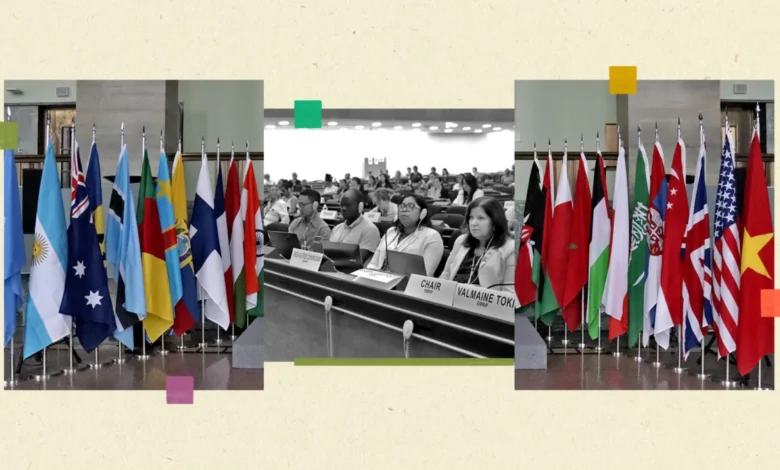
The United Nations Expert Mechanism on the Rights of Indigenous Peoples (EMRIP) has finalized a comprehensive 12-point proposal aimed at compelling the international community to move beyond rhetorical support and toward substantive protection of Indigenous lives, lands, and sovereignty. Presented during a period of intersecting global crises—including the rapid advancement of artificial intelligence, the escalating climate emergency, and a documented "regression" in human rights protections—the plan serves as a roadmap for the U.N. Human Rights Council to address the systemic marginalization of the world’s 476 million Indigenous people. The proposal arrives at a precarious moment for the United Nations itself, as the very mechanisms designed to amplify Indigenous voices face severe financial instability and an uncertain future under looming institutional reforms.
A Call for Decisive Action Over Rhetoric
The core of the 12-point plan is a demand for "sweeping and rapid action" by both the United Nations and individual member states. Indigenous leaders argue that while international declarations exist on paper, the lived reality for their communities is one of increasing vulnerability. Cora McGuire-Cyrette, a member of the Bingwi Neyaashi Anishinaabek representing the Ontario Native Women’s Association, emphasized that the time for patience has passed. She noted that Indigenous women, children, and families have an inherent right to safety and self-determination that is currently being ignored on the global stage.
The recommendations are broad in scope, reflecting the multifaceted nature of modern threats to Indigenous survival. Among the primary demands is the call for heightened legal protections for Indigenous peoples living in voluntary isolation or initial contact. These groups, primarily located in the Amazon basin and parts of Southeast Asia, are increasingly threatened by illegal logging, mining, and agribusiness, which bring not only environmental destruction but also diseases to which isolated populations have no immunity.
Furthermore, the plan addresses the burgeoning threat of artificial intelligence and digital exploitation. Indigenous leaders are seeking "data sovereignty," a framework that would give communities control over how their cultural knowledge, languages, and genetic data are collected and used by tech corporations. In an era where AI models are trained on vast datasets, there is a growing concern that Indigenous languages and traditional ecological knowledge are being extracted without consent, leading to cultural appropriation or the spread of misinformation.
The Stagnation of Global Human Rights
The urgency of the EMRIP proposal is underscored by a sobering assessment of the current geopolitical climate. Albert Barume, the U.N. Special Rapporteur on the Rights of Indigenous Peoples and former EMRIP chairperson, warned delegates of a "widespread trend of stagnation and regression." According to Barume’s analysis, the momentum that followed the adoption of the U.N. Declaration on the Rights of Indigenous Peoples (UNDRIP) in 2007 has largely stalled.
Barume pointed out that in recent years, almost no member states have introduced new, meaningful measures to protect Indigenous rights. More alarmingly, nations that previously had robust legal and policy frameworks are now actively dismantling those protections. This regression is often fueled by economic interests in extractive industries and a shift toward nationalist politics that prioritize state sovereignty over the rights of distinct Indigenous nations.
This trend is visible in various regions, including Aotearoa New Zealand. Macy Duxfield, representing the Māori nations of Ngaa Rauru, Te Ātihaunui-a-Pāpārangi, and Ngāi Tahu, described a domestic policy environment that is increasingly hostile to Māori self-determination. Despite these setbacks, Duxfield highlighted the intergenerational nature of the struggle, stating that current leaders have inherited the labor of their ancestors and are duty-bound to preserve it for future descendants.
Financial Instability Threatening Indigenous Platforms
Even as Indigenous leaders refine their demands, the international platforms available to them are crumbling due to a lack of financial support. EMRIP is one of three primary U.N. bodies dedicated to Indigenous issues, alongside the Permanent Forum on Indigenous Issues and the Special Rapporteur. All three are currently operating under a cloud of fiscal uncertainty.
A critical component of Indigenous participation at the U.N. is the Voluntary Fund for Indigenous Peoples. This fund provides financial assistance to Indigenous representatives, allowing them to travel to Geneva or New York to participate in human rights sessions. Without this support, the "Indigenous voice" at the U.N. would be limited to those with the private wealth or organizational backing to self-fund, effectively silencing the most marginalized communities.
Marjolaine Étienne, an Innu from the Pekuakamiulnuatsh community in Quebec, reported that the Voluntary Fund is in a "perilously low" state. The statistics reveal a stark lack of international commitment:
- Only eight countries currently contribute to the U.N. Voluntary Fund for Indigenous Peoples.
- The fund’s total budget is less than $2 million annually.
- The U.S., despite its large Indigenous population and significant global influence, does not contribute to the Voluntary Fund or the U.N. Trust Fund for Indigenous Peoples.
- Only three countries contribute to the Trust Fund for Indigenous Peoples.
McGuire-Cyrette argued that the U.N.’s ongoing "liquidity crisis" must not be used as a pretext to scale back the mandate of EMRIP or reduce the frequency of country-specific engagements. For many Indigenous communities, these U.N. sessions are the only venue where they can hold their national governments accountable for human rights abuses.
Chronology of Indigenous Advocacy at the United Nations
The current 12-point plan is the latest chapter in a decades-long struggle for recognition within the international legal system. To understand the significance of the proposal, it is necessary to view it through a historical lens:
- 1923: Haudenosaunee Chief Deskaheh travels to Geneva to speak to the League of Nations, but is denied the right to address the assembly.
- 1982: The U.S. Working Group on Indigenous Populations is established, marking the first formal U.N. body dedicated to these issues.
- 2007: After 25 years of negotiations, the U.N. General Assembly adopts the Declaration on the Rights of Indigenous Peoples (UNDRIP). While non-binding, it sets a global standard for treatment and rights.
- 2014: The World Conference on Indigenous Peoples results in an outcome document where states commit to implementing UNDRIP at the national level.
- 2023-2024: EMRIP identifies a "regression" in rights and begins drafting the 12-point plan to address modern threats like AI and the funding collapse of Indigenous mechanisms.
The Intersection of AI, Climate, and Gender
The enriched proposal highlights that Indigenous rights cannot be viewed in isolation from broader global challenges. The inclusion of Indigenous women in decision-making is a cornerstone of the 12 points. Leaders emphasized that Indigenous women are often the primary keepers of traditional knowledge and the most affected by environmental degradation and gender-based violence. McGuire-Cyrette’s call for autonomy for women and girls is a direct response to the global crisis of Missing and Murdered Indigenous Women and Girls (MMIWG), which activists argue is exacerbated by a lack of legal jurisdiction and protection on Indigenous lands.
Climate change also remains a central pillar of the demand for action. Indigenous lands contain approximately 80% of the world’s remaining biodiversity, yet Indigenous peoples are often excluded from high-level climate negotiations. The 12-point plan insists that "climate action" must involve the recognition of Indigenous land titles, as secure land tenure is statistically linked to lower rates of deforestation and more resilient ecosystems.
The threat of Artificial Intelligence is perhaps the most contemporary addition to the Indigenous agenda. As AI developers scrape the internet for data, there is a risk of "digital colonialism," where Indigenous languages are commodified or used to create deepfakes that misrepresent cultural ceremonies. The EMRIP proposal calls for international standards that require "free, prior, and informed consent" before Indigenous cultural heritage is used in algorithmic training.
Analysis of Implications and the UN80 Reform
The timing of this proposal is critical due to the "UN80" initiative—a sweeping effort to reform the United Nations as it approaches its 80th anniversary. While the U.N. describes these reforms as a way to increase "efficiency," Indigenous experts like Sheryl Lightfoot, the North America region expert for EMRIP, expressed concern. There is a fear that "efficiency" may become a euphemism for consolidating or eliminating specialized bodies like EMRIP to save costs.
"There are a lot of unanswered questions right now about the reforms and what the impacts of that might be for Indigenous-specific mechanisms," Lightfoot stated. The risk is that Indigenous issues will be folded into broader human rights categories, losing the specific focus on self-determination and collective rights that distinguishes Indigenous advocacy from individual civil rights.
If the U.N. Human Rights Council adopts the 12 recommendations, it would signal a renewed commitment to the principles of UNDRIP. However, if the funding crisis continues and the UN80 reforms marginalize specialized bodies, the gap between international law and the reality on the ground will likely widen.
The 12-point plan is more than a list of requests; it is a challenge to the legitimacy of the United Nations as a protector of universal human rights. As the delegates concluded their session, the sentiment was clear: the survival of Indigenous cultures in the 21st century depends on whether the world’s governments view Indigenous rights as an optional policy or a fundamental obligation. For the leaders behind the proposal, the goal is to ensure that the work of their ancestors is not erased by the fiscal or political "liquidity crises" of the present.
Related posts: