Great Wall Motor Updates Ora Ballet Cat EV With Increased Power and Enhanced Performance Specifications for 2026 Model Year

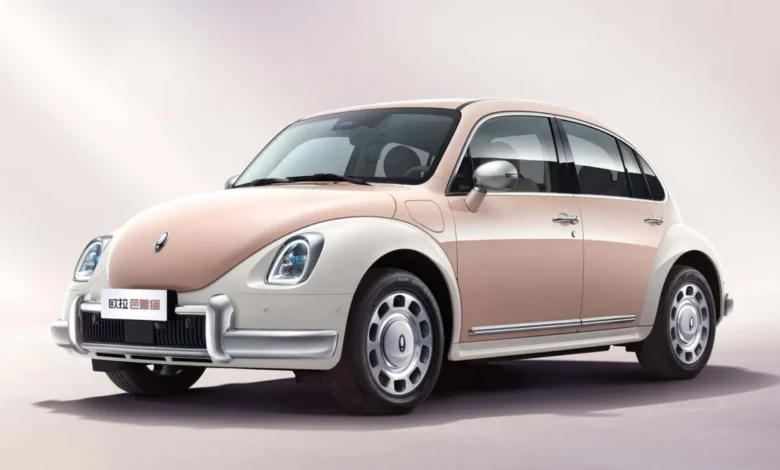
The automotive landscape in China continues to evolve with rapid-fire technological updates, and the latest beneficiary of this fast-paced development cycle is the Ora Ballet Cat, a vehicle that has garnered international attention for its striking resemblance to the classic Volkswagen Beetle. Great Wall Motor (GWM), the parent company of the electric-only Ora brand, has officially filed documentation with China’s Ministry of Industry and Information Technology (MIIT) detailing a significant mid-cycle refresh for the 2026 model year. This update is headlined by a substantial increase in powertrain output and a shift in battery chemistry, aimed at revitalizing interest in a model that occupies a unique, albeit niche, position in the world’s largest electric vehicle market.
The Ora Ballet Cat first entered the market in 2022, positioning itself as a "retro-futuristic" alternative to the sea of minimalist, modern EVs. While its design is undeniably a tribute to the iconic Volkswagen Type 1, the underpinnings are thoroughly modern. For the upcoming model year, the most critical improvement is the replacement of the existing electric motor. The outgoing version of the Ballet Cat was powered by a motor producing 126 kilowatts, equivalent to roughly 169 horsepower. The updated filing reveals that the new iteration will feature a more robust electric motor capable of delivering 150 kilowatts, or approximately 201 horsepower.
Technical Specifications and Performance Enhancements
The increase in horsepower is not merely a nominal figure on a spec sheet; it represents a nearly 19 percent boost in power, which is expected to significantly improve the vehicle’s driving dynamics and overtaking capabilities. According to the data provided to the MIIT, this power surge also correlates with an improved top speed. While the previous model was electronically limited to 155 kilometers per hour (96 mph), the 2026 update pushes that threshold to 180 kilometers per hour (112 mph). This adjustment makes the Ballet Cat more suitable for highway travel and aligns it more closely with the performance standards of its contemporary competitors in the compact EV segment.
Supporting this new motor is a transition in battery technology. The 2026 Ballet Cat will utilize a lithium-iron phosphate (LFP) battery pack. LFP batteries have become increasingly popular among Chinese automakers due to their lower production costs, enhanced safety profile, and longer cycle life compared to traditional nickel-cobalt-manganese (NCM) chemistries. Although specific range figures under the China Light-Duty Vehicle Test Cycle (CLTC) have not been finalized in the latest public filing, the move to LFP suggests that GWM is prioritizing longevity and price stability for its consumers. The previous models offered ranges between 401 and 500 kilometers (249 to 311 miles) depending on the battery capacity; it is expected that the new model will maintain or slightly exceed these figures through improved energy management software.
The Design Philosophy: A Modern Tribute to an Icon
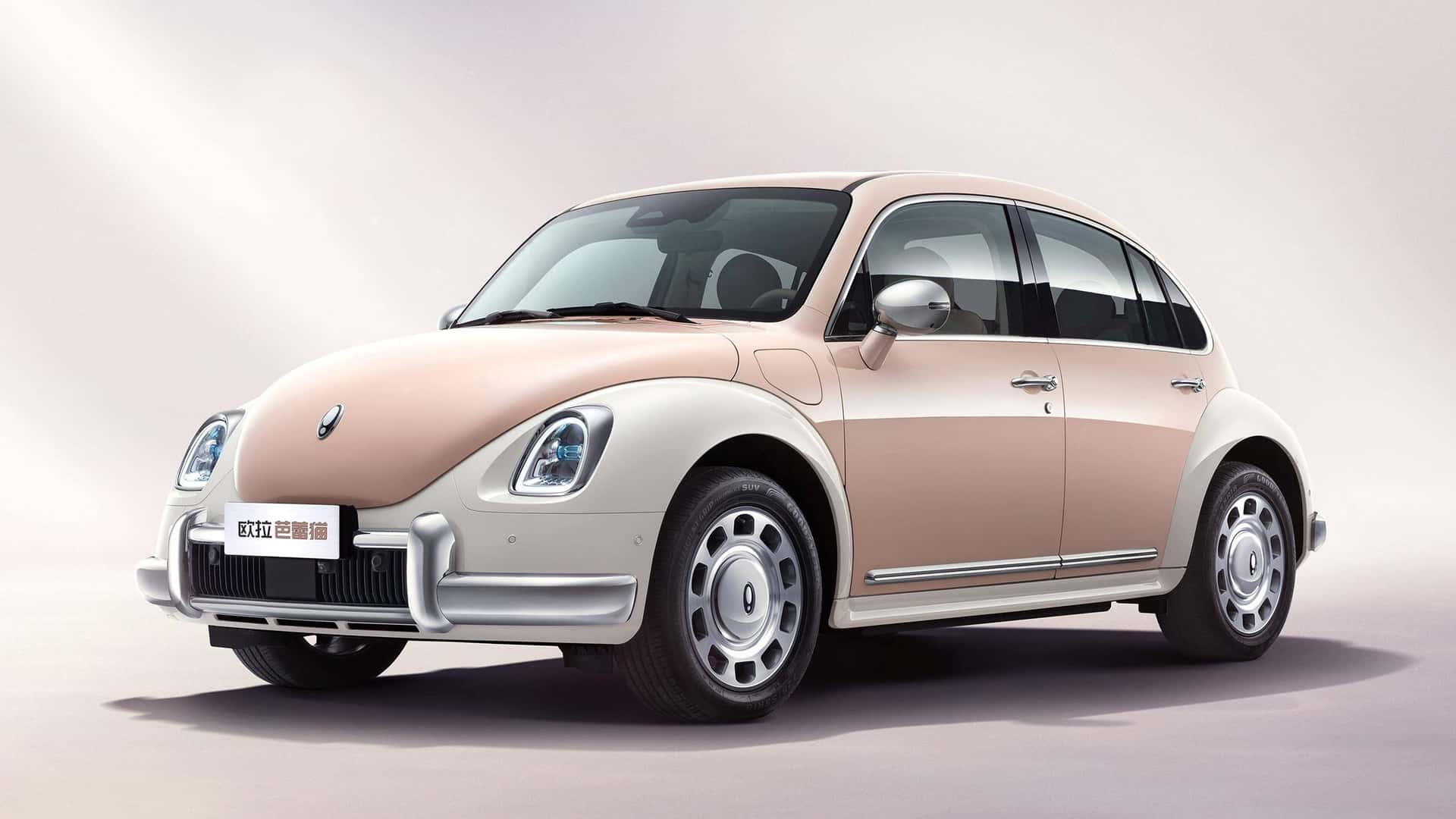
The aesthetic of the Ora Ballet Cat remains its most talking-point-heavy feature. The vehicle adopts the "curvy" silhouette of the mid-20th-century Beetle, characterized by prominent flared fenders, a sloping hood, and a rounded roofline. However, GWM designers have modernized the look with LED lighting signatures, flush door handles, and a dual-tone paint palette that emphasizes its lifestyle-oriented branding.
The car measures 4,401 mm in length, 1,867 mm in width, and 1,633 mm in height, with a wheelbase of 2,750 mm. These dimensions make it significantly larger than the original Volkswagen Beetle, offering a four-door configuration and a spacious interior that addresses the practical needs of modern families. The 2026 refresh does not appear to alter the exterior sheet metal, suggesting that GWM believes the "retro-chic" look still holds sufficient appeal for its target demographic.
Market Positioning and Lifestyle Integration
Since its inception, the Ora Ballet Cat has been marketed with a specific focus on female consumers, a strategy that has sparked both interest and debate within the industry. The vehicle comes equipped with a suite of features designed around this marketing pillar. The interior features a large "Goddess" vanity mirror integrated into the sun visor, accompanied by LED ring lighting specifically calibrated for makeup application. Furthermore, the center console includes a dedicated compartment for cosmetics and a "selfie camera" mounted on the A-pillar, which allows occupants to capture photos and videos for direct upload to social media platforms.
One of the more unique software features is the "Warm Man Mode." This function is designed to provide comfort during cold weather or menstrual cycles by simultaneously activating the seat heating, steering wheel heating, and increasing the cabin temperature with a single button press. While these features have been criticized by some as stereotypical, they represent GWM’s attempt to differentiate the Ora brand in a hyper-competitive market where software and "experience-led" features are often as important as mechanical specifications.
Chronology of Development and Sales Performance
The journey of the Ballet Cat has been one of steady refinement.
- 2021: The vehicle was first showcased as a concept at the Shanghai Auto Show, drawing immediate comparisons to the Volkswagen Beetle and sparking rumors of potential legal challenges from the German automaker.
- 2022: Official production began, with the vehicle launching in China at a price point starting around ¥193,000 (approximately $28,000 USD).
- 2023-2024: Ora expanded the "Cat" lineup globally, introducing the Funky Cat (also known as the Ora 03) to European and Southeast Asian markets, though the Ballet Cat remained largely a domestic Chinese offering.
- 2025 (Projected): The updated 201-hp model is expected to enter full production, likely hitting showrooms late in the year as a 2026 model.
Despite the global fascination with its design, sales of the Ballet Cat have remained modest compared to GWM’s more mainstream SUVs. The model sells a few thousand units annually, catering to a niche group of enthusiasts who value the retro aesthetic over the aggressive styling of modern sport-electric vehicles. The 2026 power boost is seen by industry analysts as an effort to broaden the car’s appeal to a wider range of drivers who may have previously found the 169-hp output insufficient for the vehicle’s weight.
Broader Implications for the Global Automotive Market
The existence and continued update of the Ora Ballet Cat highlight a significant shift in the global automotive industry. While Western manufacturers like Volkswagen have moved away from retro-inspired models—the Beetle was officially discontinued in the US in 2019 with the "Final Edition"—Chinese manufacturers are finding success by leaning into nostalgia combined with cutting-edge EV platforms.
Volkswagen has signaled a shift toward its "ID" family of electric vehicles, focusing on the ID. Buzz as its primary retro-inspired electric offering. While rumors of an electric "ID. Beetle" have circulated for years, no official production plans have been confirmed. This has left a vacuum in the market that GWM is clearly eager to fill, even if only within the Chinese borders for now.
The updated Ballet Cat also serves as a testament to the speed of Chinese regulatory and manufacturing cycles. The ability to swap out a powertrain and battery chemistry and receive government approval within a single model year is a feat that few legacy Western automakers can match. This agility allows Chinese brands to respond almost instantly to consumer feedback regarding performance and range.
Conclusion and Future Outlook
As the 2026 Ora Ballet Cat prepares for its market debut, it stands as a symbol of the "new normal" in the electric vehicle sector. It is a car that refuses to be ignored, blending the sentimental design of the past with the high-performance demands of the future. While the $28,000 price point and unique feature set make it an attractive option in China, the likelihood of a North American or European debut for this specific model remains low due to complex intellectual property landscapes and evolving trade tariffs.
However, for the global observer, the Ballet Cat is a reminder that the spirit of the Beetle—an accessible, distinctive, and personality-driven car—is still very much alive, even if the badge on the front has changed. As Great Wall Motor continues to refine the Ora lineup, the increased power and improved technology of the 2026 Ballet Cat may finally provide the performance to match its iconic profile.