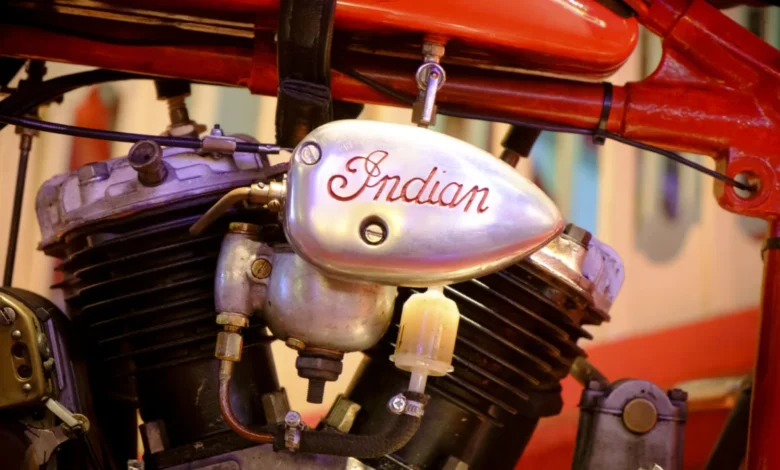
While the debate over America’s oldest motorcycle manufacturer often centers around historic titans like Harley-Davidson, Indian occupies a foundational and deeply revered place in the nation’s motorized history. Established in Springfield, Massachusetts, in 1897 as the Hendee Manufacturing Company by founder George Hendee, the enterprise quickly grew into a dominant industrial force. Following Hendee’s partnership with brilliant engineer Oscar Hedstrom in 1901, the company transitioned from gasoline-powered bicycles to producing some of the most celebrated and advanced motorcycles of the early 20th century. By the 1910s, Indian stood as the largest motorcycle manufacturer in the world, scaling its output from a modest 1,000 units in 1905 to an astonishing 32,000 machines by 1913.
However, the path of American manufacturing is fraught with economic volatility, shifting military demands, and market miscalculations. When the original Springfield company abruptly ceased operations in 1953, it inadvertently catalyzed the creation of some of the rarest, most fiercely contested collector motorcycles in existence. Today, vintage Indian motorcycles occupy a unique tier in the global collector car and motorcycle market. Values are determined by verified auction transactions, survivor counts, historical provenance, and the meticulousness of restorations. An examination of ten of the rarest Indian motorcycles reveals not only their market valuations, scaled for contemporary economics, but also the rich historical context, engineering ambitions, and market failures that shaped their legacies.
The Dawn of American Motorcycling: 1902-1905 Indian Camelback
The genesis of Indian’s commercial production rests upon the 1902-1905 Camelback, a machine that bears little resemblance to modern motorcycling standards yet serves as a critical artifact of industrial history. Following George Hendee’s encounter with Oscar Hedstrom’s high-performance "motor-pacers" in New York City in 1900, Hendee sought to deliver a reliable, chain-driven motorcycle to the general public, moving away from the notoriously slip-prone belt drives of the era. Hedstrom successfully integrated an Indian bicycle frame with a specialized engine, presenting a prototype to the public on June 1, 1901.
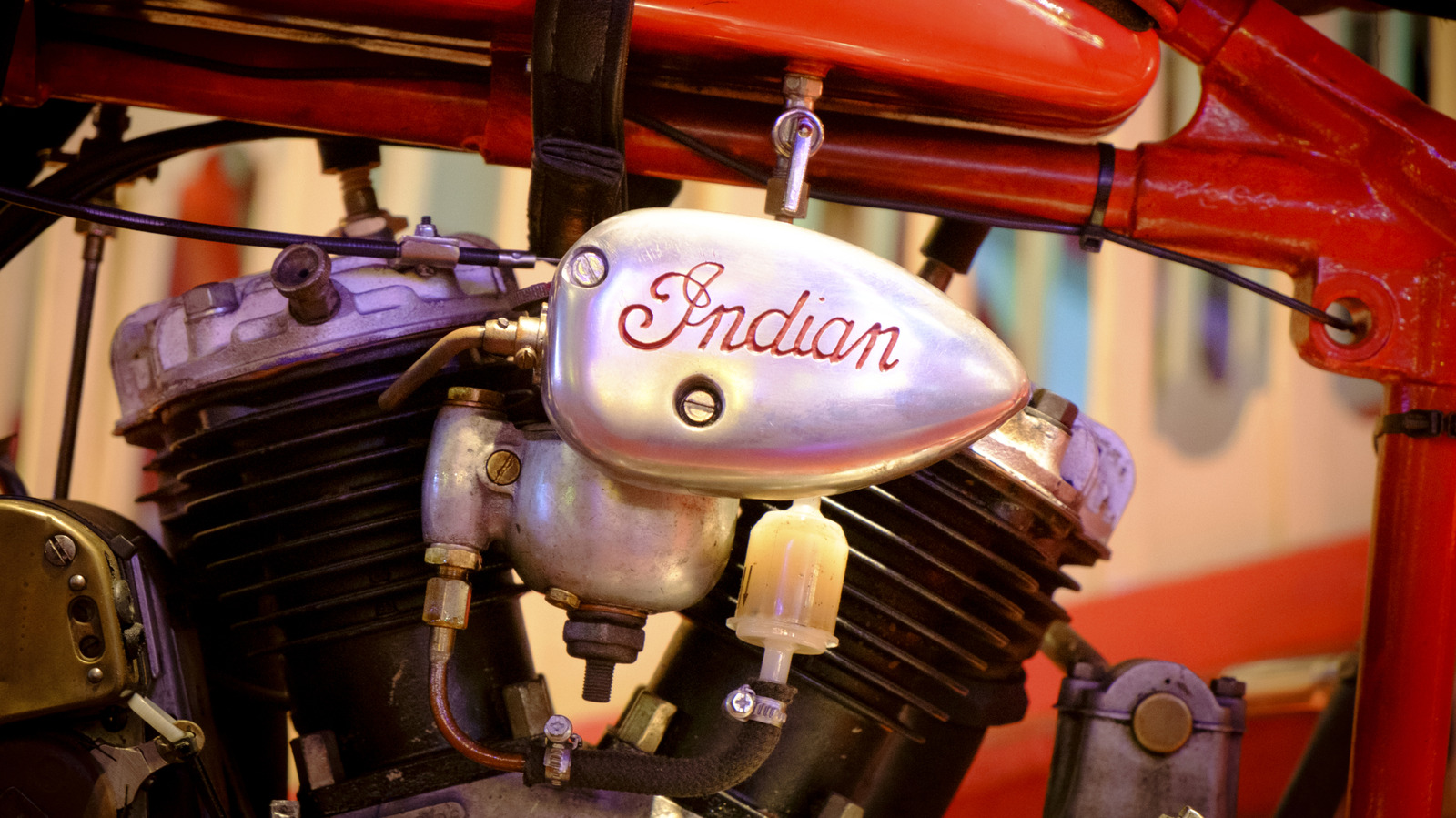
Surviving examples, such as the 1903 Camelback formerly housed in the National Motorcycle Museum, showcase a 2-horsepower, 13-cubic-inch, air-cooled single-cylinder four-stroke engine paired with a distinctive humped, rear-mounted fuel tank that gave the model its iconic moniker. Engines were initially sourced from the Aurora Automatic Machinery Company in Illinois, while frames were fabricated locally in Springfield. These early machines proved remarkably capable; in 1903, Hedstrom piloted one to a world motorcycle speed record of 56 mph. Production numbers remain heavily contested by historians, with estimates ranging from 1,000 total units built between 1902 and 1905 up to 1,182 machines manufactured in the single year of 1905. Because of their profound historical significance, they command exceptional sums when discovered in unrestored or preserved states, such as a 1905 example that realized £40,250 at a Bonhams auction.
Wartime Engineering and Rejection: 1941-1943 Indian 841
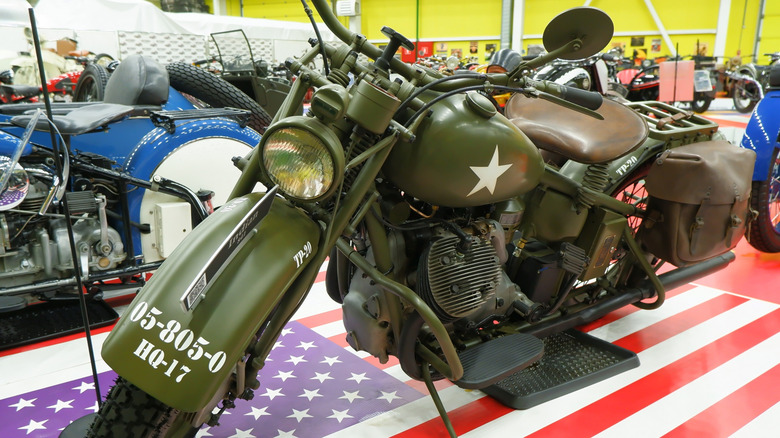
Among the most unconventional machines ever commissioned by the United States military is the Indian 841, a product of wartime necessity. In 1941, the U.S. Army tasked both Harley-Davidson and Indian with developing a rugged, desert-capable motorcycle tailored for grueling operations in North Africa. While Harley-Davidson responded with the XA—a heavy-duty machine heavily derivative of BMW’s R71 design—Indian engineered the 841 from the ground up.
The 841 featured a 45-cubic-inch, 90-degree side-valve V-twin engine oriented with a longitudinal crankshaft to optimize air-cooling in high-temperature environments. To withstand the rigors of combat zones, the machine incorporated a low 5.1:1 compression ratio designed to burn low-octane battlefield fuel, a four-speed foot-shift, an enclosed driveshaft, girder front forks with coil springs, and 8-inch drum brakes. Despite meeting the military’s stringent mechanical criteria, the overarching strategic landscape shifted. The U.S. Army ultimately canceled large-scale motorcycle deployments in favor of the ubiquitous Jeep.
Production of the 841 stalled at approximately 1,000 to 1,056 prototype units, none of which saw active combat deployment. Post-war surplus disposal saw these military machines sold to civilians for roughly $500. Today, complete, surviving 841s are exceedingly scarce, with major auction houses estimating fewer than 100 complete examples remain. Provenance plays a massive role in valuation; a civilian-adapted 841 once owned by E. Paul du Pont, the industrialist credited with saving Indian during the Great Depression, resides in the Hagley Museum and Library, while market examples continue to command strong collector interest, evidenced by a 2026 auction sale reaching $25,300.
The Short-Lived Evolution: 1936-1937 436/437 Upside Down Four
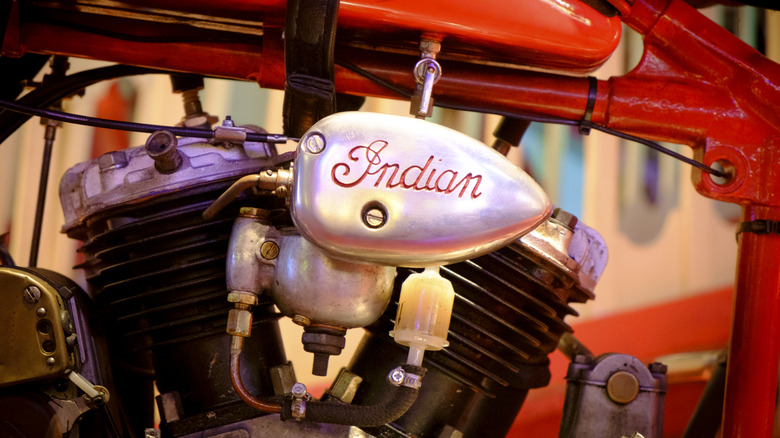
During the mid-1930s, Indian sought to revamp its four-cylinder motorcycle lineup to improve acceleration and top-end speed, addressing performance limitations inherited from its acquisition of the Ace Motor Company. The engineering team executed a radical redesign by literally inverting the engine architecture, placing the exhaust valves directly over the side-facing inlets to create the Upside Down Four.
The early 436 model, introduced in 1936, utilized exposed exhaust valves, a Marvel updraft carburetor, leaf-spring front suspension, a three-speed hand-operated transmission, and a 77.1-cubic-inch engine capable of 35 horsepower and a 95 mph top speed. An immediate evolution followed in 1937 with the 437 "Sport Four," which incorporated twin Zenith carburetors, revised connecting rods, and protective shielding over the previously exposed valve rockers. Despite marketing efforts emphasizing enhanced reliability and sustained high-speed cruising, the design proved commercially unsuccessful. The exhaust-over-inlet configuration subjected riders to intense engine heat and demanded frequent, complex valve adjustments.
Indian abandoned the upside-down layout by 1938, reverting to traditional inlet-over-exhaust configurations after producing only a few hundred units annually. Due to their extreme scarcity, surviving examples command high market valuations; a restored 437 achieved $48,000 at a Bonhams auction, while a historically significant 436 display bike previously owned by an American Motorcycle Owners Club president commanded $126,500.
Bridging Two Legacies: 1927-1928 Indian Ace
The lineage of Indian’s four-cylinder motorcycles has deep roots in external engineering talent, specifically the work of William G. Henderson and his Ace Motor Company. When Indian absorbed Ace, the initial four-cylinder machines rolling off the Springfield assembly lines continued to wear the Ace name prominently on their fuel tanks before being officially rebranded as the Indian 401 in July 1928.
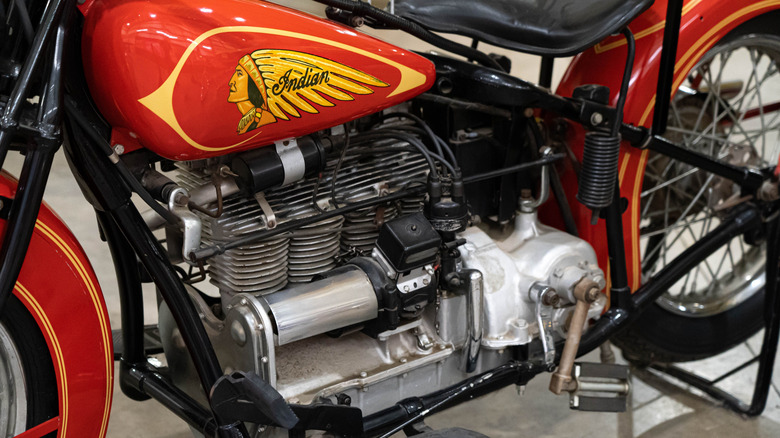
Produced between April 1927 and July 1928, these transitional machines utilized an air-cooled inline-four engine featuring inlet-over-exhaust valves, a three-speed manual transmission, and a chain drive. Indian introduced significant metallurgical and mechanical enhancements during this brief window, notably drilling internal passages into the crankshaft to force engine oil under 40 pounds of pressure directly to every bearing. Displaced slightly larger than the original Ace designs at 1,265 cc, these machines delivered approximately 30 horsepower and a top speed of 80 mph. With production estimates resting at roughly 260 total units, verified auction offerings are exceptionally rare. A well-documented 1928 Indian Ace crossed the auction block at a Mecum event for $220,000, underscoring the aggressive market demand for early four-cylinder Indian models.
The End of an Era: 1953 Indian Chief
Few motorcycles hold the cultural resonance of the Indian Chief. First introduced in 1922 as a larger, more muscular evolution of the Scout, the Chief became universally recognized by the 1940s through its expansive, skirted fenders and commanding road presence. While ordinary production numbers for the Chief were historically robust—peaking at nearly 12,000 units in 1947 alone—the final production year of 1953 represents a holy grail for collectors.
The 1953 models featured an air-cooled 42-degree side-valve V-twin engine displacing 80 cubic inches, paired with a three-speed tank-shift transmission, wet multi-disk foot clutch, hydraulic front forks, and plunger rear suspension. Rated at 40 horsepower with a 90 mph top speed, these machines were the very final motorcycles to exit the historic Springfield manufacturing plant before corporate dissolution. Only about 600 authentic 1953 Chiefs were manufactured. While standard examples generally trade between $17,000 and $60,000 depending on preservation, expertly restored or documented pedigree machines achieve significantly higher figures, such as a Dennis Craig-restored example that fetched $77,000, and dealer offerings constructed from new-old-stock components commanding nearly $90,000.
Technological Ambition and Recall: 1914 Hendee Special
By 1913, the Hendee Manufacturing Company achieved global supremacy, outproducing all international competitors with an output of 32,000 motorcycles annually. Despite slight volume contractions the following year, Indian maintained an aggressive posture of technological innovation, resulting in the 1914 Hendee Special—widely recognized as the world’s first production motorcycle equipped with an electric starter.
Named in honor of co-founder George Hendee, the motorcycle utilized a 61-cubic-inch V-twin generating 7 horsepower, a three-speed transmission, and a dual six-volt electrical ignition system inspired by the groundbreaking Kettering starters used in Cadillac automobiles. Mechanically, however, the system faltered. The early battery technology depleted rapidly after only a dozen start cycles, and the absence of a manual kick-start backup mechanism created a severe operational failure. Consequently, the Hendee Special became the subject of history’s first major motorcycle recall, with factory technicians actively stripping out the electrical starters and retrofitting conventional kick-start levers to the transmissions.
With only 200 units originally produced, automotive historians estimate fewer than six complete, surviving examples retain their functional electric starting systems. When these rare units appear at major international collector car and motorcycle auctions, they consistently achieve six-figure valuations, with verified original, unrestored examples reaching $126,500 and expertly preserved or restored variants regularly commanding between $60,000 and $85,000.
Homologation Rarity: 1948 648 Big Base Scout
While standard Scouts were produced in significant volume, the post-World War II landscape brought temporary disruption to Indian’s catalog. When racing demands required factory support for competitive events, Indian engineered a limited run of specialized machines to satisfy strict homologation rules.
In 1948, Indian constructed precisely 50 units of the 648 "Big Base" Sport Scout exclusively to qualify for the Daytona 200. The machine justified its engineering existence immediately, powering rider Floyd Emde to victory and securing Indian’s final Daytona title before the company’s ultimate closure. Built with massive engine crankcase oil capacities designed for sustained high-speed endurance racing, these machines utilized a 45-cubic-inch side-valve V-twin producing approximately 50 horsepower, paired with an Amal carburetor, girder forks, and a rigid rear triangle.
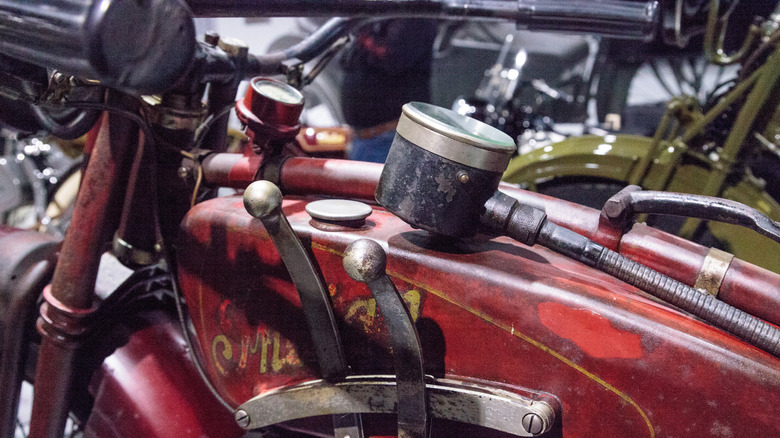
With expert registries like Mecum estimating a surviving population of only seven complete machines, the Big Base Scout remains exceptionally rare. Market transactions reflect this scarcity; a machine restored by Jim Suter that saw actual competition history at Daytona achieved $165,000 at auction, while even historically linked examples command substantial sums among dedicated marque collectors.
The Altoona Track Legend: 1920s A45 Altoona Hillclimber
The 1920s witnessed the explosive rise of specialized motorcycle sports in the United States, with national hillclimbing championships drawing massive crowds. To conquer extreme vertical inclines, manufacturers developed dedicated, alcohol-burning competition machines featuring extended wheelbases and heavy-duty chains wrapped directly around the rear tires for maximum adhesion. Among these, Indian’s A45 model dominated the sport, earning its nickname from the famous Altoona speedway in Pennsylvania where it established its competitive dominance.
Indian manufactured a mere two dozen A45 hillclimbers, making them exceptionally scarce today. Factory specifications varied based on specific race demands and rider preferences; historical archives document configurations ranging from heavy-duty 80-cubic-inch V-twins with high-lift cams and 5.33:1 compression ratios to specialized 750 cc powerplants generating over 60 horsepower with staggering 15:1 compression. Given their competition-bred nature and survival rates, authentic examples are hotly contested by premier collectors. A speed-record-winning 1928 Altoona hillclimber in unrestored, as-raced condition commanded $247,500 at a high-profile collection auction, while restored variants continue to easily clear six figures.
Factory Dirt Dominance: 1938/1939 Indian Scout Factory Hill Climber
The competitive pedigree of the Indian Scout extended far beyond standard oval tracks and salt flats—most notably demonstrated by the specialized engineering applied to factory hillclimbers. In 1938 and 1939, the Springfield factory produced a final, highly exclusive batch of just 18 dedicated Scout Factory Hill Climbers before halting competition development.
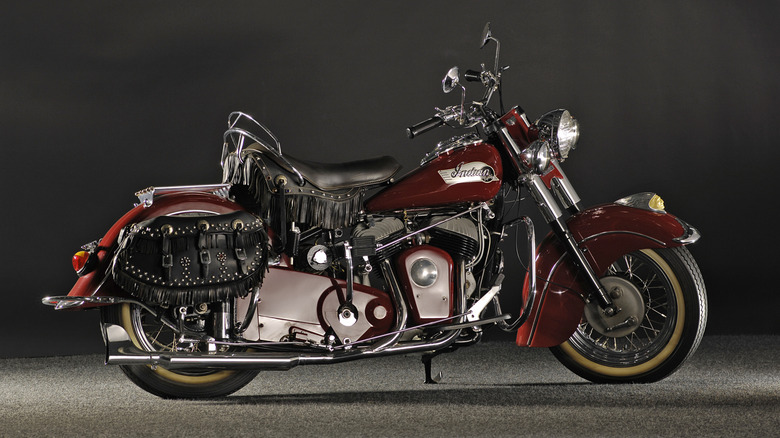
Engineered specifically to conquer severe vertical gradients using high-octane alcohol fuel, these machines were heavily customized by both the factory and their professional racing pilots. Surviving examples, such as the machine raced by professional hillclimber Ken Edmiston, featured heavily modified extended frames, specialized auxiliary fuel tanks, and rear-facing air intake vents designed to prevent abrasive environmental debris like sand and mud from choking the engine. Outfitted with specialized Linkert carburetors and custom gearing, these rare factory racers represent the absolute zenith of pre-war American motorcycle competition engineering, commanding significant estimated values whenever they surface for public acquisition.
The Apex of Motordrome Engineering: 1910s 8-Valve Racers
Undoubtedly the rarest and most historically volatile machines in the entire pantheon of vintage Indian motorcycles are the factory-built 8-Valve racers, constructed during the perilous heyday of American board track racing in the 1910s. Never intended for public commercial sale or mass production, these sophisticated machines were hand-built in extremely small numbers exclusively for professional motordrome competition. Due to the catastrophic, high-speed nature of board track racing, very few of these machines survived the era intact. Modern marque experts estimate that only four authentic 8-Valve racers survive today.
The extreme historical value of these machines was demonstrated when a unique 8-Valve racer featuring a prototype keystone/Marion frame—complete with original factory castings, matching racing forks, and comprehensive historical provenance linking it to professional racer Waldo Korn—was offered at auction. Having spent decades preserved in private collections and notably exhibited at the Guggenheim Museum in 1998, this extraordinary machine realized $313,500. While incomplete, un-restored board track projects command lower entry points, authentic, factory-correct 8-Valve Indians remain the ultimate crown jewel for serious motorcycle historians and elite international collectors.