Maserati Grecale Trofeo and Modena Performance Analysis and the Evolution of the Nettuno V6 Engine Architecture

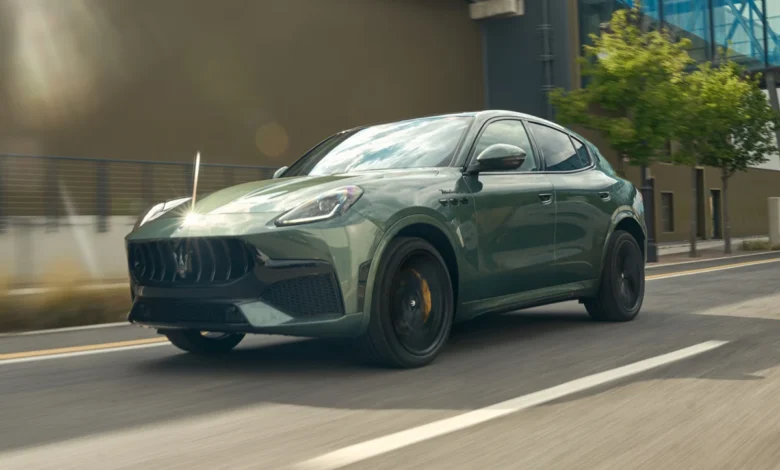
The Maserati Grecale represents a pivotal moment for the Trident brand as it seeks to capture a larger share of the luxury compact SUV market, a segment long dominated by the Porsche Macan. At the heart of this strategic push is the Nettuno engine, a powerplant that Maserati insists is "100% Maserati," developed at the Maserati Innovation Lab in Modena and produced at the historic Viale Ciro Menotti plant. However, technical analysis and visual inspections of the engine bay suggest a complex lineage that ties the Nettuno to the 2.9-liter V6 found in the Alfa Romeo Stelvio and Giulia Quadrifoglio. Both engines share a 90-degree V-angle and various structural similarities, including the plastic engine covers and specific component layouts. Despite these shared roots, the Nettuno introduces significant proprietary technology, most notably the Maserati Twin Combustion (MTC) system, which utilizes a pre-chamber combustion strategy derived from Formula 1 technology to enhance efficiency and power density.
The Engineering Philosophy Behind the Nettuno V6
The existence of the Nettuno engine in the Grecale Trofeo is largely a byproduct of Maserati’s halo supercar project, the MC20. To justify the development costs of a bespoke performance engine, Maserati needed to scale its application across the lineup. For the MC20, the engine required a dry-sump lubrication system to allow for lower mounting and high-G cornering. In the Grecale Trofeo, the engine is adapted for SUV duties, producing 523bhp. This output places it 20bhp ahead of the Alfa Romeo Stelvio Quadrifoglio, a direct sibling built on the same "Giorgio" platform architecture.
This power advantage is not merely a figure on a spec sheet; it translates into tangible performance gains. In real-world testing, the Grecale Trofeo manages to shave 0.4 seconds off the 0-60mph time of the hot Alfa Romeo. Furthermore, while many German competitors, such as Audi and BMW, often limit their performance SUVs to a top speed of 155mph, Maserati allows the Grecale to pull hard into higher velocities, catering to the requirements of the European Autobahn and high-speed touring enthusiasts.
Performance Metrics and Launch Dynamics
During recent performance evaluations at testing facilities, the Grecale Trofeo showcased its raw capability despite less-than-ideal conditions. On a day marked by damp patches on the tarmac, the Trofeo successfully matched its factory-claimed 0-62mph (100km/h) time of 3.8 seconds. Engineering analysts suggest that in optimal, dry conditions with high-ambient-temperature grip, the vehicle could potentially exceed these figures.
However, the delivery of this power is described as aggressive rather than refined. The Trofeo features a dedicated launch control system—a feature notably absent from its Alfa Romeo counterpart. When engaged, the system allows the twin-turbocharged V6 to build revolutions to approximately 3,000rpm before dumping 457lb-ft of torque into the all-wheel-drive system. The resulting acceleration is characterized by a "violent" surge that taxes the vehicle’s chassis.
Observers noted that the Grecale’s suspension setup, which leans toward a softer, more compliant ride for everyday usability, struggles to contain the initial weight transfer during a full-bore launch. This "underdamped" sensation causes the vehicle to rear up, occasionally leading to traction issues at the front axle. This phenomenon, colloquially referred to as "hopping," occurs as the unloaded front wheels struggle to maintain a consistent contact patch under the duress of the Nettuno’s torque curve.
Drivetrain Integration and Gearing Strategy
Once past the initial launch phase, the Grecale Trofeo utilizes a ZF eight-speed automatic transmission. This gearbox features the same closely stacked ratios found in the Alfa Romeo Stelvio, a choice that significantly enhances the vehicle’s engagement levels on public roads. In a market where many performance vehicles, particularly those from Porsche, utilize long gearing that makes reaching the redline nearly impossible without exceeding legal speed limits, the Maserati offers a more accessible performance window.
Drivers can reach the redline in second gear and progress significantly through third gear before crossing the 60mph threshold. This gearing encourages the use of the Grecale’s signature column-mounted aluminum shift paddles. While modern dual-clutch transmissions (DCTs) may offer a marginal advantage in shift speed, the ZF eight-speed torque converter unit is praised for its balance of smoothness in low-speed traffic and snappy response during spirited driving. This versatility is essential for a vehicle marketed as an "everyday" luxury SUV.
The Modena Trim: A Balanced Alternative
Positioned below the flagship Trofeo is the Grecale Modena. This variant utilizes a downtuned version of the non-electrified Nettuno V6. In this configuration, the engine produces a more manageable 385bhp and 369lb-ft of torque. While the power deficit compared to the Trofeo is substantial on paper, the Modena remains a potent performer. It achieves a 0-62mph time of 4.9 seconds and reaches a top speed of 160mph.
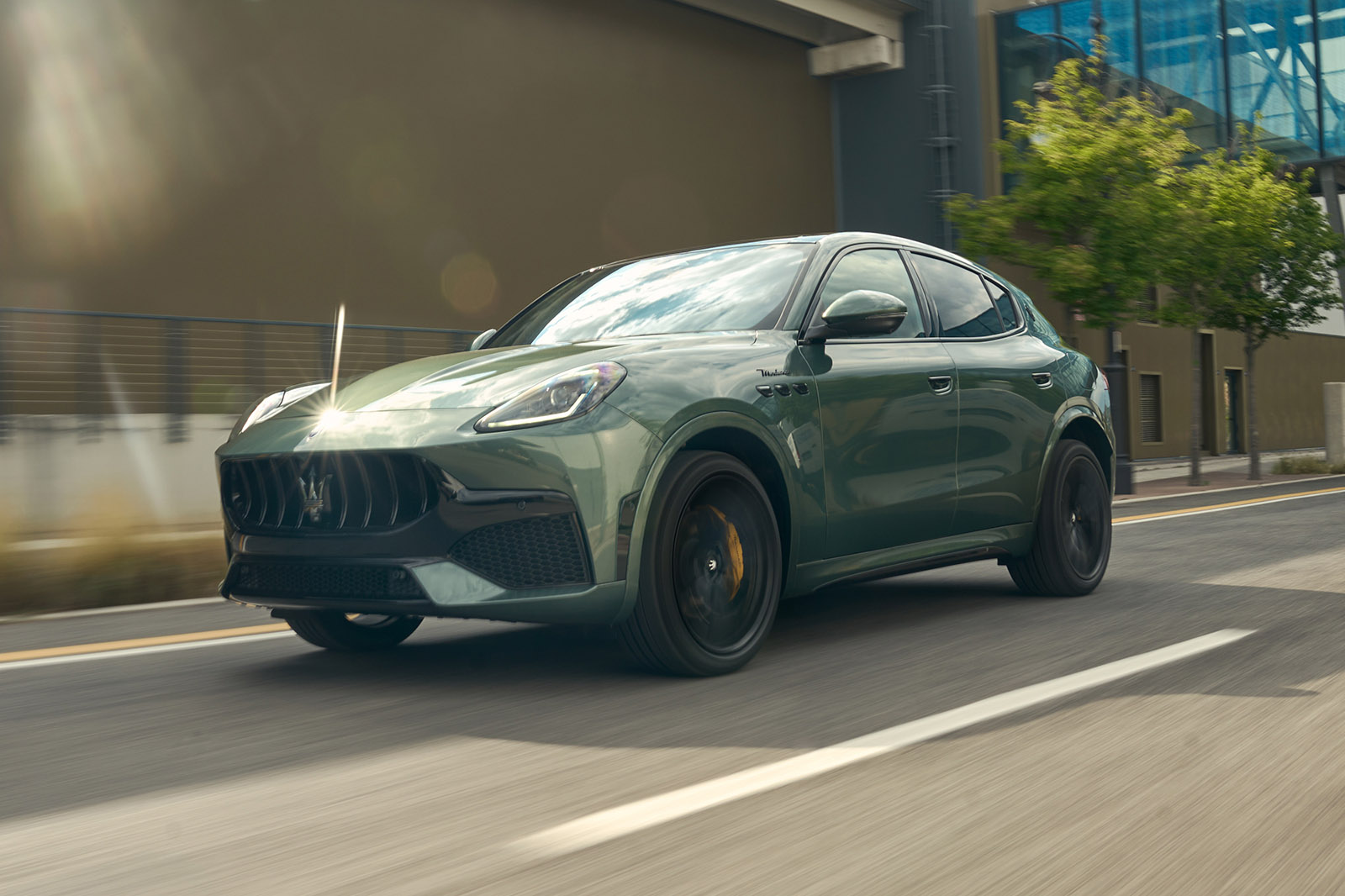
The Modena is positioned to compete directly with six-cylinder rivals such as the BMW X3 M50 and the Audi SQ5. However, Maserati faces a significant challenge in the pricing department; the Modena typically carries a premium of roughly £10,000 over its German counterparts. Maserati justifies this price gap through Italian craftsmanship, brand exclusivity, and the charismatic nature of the Nettuno engine.
One point of contention among testers is the Modena’s acoustic profile. While the engine inherently possesses a gravelly, hoarse character that smoothens out at high revs, Maserati has opted to enhance the cabin experience through synthesized engine noise played through the vehicle’s audio system. This artificial enhancement is particularly noticeable in environments like tunnels, where the interior sound remains constant regardless of the external acoustic reflections. Critics have noted that while the sound is not inherently unpleasant, it lacks the authentic "operatic" quality traditionally associated with Italian V6 engines.
Track Performance and Handling Characteristics
To further evaluate the Grecale’s mechanical limits, testing was conducted on the Hill Route at the Millbrook Proving Ground. This circuit is known for its demanding elevation changes and technical corners, which provide a rigorous test for any SUV’s center of gravity.
The Grecale Trofeo, while not designed as a dedicated track machine, acquitted itself well under pressure. The vehicle’s handling is defined by its Maserati-specific Bridgestone Potenza Sport tires, which provide high levels of lateral grip. The steering rack is tuned to offer sufficient feedback, allowing the driver to sense the limits of the front tires and settle the car into corners despite the inherent body roll caused by the air suspension.
The all-wheel-drive system in the Grecale is fundamentally rear-biased, preserving the brand’s rear-wheel-drive heritage. An electronic limited-slip differential (eLSD) manages power distribution across the rear axle, effectively sending torque to the outside wheel during cornering to induce rotation. This setup allows the Grecale to feel more agile than its dimensions might suggest, mitigating the understeer typically found in heavy, AWD SUVs.
Market Positioning and Broader Implications
The launch of the Grecale and the deployment of the Nettuno engine come at a crossroads for Maserati. The brand has committed to a "Folgore" electrification strategy, promising electric versions of every model in its lineup by 2025 and a full transition to EVs by 2030. In this context, the Nettuno V6 represents the final pinnacle of Maserati’s internal combustion engineering.
From a commercial perspective, the Grecale is tasked with increasing Maserati’s global volume. By offering a vehicle that shares technical DNA with the MC20 supercar but provides the utility of an SUV, Maserati is attempting to bridge the gap between niche luxury and mainstream premium segments.
The relationship with Alfa Romeo remains a double-edged sword. While the "Giorgio" platform is widely regarded as one of the best-handling architectures in the world, the visual and mechanical similarities between the Grecale and the Stelvio raise questions about brand differentiation. Maserati’s response has been to focus on the "Everyday Exceptional" philosophy, emphasizing superior interior materials, more advanced infotainment, and a more prestigious badge.
Conclusion and Outlook
The Maserati Grecale Trofeo and Modena represent a sophisticated evolution of the performance SUV. By utilizing the Nettuno V6, Maserati has brought a piece of its supercar development to the masses. While the engine’s lineage may be linked to Alfa Romeo, its unique combustion technology and performance output allow it to stand alone as a distinct entity.
As the automotive industry shifts toward electrification, the Grecale stands as a testament to the enduring appeal of the high-performance internal combustion engine. Its ability to combine 0-60mph times that rival sports cars with the practicality of a five-door SUV ensures its place in the competitive landscape. However, its success will ultimately depend on whether consumers value the Italian character and the "Nettuno" pedigree enough to overlook the premium price point compared to established German rivals. For now, the Grecale remains a charismatic, if slightly unrefined, alternative in a segment that often prioritizes clinical efficiency over soul.