The modern travel experience often concludes with a digital burden that rivals the physical weight of unpacked luggage: thousands of unorganized photographs, overlapping video files, and cluttered memory cards. For professional travel journalists, photographers, and frequent flyers, the return journey represents a unique window of isolation free from connectivity, notifications, and environmental distractions. Industry veterans increasingly utilize this uninterrupted transit time to execute a rigorous post-production routine, transforming the chaotic aftermath of an expedition into a meticulously curated and safely backed-up digital archive before the aircraft touches down.
This systematic approach to travel photography management addresses a widespread phenomenon in the digital age. According to consumer data from major cloud storage and memory card manufacturers, the average smartphone user captures hundreds of images during a standard week-long vacation, yet more than 65 percent of these files are never viewed, edited, or shared again. For professional creators utilizing both mirrorless cameras and mobile devices, the volume often exceeds several thousand frames per trip. Left unmanaged, these digital assets quickly overwhelm storage capacity, degrade device performance, and obscure the genuinely compelling moments captured on the road.
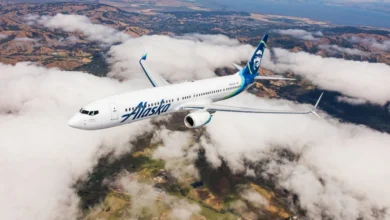
The logistics of long-haul air travel provide an ideal environment to resolve this digital backlog. With limited or expensive inflight Wi-Fi preventing web browsing, social media scrolling, and professional email correspondence, travelers possess a rare block of uninterrupted hours. Furthermore, the psychological distance of the journey home leaves memories of specific locations, local terminology, and chronological sequences fresh in the traveler’s mind, ensuring accurate context is preserved alongside the visual data.
Phase One: Aggressive Curation and Digital Culling
The foundational step in the inflight curation workflow is the immediate and often ruthless culling of inferior images. Industry standards in digital photography dictate that raw capture ratios should heavily outnumber final selections, but failing to purge the rejects immediately leads to chronic storage bloat.
During the initial pass through a camera roll or memory card, professional photographers systematically eliminate technical failures, including motion-blurred frames, accidental pocket shots, closed-eye portraits, and redundant burst-mode sequences. When a traveler captures ten near-identical frames of a coastal sunset, standard practice requires selecting the single optimal exposure and deleting the remaining nine. Similarly, frames compromised by distracting foreground elements—such as a modern automobile parked directly in front of an ancient architectural landmark or harsh, unflattering shadows cast across a subject’s face—are discarded without hesitation.
Data security and storage optimization experts emphasize that delaying this culling process exponentially increases the likelihood that the task will be abandoned entirely once the traveler returns to a busy home or office environment. By executing a strict deletion protocol while airborne, users routinely reduce their total file count by 50 to 70 percent within the first hour of flight, preserving valuable memory card space and streamlining all subsequent organizational steps.

Chronological Structuring and Cross-Platform Consolidation
Once the obvious rejects have been removed from the digital ecosystem, the next priority involves unifying disparate media sources into a coherent structural framework. Modern travelers frequently capture imagery across multiple devices, including professional DSLR or mirrorless camera systems, action cameras, and smartphones. Without deliberate consolidation, these files remain fragmented across proprietary apps and physical media.
To resolve this fragmentation, mobile-enabled card readers and laptop adapters are utilized at cruising altitude to ingest RAW and JPEG files directly from external memory cards into portable computing environments. The surviving images are then sorted into dedicated albums categorized primarily by geographic location and chronological timeframe—such as a standardized naming convention of destination followed by month and year.
Data organization specialists note that structuring digital assets immediately following a trip prevents the common phenomenon of "lost context," where photographs taken on day three of an itinerary become indistinguishable from those captured on day five. Within these standardized folders, exceptional frames are tagged, starred, or flagged to indicate priority status for future editing and publication. This dual-action process of culling and sorting achieves approximately 90 percent of the labor required for a professionally organized travel archive.
Contextual Metadata and File-Naming Conventions
The third phase of the inflight workflow focuses on data longevity and searchability through descriptive file naming and tagging. While visual aesthetics capture immediate attention, the long-term utility of a photograph often depends on its associated metadata.
Professional photojournalists and archivists routinely rename batch-generated alphanumeric file codes—such as IMG_4892.NEF—into descriptive, human-readable labels before concluding their transit. While manual renaming requires significant time investment, even basic modifications drastically improve search functionality across cloud storage platforms like Google Photos, Apple iCloud, and Adobe Lightroom.
For instance, transforming a generic filename into a specific identifier—such as "Swiss_Alpkase_Cheese_Production_Appenzell.jpg" or "Samburu_Elephants_Kenya_Wildlife.jpg"—allows cloud-based search algorithms to retrieve exact assets instantly years after the event. This practice is particularly critical for documenting specific cultural markers, Indigenous terminology, local flora and fauna, and biographical details of individuals encountered during the journey. By embedding locations and proper nouns directly into the metadata while the memory remains sharp, travelers bypass the frustrating diagnostic searches that plague poorly managed digital archives.
Redundancy and Data Security Protocols
Perhaps the most critical objective of the inflight digital workflow is establishing robust data redundancy. The physical transport of unique media assets on a single device or memory card exposes travelers to catastrophic data loss through hardware failure, theft, loss, or corruption.
Industry best practices mandate the implementation of the 3-2-1 backup rule, which suggests maintaining multiple copies of critical data across separate physical mediums. During a flight, once all images have been culled, sorted, and renamed on a primary laptop or tablet, the entire library is copied to a portable solid-state drive (SSD) or ruggedized external hard drive stored securely within the traveler’s carry-on luggage.
Because large-format RAW image files can consume hundreds of gigabytes of storage, the data transfer process is notoriously time-consuming. Utilizing long-haul flights for this operational necessity transforms dead transit time into a productive security protocol. By completing the transfer before landing, the traveler steps off the aircraft with dual-saved, fully organized archives, completely mitigating the risk of post-travel data vulnerability.
Refinement, Preliminary Editing, and Broader Implications
If time permits after successfully executing culling, organizing, metadata assignment, and secure backup, advanced travelers often dedicate the remaining hours of flight time to preliminary image enhancement. Selecting a handful of standout frames for basic exposure correction, color grading, and cropping allows creators to generate presentation-ready assets for immediate deployment upon arrival.
The broader implications of this disciplined inflight routine extend far beyond individual convenience. In an era dominated by visual communication, the ability to rapidly process, verify, and archive visual data underpins modern travel media, academic research, and personal record-keeping. By refusing to let digital clutter accumulate, professional travelers maintain clean, searchable archives that serve accurate historical and commercial utility. Ultimately, mastering the camera roll at 35,000 feet transforms an exhausting logistical chore into an efficient, creative conclusion to any global expedition.