Ferrari CEO Benedetto Vigna awards Tesla Roadster a perfect score for innovation and daring presentation.

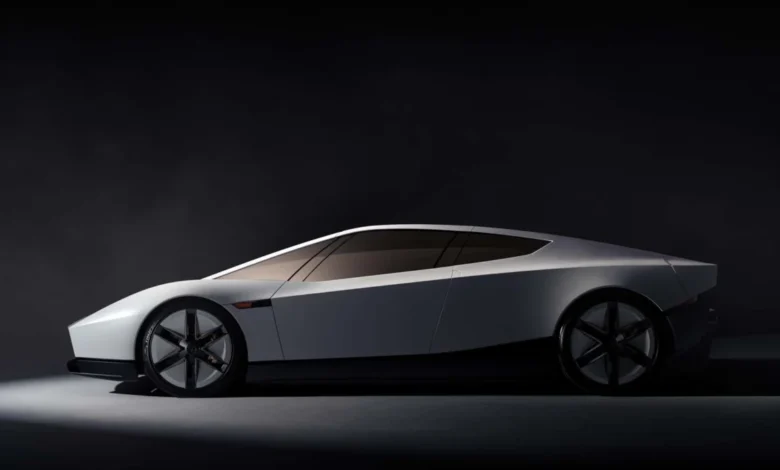
In a rare public appraisal of a competitor, Ferrari Chief Executive Officer Benedetto Vigna has awarded the Tesla Roadster a perfect score of 10 out of 10 for both its technological achievement and its dramatic public unveiling. This high praise, delivered during the Quattroruote automotive conference, highlights a moment of profound professional respect between two companies often positioned at opposite ends of the automotive spectrum. Vigna’s endorsement arrived just days after Tesla showcased the reworked engineering of its long-delayed flagship at a specialized rocket test facility in McGregor, Texas.
The event in Texas was not merely a vehicle debut; it was a highly choreographed spectacle designed to emphasize the intersection of aerospace engineering and automotive performance. Tesla’s presentation featured the Roadster executing gravity-defying maneuvers, including driving upside down on a ceiling-mounted track facilitated by advanced suction fan technology, followed by a mid-air turn and landing supported by compressed-gas thrusters—a clear nod to SpaceX’s orbital maneuvering systems.
A Chronology of the Roadster’s Evolution
The path to this moment has been characterized by significant delays and shifts in strategy. When the second-generation Tesla Roadster was first teased in 2017, the automotive industry was in a different era regarding battery technology and electric vehicle (EV) adoption. Initially projected for a 2020 release, the project faced numerous setbacks as Tesla prioritized the development of the Model 3, Model Y, and the eventual rollout of the Cybertruck.
By 2024, the narrative surrounding the Roadster had shifted from a simple halo car to a demonstration of Tesla’s most advanced "sentient" software and hardware integration. The current target for production is set for 2028, a date that industry analysts view as ambitious given the complexity of the engineering required for the announced thruster and suction systems. Vigna’s assessment, however, ignored the financial and logistical noise surrounding these delays, choosing instead to focus on the spirit of the engineering challenge presented in Texas.
The Philosophy of Innovation
For Vigna, the significance of the Roadster lies not in its production timeline, but in its ability to defy the status quo. In his remarks, he struck a tone of collegial appreciation, stating, "As a European, thank you for showing us that, even in an old world, you can still innovate and dare." This sentiment serves as a broader commentary on the European automotive sector, which has faced mounting pressure to transition from internal combustion engines to battery-electric powertrains while maintaining the performance heritage that defines brands like Ferrari.
Vigna’s analysis of the Roadster underscores a critical shift in how legacy manufacturers approach the EV transition. He noted that Tesla’s choice to leverage external design and engineering partnerships—a move that effectively expanded the company’s internal capabilities—mirrors the collaborative spirit that Ferrari has adopted in its own electrification journey.
Ferrari’s Electric Transition: The Luce Context
The mention of external collaboration brings into focus Ferrari’s own high-stakes pivot. The Italian luxury automaker recently unveiled its first fully electric model, the Luce, a project that represented a fundamental departure from the company’s history of V8 and V12 engines. The development of the Luce involved an extensive partnership with LoveFrom, the design studio founded by former Apple design chief Jony Ive.
This partnership was not without controversy. When the Luce was introduced in May 2026, the reaction from shareholders and purists was mixed. Ferrari’s stock price experienced a notable correction following the reveal, as analysts questioned whether an electric vehicle could capture the "soul" of a Ferrari. Vigna, however, has remained a staunch defender of the project, arguing that external partners like LoveFrom provided the necessary "outside eyes" to challenge internal biases and force the company to rethink the traditional architecture of a sports car.
Supporting Data and Industry Implications
The contrast between Tesla’s "dare-to-fail" approach and Ferrari’s "precision-engineered" transition offers a fascinating case study in modern automotive development. Tesla, backed by the data-heavy ecosystem of the SpaceX test range, operates with a high appetite for risk. Conversely, Ferrari remains tethered to a legacy of craftsmanship and brand exclusivity.
Data from the 2026-2027 fiscal quarters shows that luxury EV adoption is cooling in certain markets, yet demand for high-performance, specialized electric vehicles remains stable. Ferrari’s strategy, which now includes a balanced portfolio of battery-electric vehicles (BEVs) and advanced biofuel-powered combustion models, is designed to mitigate the risks associated with a full-scale conversion. By acknowledging Tesla’s success in pushing the boundaries of what a vehicle can do, Vigna is signaling that the industry’s future is not merely about electrification, but about re-imagining the vehicle as a multi-modal performance machine.
Strategic Impact of External Partnerships
The success of the Roadster’s unveiling has reignited discussions regarding the "Silicon Valley" model of vehicle development versus the "Traditional OEM" model. Vigna’s admission that Ferrari would not have reached its current design milestones without external consultation is a significant departure from the insular culture that once defined the Maranello-based manufacturer.
Industry observers note that the cross-pollination of talent—designers from tech firms moving into automotive roles, and automotive engineers consulting for aerospace companies—is becoming the industry standard. The Roadster’s use of SpaceX thruster technology is a primary example of this, effectively blurring the lines between consumer vehicles and aerospace hardware.
A Call to Keep Dreaming
The most resonant part of Vigna’s commentary was his concluding remark: "It certainly shows that also in the automotive world there is still a lot to be done. We have to keep dreaming." This statement serves as both a challenge to his peers and a validation of the current state of industrial competition.
While the Tesla Roadster is unlikely to enter mass production before 2028, its function as a "technological beacon" is already succeeding. It has forced established titans like Ferrari to evaluate their own innovation cycles. The perfect score from a CEO of a competing brand is more than just a gesture; it is an acknowledgement that the era of automotive stagnation is over, and that the race to define the next generation of performance is truly underway.
As both companies move forward—Tesla with its aggressive, stunt-heavy prototyping and Ferrari with its measured, design-led electrification—the automotive landscape is becoming increasingly defined by those willing to take public, often expensive, risks. Whether these risks will translate into the commercial success of the 2028 Roadster or the long-term viability of the Ferrari Luce remains to be seen. However, the dialogue between these two companies suggests that the spirit of competition remains as fierce as ever, even as the engines themselves go quiet.