The Future of Regenerative Aesthetics: Can Your Own Stem Cells Reverse the Aging Process

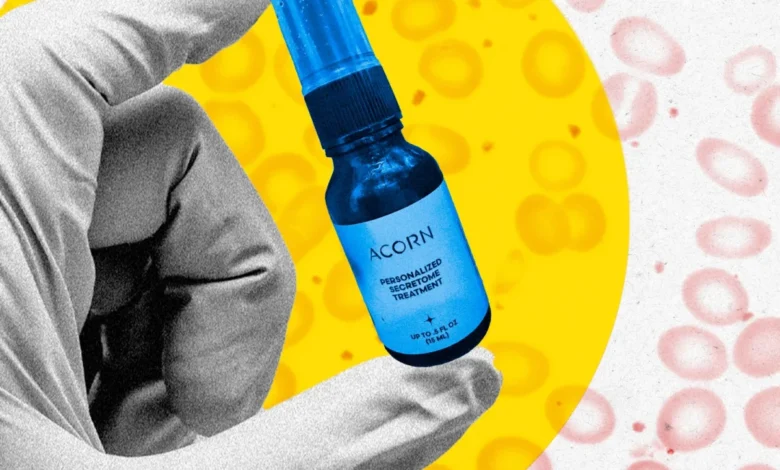
Tucked away in a standard kitchen refrigerator, nestled behind everyday condiments, sits a small blue vial containing a biological concentrate that represents a significant frontier in modern medical aesthetics. This substance, known as a secretome, is a laboratory-derived cocktail of secretions harvested from an individual’s own stem cells. While the concept of utilizing one’s own biology for repair is not entirely new, the methodology employed by firms like Acorn Biolabs—collecting cells from hair follicles rather than more invasive adipose or bone marrow sites—marks a pivot toward more accessible, personalized regenerative medicine.
The Science of Secretomes and Cellular Communication
At the core of this innovation is the stem cell. In biological terms, stem cells are the body’s "master builders," possessing the unique ability to differentiate into various cell types. However, for dermatological and cosmetic applications, the interest lies less in the cells themselves and more in what they produce. When cultivated in a controlled laboratory environment, these stem cells release a complex mixture of growth factors, cytokines, and exosomes. These chemical signals act as molecular instructions, directing surrounding cells to initiate specific biological processes, such as tissue repair, collagen synthesis, and the modulation of inflammation.
The resulting mixture, the secretome, is essentially the biochemical "language" that cells use to communicate. By harvesting this, freeze-drying it, and reconstituting it into a serum, researchers are attempting to harness these natural signaling pathways to accelerate healing and enhance skin quality.
Chronology of Development: From Lab to Clinic
The transition of stem cell technology from theoretical research to clinical aesthetic application has been incremental. For decades, the gold standard for regenerative procedures has been Platelet-Rich Plasma (PRP), which utilizes a patient’s own blood plasma to stimulate healing. The shift toward follicular stem cell harvesting represents the next logical step in this evolution.
- Cell Harvesting: The process begins with the extraction of approximately 50 hair follicles. Unlike traditional liposuction or bone marrow aspiration, this procedure is minimally invasive, requiring only a professional to pluck follicles from the scalp.
- Cryogenic Banking: Once collected, these follicles are sent to a laboratory for processing and subsequent long-term cryogenic storage. This allows for a reservoir of genetic material to be kept on standby for future use.
- The Incubation Phase: When a patient elects to undergo treatment, the banked cells are thawed and cultivated. Over several weeks, the cells are prompted to secrete the necessary growth factors and signaling proteins.
- Clinical Application: The final secretome is shipped to a dermatologist, where it is typically paired with microneedling. The needles create micro-channels in the dermis, allowing the serum to bypass the skin’s natural barrier and penetrate deep into the tissue where it can interact with dermal fibroblasts.
Supporting Data and Clinical Efficacy
The clinical enthusiasm for regenerative aesthetics is tempered by the current state of empirical validation. While studies published in journals such as Cells and Cureus indicate that the mechanisms behind secretome therapy are scientifically sound, the field currently lacks the large-scale, multi-center, randomized controlled trials (RCTs) required to establish absolute efficacy.
Current data suggests that patients undergoing microneedling combined with stem-cell-derived products often report faster recovery times and improved skin texture compared to microneedling alone. However, distinguishing the precise contribution of the secretome from the inherent benefits of the physical microneedling procedure remains a challenge for researchers. Microneedling itself is a proven mechanism for inducing collagen production; therefore, isolating the "added value" of the stem cell serum requires rigorous, double-blind testing that is still in its infancy.
Regulatory and Ethical Landscape
The commercialization of autologous stem cell products—those derived from the patient’s own body—exists in a complex regulatory space. Because the product is derived from the patient, it is often viewed differently by regulatory bodies compared to synthetic pharmaceuticals. However, the process of culturing, concentrating, and "repackaging" these cells in a lab introduces variables that warrant strict safety oversight.

Medical experts caution that while the "bio-hacking" movement is gaining momentum, patients must differentiate between established medical procedures and experimental aesthetic services. There is a concern that the marketing of these services may outpace the clinical evidence, leading to inflated consumer expectations. The medical community emphasizes that regenerative medicine is not a substitute for healthy lifestyle habits, but rather an adjunct to them.
The Broader Implications for Regenerative Medicine
Beyond the immediate cosmetic benefits of glowing skin or faster healing, the implications of this technology are far-reaching. The ability to bank hair-follicle-derived stem cells provides a potential long-term repository for future medical needs. Research is currently investigating whether these cells can be successfully reprogrammed into various lineages, including chondrocytes (cartilage), adipocytes (fat), and potentially even specific types of neurons.
If the technology for successful reprogramming matures, the small vials currently sitting in refrigerators could eventually transition from high-end beauty treatments to essential tools for treating degenerative diseases, orthopedic injuries, or tissue loss. This represents a fundamental shift in how patients perceive their own biological data: moving from viewing the body as a static entity to viewing it as a bankable asset.
Economic Considerations and Market Commitment
For the average consumer, this level of personalization comes at a significant financial premium. The cost structure involves not only the initial extraction and processing fees but also the ongoing annual cost of cryogenic storage. Consequently, this service is currently positioned as a luxury intervention.
Market analysts observe that the target demographic for such services is not the casual skincare user, but rather the "optimized" consumer who is already engaged in high-end maintenance routines, such as fractional laser therapy, advanced hair restoration, or consistent professional dermatological care. For this cohort, the cost is often viewed as an investment in a long-term biological insurance policy.
Conclusion: The Path Ahead
The rise of follicular stem cell banking and secretome application is a testament to the rapid convergence of biotechnology and consumer wellness. While the results currently observed by early adopters are promising—characterized by reduced downtime and improved skin vitality—the industry remains in a "proof-of-concept" phase.
For the field of regenerative aesthetics to reach maturity, it must transition from proprietary, case-study-based successes to a broader framework of transparent, independent clinical verification. Until such data is widely available, the use of autologous stem cell derivatives will remain a frontier that offers significant potential, provided that patients approach the investment with a clear understanding of both the benefits and the current limitations of the science. As research continues to unfold, the possibility that we might eventually use our own biology to repair the wear and tear of aging is no longer a matter of science fiction, but a rapidly evolving reality of 21st-century medicine.
Related posts: