Nearly 120 residents of the Vindoulou neighborhood in Pointe-Noire, the industrial heartbeat of the Republic of Congo, have initiated a landmark civil lawsuit against the operators of a local foundry. The plaintiffs, organized under the Vindoulou Residents’ Collective, are seeking not only judicial validation of the environmental catastrophe that has blighted their community but also mandatory site remediation and financial compensation for the severe health impacts caused by years of lead exposure.
The legal action, filed in October, represents a critical escalation in a protracted battle against Metssa Congo, a subsidiary of the United Arab Emirates-based Metssa Group. The facility, which opened in 2013, specialized in recycling lead-acid car batteries, a process that inherently involves the extraction and refinement of lead—a potent neurotoxin. For over a decade, the plant operated in the heart of a working-class residential area, processing industrial volumes of toxic material, and eventually leaving behind a legacy of contamination that persists long after the plant’s closure.
A Chronology of Contamination and Neglect
The conflict in Vindoulou did not erupt overnight; it was the result of years of community-led observation and institutional inaction.

- 2013: Metssa Congo begins operations in the Vindoulou neighborhood, recycling batteries for export.
- 2019: Residents, alarmed by toxic fumes and deteriorating health conditions, officially voice their concerns to local and departmental authorities.
- 2020–2022: Despite complaints, government health and environmental officials conduct inspections and report no evidence of pollution, citing routine medical checks as proof that the community is safe.
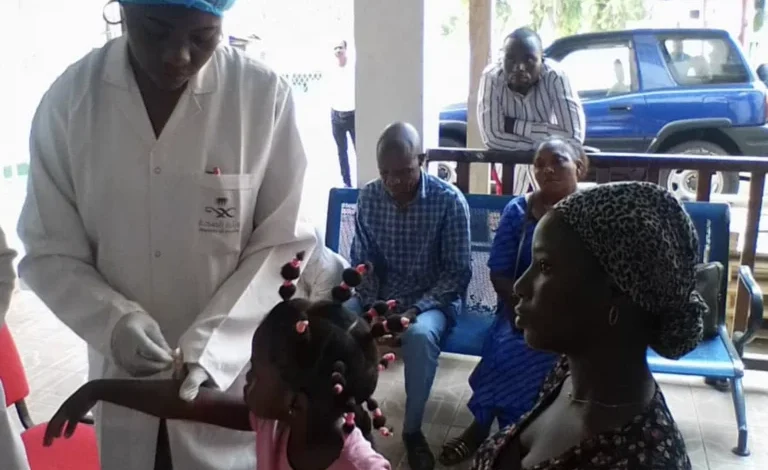
- 2023: With the assistance of Amnesty International, residents commission independent blood tests. Results show lead levels in children and adults far exceeding the World Health Organization (WHO) threshold of 5 micrograms per deciliter (µg/dL).
- 2024: Following the publication of the blood test data, the administrative court of Pointe-Noire orders the immediate suspension of Metssa Congo’s operations.
- 2025–2026: Scientific studies, including soil sampling conducted by researchers from Columbia University, confirm widespread environmental contamination.
- October 2026: A civil claim is filed by 120 residents demanding full remediation and medical restitution.
Scientific Evidence and Environmental Data
The turning point in the community’s struggle occurred when empirical evidence replaced anecdotal reports. The 2023 blood tests were described as “horrifying” by experts, including Alexander Van Geen, a research professor at Columbia University. Several individuals, particularly children, were found to have blood lead levels ten times higher than the recommended limit. Lead, which accumulates in the body, is known to cause irreversible neurological damage, kidney failure, and cognitive impairment.
In an effort to quantify the extent of the disaster, Van Geen collaborated with the residents to conduct a localized, high-resolution soil study in 2026. Using 49 soil samples collected within a 300-meter radius of the facility, the analysis revealed that the area is heavily compromised. Nearly 50% of the samples exceeded the U.S. Environmental Protection Agency (EPA) safety threshold for residential soil (200 mg/kg), with some samples reaching concentrations as high as 10,000 mg/kg.
The data mapping suggests that while the contamination is severe, it is geographically contained. Van Geen’s report estimates that approximately 25,000 square meters of land require intervention. Removing the top 10 centimeters of topsoil—amounting to roughly 2,500 cubic meters—could effectively decontaminate the neighborhood. However, the lack of government follow-through on this recommendation remains the primary obstacle to the health of the local population.
Institutional Silence and the Impunity Gap
Despite the judicial order to cease operations and the explicit findings of the soil contamination study, the residents of Vindoulou report that the situation on the ground remains stagnant. Cyrille Traoré Ndembi, president of the residents’ collective, has been a vocal critic of the state’s failure to protect its citizens.

"Closing the plant is not enough," Ndembi stated. "We are still living in an area that has been polluted for years. We need medical care for those poisoned, and we need the land cleaned so our children can play outside without fear."
The response from the Congolese authorities and the company management has been characterized by a notable absence of engagement. Repeated inquiries by international media and civil society organizations regarding the status of the cleanup operations have been met with silence. Experts like Jacques Gardon, a research director at the French National Research Institute for Sustainable Development (IRD), emphasize that the silence is not merely a bureaucratic failure but a public health crisis. "We have a clear diagnosis of environmental pollution," Gardon noted. "We have the evidence, yet the necessary financial and logistical resources are not being mobilized."
Broader Implications for Industrial Accountability
The case of Metssa Congo serves as a microcosm for the broader struggle of environmental justice in emerging economies. The Republic of Congo, while rich in natural resources, faces significant challenges regarding institutional oversight and the regulation of foreign-owned industrial entities. The persistence of Metssa Congo’s operations for a decade without stringent safety enforcement raises questions about the influence of private interests over public health protocols.
The reliance on local, low-cost testing methods—such as the kits provided by Van Geen—demonstrates a shift in how marginalized communities are fighting for their rights. By utilizing smartphones for GPS-tagged data collection and colorimetric soil analysis, residents are bypassing the need for state-sanctioned, often biased, assessments. This model of "citizen science" provides a replicable strategy for other communities globally that are grappling with industrial contamination but lack the resources for institutional environmental litigation.

The Path Forward: Litigation and Education
As the civil case moves through the High Court of Pointe-Noire, the strategy of the Vindoulou Residents’ Collective is two-fold: legal victory and community empowerment. The lawsuit seeks a firm judicial ruling that would compel both the government and the plant operators to fulfill their environmental liabilities.
Parallel to the court proceedings, there is a push to expand the testing project to local schools. By training teachers and students to monitor soil health, the collective hopes to build a sustained awareness campaign that makes it impossible for authorities to "shelve" the issue.
The fear of reprisal remains a significant deterrent for many, as the political climate in the Republic of Congo has historically been challenging for those who organize against state-sanctioned industrial interests. Yet, the residents of Vindoulou remain undeterred. For them, the legal battle is not merely about damages; it is a fight for the basic right to live in an environment that does not threaten the lives of their children.
As the scientific community continues to validate the residents’ findings, the burden of proof has shifted entirely onto the state and the industrial actors involved. The question remains whether the Congolese judiciary will prioritize the health of its citizens over the interests of a foreign industrial firm. For now, the dust in Vindoulou continues to settle, a silent and dangerous reminder of a decade of unchecked pollution that demands an urgent, evidence-based response.
Related posts: