A Strategic Pivot Toward Market Extremes
Since its inception as a standalone brand in 2015, Genesis has focused primarily on the "heart" of the luxury market, offering competitive alternatives to the BMW 5 Series, Mercedes-Benz E-Class, and Audi Q7. However, the brand’s leadership recognizes that long-term sustainability in the premium sector requires more than just high-quality sedans and SUVs; it requires a brand identity that spans from accessible luxury to aspirational performance.
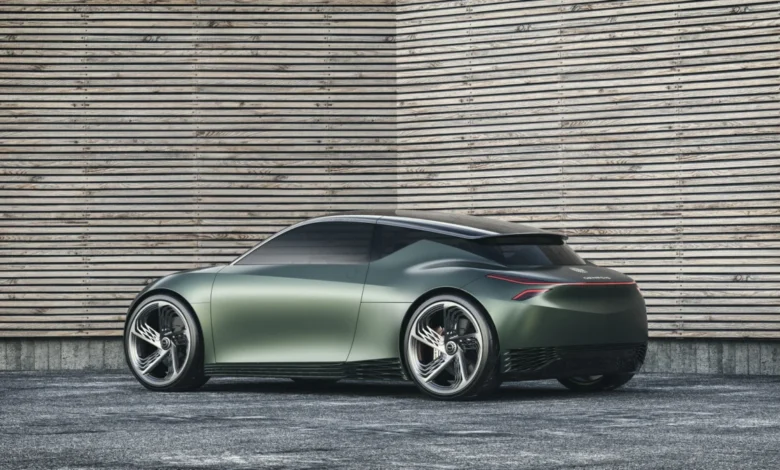
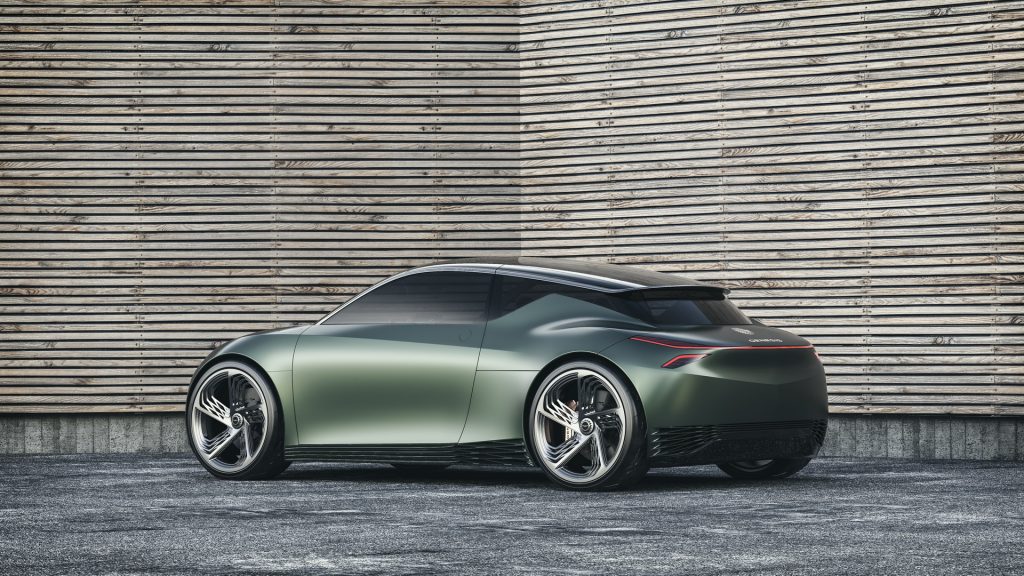
Peter Kronschnabl, Managing Director of Genesis Europe, recently confirmed that the company is evaluating the feasibility of a small premium EV. This model would likely sit below the current GV60, which utilizes the E-GMP (Electric-Global Modular Platform) shared with the Hyundai Ioniq 5 and Kia EV6. The proposed "baby EV" would target the rapidly growing B-segment and C-segment luxury markets, particularly in Europe and Asia, where urban density and tightening emissions regulations favor smaller footprints.
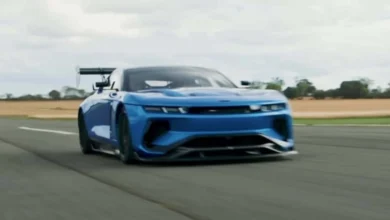
At the opposite end of the spectrum, Genesis is moving forward with its Magma program. Originally unveiled as a series of performance-oriented concepts, the Magma initiative is headlined by a mid-engined, V8-powered supercar. This move is particularly notable given the industry-wide trend toward downsizing and electrification. By developing a V8 halo car, Genesis is attempting to build the "emotional equity" that has long been the preserve of European marques like Ferrari, Aston Martin, and Lamborghini.
The Baby EV: Nurturing a New Generation of Buyers
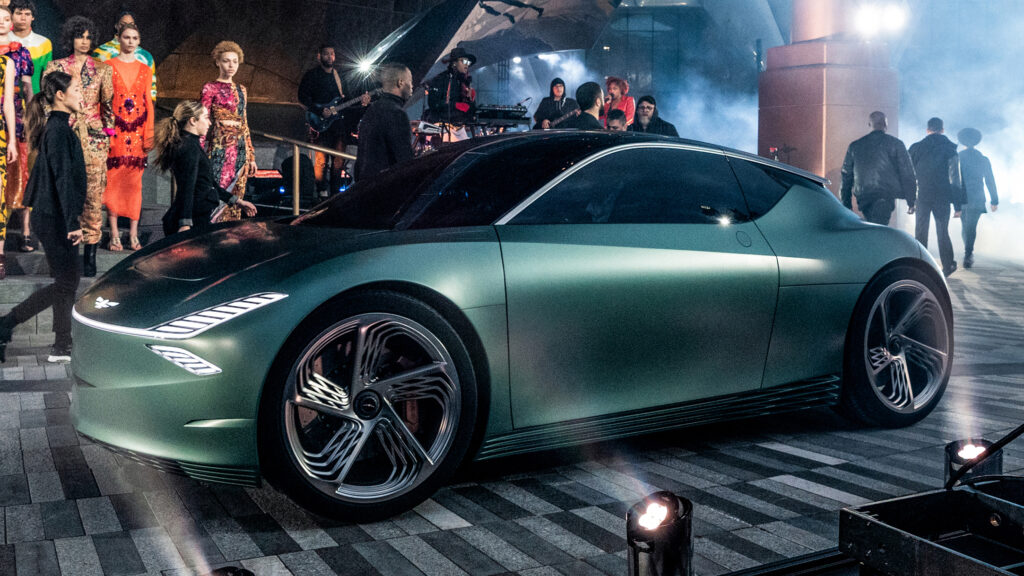
The logic behind a smaller Genesis EV is rooted in customer retention and brand loyalty. According to Kronschnabl, entering fast-growing segments is essential for "nurturing customers" who might eventually trade up to larger, more expensive models like the G80 or GV80.
Market data suggests that the entry-level luxury EV segment is poised for significant growth. Brands like Volvo, with the EX30, and Alfa Romeo, with the Junior, have already demonstrated that there is a healthy appetite for premium features in a compact package. A Genesis version of a small EV—potentially based on the upcoming Hyundai Ioniq 3 architecture—would allow the brand to offer its signature "Athletic Elegance" design language and "Son-nim" (honored guest) hospitality philosophy at a more accessible price point, likely ranging between $35,000 and $45,000.
However, Genesis is treading carefully. Kronschnabl emphasized that the company will not chase "white space" just for the sake of volume. He specifically cited the premium pickup truck segment as an area the brand is currently avoiding, noting that while a niche might exist, it must align with the brand’s long-term strategic goals rather than offering a mere short-term sales spike.
The V8 Halo: The Magma Performance Sub-brand
While the small EV focuses on volume and accessibility, the Magma GT and its associated performance models are designed to elevate the brand’s prestige. The Magma program represents a significant investment in engineering and brand positioning. Historically, luxury brands have used high-performance "halo" cars to showcase technical prowess and create a "trickle-down" effect of desirability for their more mainstream models.

The centerpiece of this effort is the production version of the Magma GT Supercar Concept. Reports indicate that this vehicle will feature a high-output V8 engine, possibly a twin-turbocharged unit, positioned behind the driver. This represents a bold departure from the Hyundai Motor Group’s recent focus on the E-GMP electric platform. By sticking with a V8 for its flagship performance car, Genesis is appealing to traditionalists who value the acoustic and mechanical character of internal combustion—a segment that many competitors are abandoning in their rush to go all-electric.
The Magma lineup is expected to include:
- GV60 Magma: A high-performance version of the brand’s first dedicated EV.
- G80 Magma Special: A limited-run, track-focused sedan.
- Magma GT Supercar: The V8-powered flagship intended to compete with the likes of the McLaren Artura and Maserati MC20.
The GV90: The Immediate Flagship
While the baby EV and the V8 supercar represent the future horizons of the brand, the immediate focus is on the GV90. Expected to be unveiled in late 2024 or early 2025, the GV90 will be a three-row, all-electric SUV that serves as the pinnacle of the Genesis lineup.
The GV90 is expected to utilize the new Integrated Modular Architecture (IMA), an evolution of the E-GMP that allows for greater battery density and more efficient motor configurations. Early prototypes and concepts, such as the Neolun Concept, have showcased "coach doors" (suicide doors) and a pillarless cabin design, suggesting that Genesis is aiming for a level of opulence usually associated with ultra-luxury brands like Rolls-Royce or Maybach.

Chronology of Genesis’s Strategic Expansion
To understand the current dual-track approach, it is necessary to look at the timeline of the brand’s evolution:
- 2015: Genesis is spun off from Hyundai as a standalone luxury brand.
- 2017-2020: The brand establishes its "core" lineup with the G70, G80, and G90 sedans, followed by the GV80 SUV.
- 2021: Launch of the GV60, the brand’s first dedicated EV, signaling the start of its electrification journey.
- 2023: Genesis announces that all new models launched from 2025 onwards will be purely electric, with a goal to become a 100% zero-emission brand by 2030.
- Late 2023: The Magma performance sub-brand is introduced at the New York Auto Show.
- 2024 (Present): Leadership confirms the study of a "baby EV" while simultaneously testing V8-powered performance prototypes.
Supporting Data and Market Context
The decision to expand the lineup comes at a time when Genesis is seeing record sales growth but faces a plateau in established markets. In 2023, Genesis surpassed 1 million cumulative global sales, a milestone achieved in just under eight years. However, to reach the next million, the brand must diversify.
In Europe, Genesis remains a niche player compared to the "German Big Three" (Mercedes, BMW, Audi). Market analysis indicates that European buyers are more likely to consider a new brand if it offers a compelling entry-level EV or a unique high-performance proposition. By covering both bases, Genesis is hedging its bets against fluctuating EV adoption rates.
Furthermore, the "halo effect" of a V8 supercar cannot be understated. According to industry analysts, brands that maintain a high-performance flagship see an average 15% increase in "brand desirability" metrics among younger consumers, even if those consumers ultimately purchase an entry-level model.
Official Responses and Industry Sentiment
While Genesis executives have been relatively tight-lipped about specific production dates for the baby EV, the sentiment from the parent company, Hyundai Motor Group, is one of total support. Euisun Chung, Executive Chair of Hyundai Motor Group, has frequently stated that Genesis is the "vanguard" of the group’s technological and design innovation.
Industry observers note that Genesis’s ability to pivot between a V8 supercar and a compact EV is a testament to the massive R&D resources of the Hyundai Motor Group. "Genesis has the luxury of being backed by one of the world’s largest and most profitable automotive groups," says automotive analyst Marcus Thorne. "They can afford to experiment with a V8 halo car to build brand prestige while simultaneously leveraging Hyundai’s world-class EV platforms to build a high-volume baby EV."
Broader Impact and Implications
The dual-track strategy of Genesis has several implications for the luxury automotive landscape:
- Pressure on Legacy Brands: By offering a more diverse and daring portfolio, Genesis is forcing legacy brands to accelerate their own innovation cycles. If a "newcomer" can produce a V8 supercar and a class-leading luxury EV flagship, the established players can no longer rely on heritage alone.
- Sustainability vs. Performance: The coexistence of a V8 supercar and a baby EV highlights the industry’s current "transition phase." Genesis is proving that a brand can be committed to an electric future while still honoring the mechanical heritage that defines automotive passion.
- Platform Versatility: The success of this strategy will depend on how effectively Genesis can differentiate its products from its Hyundai and Kia siblings. The "baby EV" must feel like a true Genesis, not just a rebadged Hyundai Ioniq 3, to justify its premium pricing.
As Genesis moves toward the second half of the decade, its success will be measured by its ability to balance these two extremes. Whether it is the silent, efficient hum of a compact city EV or the visceral roar of a V8-powered Magma GT, Genesis is determined to ensure that its wings are seen—and heard—in every corner of the luxury market. The upcoming reveal of the GV90 will likely serve as the definitive proof of concept for this ambitious expansion, setting the stage for a new era of South Korean luxury.