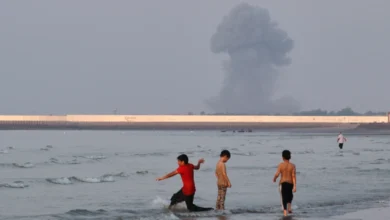
Defense Secretary Pete Hegseth Requests $1.5 Trillion Amidst Fierce Criticism Over Iran War and Mounting Casualties

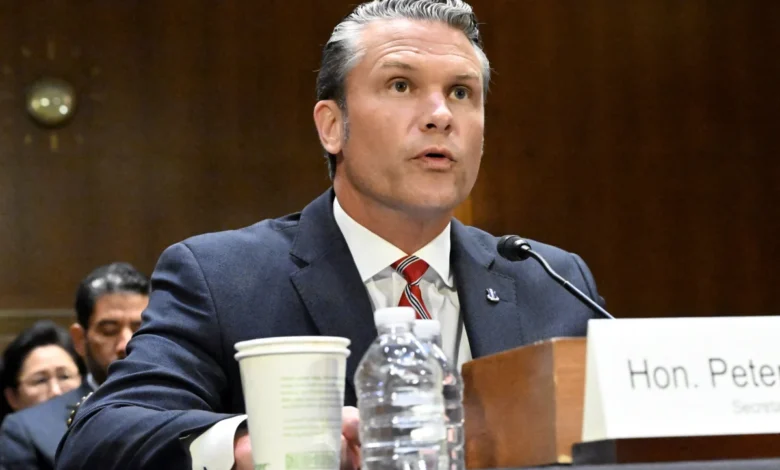
Defense Secretary Pete Hegseth appeared before the Senate Appropriations Committee on Tuesday, seeking a monumental $1.5 trillion in funding for the Pentagon, a request that immediately plunged into controversy given the ongoing, five-month-long conflict in Iran initiated by President Donald Trump. Hegseth’s testimony, intended to secure critical resources for the Department of Defense, instead became a charged arena for debate over the legality, morality, and economic repercussions of what critics have dubbed a "never-ending war." Throughout the contentious hearing, Hegseth staunchly defended President Trump’s actions, even suggesting that the Commander-in-Chief deserved praise for plunging the nation into a devastating conflict that has already claimed 17 American lives and caused untold suffering among Iranian civilians.
Hegseth’s opening remarks, delivered amidst palpable tension, set an audacious tone. "President Trump deserves the kind of praise he should get for undertaking this effort," Hegseth asserted, elaborating that the president had shown "the courage to ensure that crazy Islamists can’t have a nuclear weapon to hold us at issue." This justification, echoing familiar rhetoric concerning national security and the threat of nuclear proliferation, was met with immediate and sharp skepticism from senators present. The sheer scale of the funding request, nearly double the standard annual defense budget and arriving after only five months of active conflict, underscored the immense financial commitment the administration was demanding from American taxpayers.
Escalating Conflict and Congressional Scrutiny
The United States’ involvement in Iran began approximately five months prior, marking a dramatic escalation of long-standing tensions between Washington and Tehran. Following President Trump’s withdrawal from the Joint Comprehensive Plan of Action (JCPOA), commonly known as the Iran nuclear deal, in 2018, relations rapidly deteriorated. A series of escalating incidents, including alleged attacks on shipping in the Persian Gulf, drone shoot-downs, and increased sanctions, eventually culminated in direct military engagement. While the precise trigger for the "devastating, never-ending war" remains a subject of intense debate, the administration consistently cited intelligence regarding Iran’s accelerated nuclear ambitions and its alleged sponsorship of regional proxy groups as primary justifications for its military posture.
Senator Jack Reed of Rhode Island, a ranking Democrat on the Senate Armed Services Committee, was among the first to challenge Hegseth’s narrative. "Excuse me, so he should be praised for starting a war without authority?" Reed interjected, his voice cutting through the room. "For creating a situation in which the world economy is suffering tremendously?" Reed’s pointed question highlighted two critical concerns: the constitutional prerogative of Congress to declare war, which many argue was circumvented by the administration, and the far-reaching economic ramifications of the conflict. The global economy has indeed shown significant signs of distress, with oil prices experiencing unprecedented volatility, supply chains disrupted, and investor confidence plummeting amidst fears of a wider regional conflagration. The Strait of Hormuz, a critical chokepoint for global oil shipments, has seen increased militarization, driving up insurance costs and threatening vital trade routes.
The Economic and Human Cost of War
The economic toll of the conflict extends beyond global markets, directly impacting American taxpayers. The $1.5 trillion requested by Hegseth represents an extraordinary sum, dwarfing supplemental requests for previous conflicts and raising serious questions about fiscal responsibility. Critics argue that such an allocation diverts crucial funds from pressing domestic needs, including healthcare, education, infrastructure development, and social services, creating significant opportunity costs for the nation.
Moreover, the human cost of the conflict has steadily mounted. The Pentagon has confirmed that at least 17 American servicemembers have been killed since the war began, with three additional casualties reported in the past few days from Iranian strikes, notably on a US base in Jordan. These losses represent a stark reminder of the sacrifices being made, yet concerns persist about the transparency of casualty reporting. The New York Times has reported that the Pentagon has repeatedly withheld comprehensive information on U.S. casualties from the public throughout the war’s duration, leading to accusations of obfuscation and a lack of accountability. Historically, governments have sometimes limited casualty information to manage public perception and maintain morale, but such practices often fuel distrust and criticism.
Beyond American servicemembers, the suffering of Iranian civilians has been immense. While precise figures are difficult to obtain in an active conflict zone, humanitarian organizations estimate thousands of civilian casualties, widespread displacement, and severe damage to critical infrastructure. Cities and towns have been subjected to repeated bombings, leading to a deepening humanitarian crisis, a severe shortage of medical supplies, and disrupted access to food and clean water. These consequences resonate deeply with anti-war activists who see the conflict as a catastrophic failure of diplomacy and a violation of international humanitarian law.
Protests and Disruption on Capitol Hill
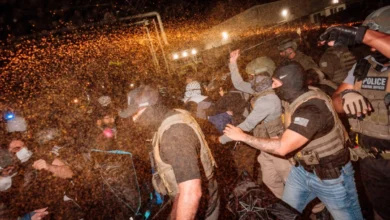
The contentious nature of the hearing was further amplified by repeated interruptions from anti-war protesters. During Hegseth’s testimony, several individuals disrupted the proceedings, voicing their fervent opposition to the war. One protester, holding a banner emblazoned with "NO WAR ON IRAN," shouted, "Your hands are bloody with 17 Americans," before being forcibly removed by law enforcement. Moments later, another demonstrator cried out, "Stop bombing our children in Iran and Palestine, this is illegal," linking the conflict in Iran to broader regional issues and the suffering of civilians. These outbursts, occurring multiple times throughout the hearing, underscored the deep public polarization surrounding the conflict and served as a stark, visceral reminder of the human element behind the policy debates.
The protesters represented a diverse coalition of anti-war groups, human rights organizations, and concerned citizens who have consistently opposed military intervention in Iran. Their presence on Capitol Hill mirrored similar movements throughout American history, from the Vietnam War to the Iraq War, where public demonstrations sought to influence policy and hold leaders accountable for military actions.
Vague Justifications and Unobligated Funds
When pressed by senators for specific details on how the colossal $1.5 trillion would be allocated, Hegseth offered largely vague assurances. He spoke broadly about the need to overturn what he termed "Biden’s woke military policy," a phrase often used in conservative circles to criticize perceived progressive social initiatives within the armed forces, such as diversity programs or changes in uniform regulations. Hegseth’s implication was that the massive funding was necessary not just for current operations but also to reverse ideological shifts he deemed detrimental to military readiness and effectiveness. However, this justification did little to satisfy senators seeking concrete budgetary breakdowns.
Senator Dick Durbin (D-IL) brought another critical issue to the forefront, questioning the Department of Defense’s existing financial resources. "It’s my understanding that this whole supplemental funding request is $87.6 billion," Durbin noted, referring to a portion of the overall request. He then pressed Hegseth, stating, "We are told the Department of Defense still has $75 billion in unobligated funding from last year’s reconciliation package. Is that true?" Hegseth’s terse response, "Roughly," confirmed a significant pool of unspent funds, raising immediate questions about the necessity of such a substantial new request. The existence of large unobligated funds often signals inefficiencies in departmental spending, lack of clear planning, or an attempt to hoard resources, further fueling skepticism about the Pentagon’s financial management and the genuine need for the requested $1.5 trillion.
"Running the Department Like a Business"
Hegseth also championed a fundamental shift in the Pentagon’s operational philosophy. He boasted that the American military was "no longer run by bureaucrats," but was "instead led by combat tested veterans and world class business leaders who are running the department like a business." This rhetoric, popular in administrations seeking to streamline government operations, suggests an emphasis on efficiency, cost-effectiveness, and private-sector principles.
However, critics quickly pointed out the potential pitfalls of this "business" model within the context of national defense. If the Pentagon is truly being run like a business, they argued, it is certainly not a profitable one for the American public. Instead, this approach often functions as a "taxpayer subsidized feast for defense contractors and Silicon Valley." Private corporations, including major arms manufacturers and tech firms, are increasingly integrated into the defense apparatus, allowed to "milk American defense systems for profit." This privatization, while potentially offering innovation, also raises concerns about inflated costs, conflicts of interest, and a lack of transparency, with taxpayers footing the bill for ever-expanding budget requests with little in the way of accountability or return on investment. The blurring lines between public defense and private enterprise often leads to a powerful military-industrial complex that benefits financially from perpetual conflict.
President Trump’s Defiance and the "Forever War" Narrative
Despite the mounting criticism, President Trump remained defiant. On Tuesday afternoon, he utilized his Truth Social platform to post a short, controversial list comparing the casualty figures of the Iran conflict to past U.S. wars, including Iraq, Afghanistan, Korea, and Vietnam. His post read: "Iran Military Conflict: 4 months, 18 DEAD," a clear attempt to minimize the scale of the current conflict by contrasting its casualty count with wars that spanned decades and resulted in tens of thousands of American lives lost.
This comparison, however, drew immediate condemnation for its selective use of data and its disregard for the nuanced historical context of each conflict. Critics highlighted that the other wars on Trump’s list had already concluded, while his "war in Iran" was still in its nascent stages and showing no signs of abatement. The characterization of the conflict as "never-ending" or a "forever war" by various news outlets and political commentators underscores a profound concern: that the U.S. is once again embarking on a prolonged military engagement in the Middle East with no clear exit strategy or achievable objectives, mirroring the costly and protracted conflicts in Afghanistan and Iraq.
Broader Implications and Future Outlook
The unfolding events surrounding the Iran conflict and Hegseth’s controversial funding request carry significant implications for both domestic politics and international relations. Geopolitically, the war has further destabilized an already volatile Middle East, potentially drawing in regional powers and creating new alliances and antagonisms. It has also tested the United States’ relationships with its traditional allies, many of whom opposed the withdrawal from the JCPOA and expressed concerns about the unilateral nature of the military intervention. Adversaries like Russia and China have likely leveraged the situation to critique American foreign policy and expand their own influence in the region.
Domestically, the war and its associated costs are set to be a major issue in upcoming elections. Public opinion remains divided, with a significant portion of the populace expressing war weariness and a desire for diplomatic solutions over military engagement. The debate within Congress reflects this division, with fierce arguments over presidential war powers, budgetary priorities, and the future direction of American foreign policy. The immense financial commitment, coupled with the rising human toll, will continue to fuel intense scrutiny of the Trump administration’s strategic decisions and Hegseth’s leadership at the Pentagon.
As the conflict in Iran continues its uncertain trajectory, the call for $1.5 trillion in additional funding underscores a critical juncture in American foreign policy. The questions raised by senators, protesters, and concerned citizens about accountability, transparency, and the true cost of war highlight a profound national debate that is far from over. The "forever war" in Iran, still in its early stages, threatens to cast a long shadow over the nation’s future, demanding continued vigilance and critical examination from all stakeholders.